

Key Takeaways
Braking depends on parts at each wheel, hydraulic pressure, and electronic controls working together. Knowing what each does can help you recognize changes and ask clearer questions during service.
- The brake pedal starts a process that turns hydraulic pressure into friction at the wheels.
- Disc brakes use pads and rotors; drum brakes use shoes and drums.
- Brake fluid, lines, and the master cylinder transfer pressure through the system.
- ABS and related electronics help manage braking, but do not replace sound mechanical parts.
- Unusual noises, pedal changes, warning lights, or leaks deserve prompt attention.
How the braking system works
A vehicle’s braking system turns the driver’s action at the pedal into force that slows the wheels. The process relies on mechanical parts and hydraulic pressure, with electronic controls supporting braking on equipped vehicles. The overview of passenger-vehicle braking parts offers another look at how the major components fit together.
How pedal pressure becomes stopping force
Pressing the brake pedal moves a pushrod that acts on the master cylinder. The master cylinder converts that mechanical input into hydraulic pressure, which travels through brake fluid toward the wheel brakes. A booster, when fitted, reduces the effort needed at the pedal, but the basic sequence remains the same: pedal movement, pressure, then force at the wheels.
How friction slows the wheels
At each wheel, the brake mechanism presses friction material against a rotating surface. In a disc brake, pads clamp onto a rotor; in a drum brake, shoes press against the inside of a drum. That contact creates friction at the wheel, slowing rotation and helping bring the vehicle to a stop. Some of the vehicle’s motion becomes heat, so the parts must be designed to tolerate repeated heating and cooling.
How front and rear brakes work together
All four brakes contribute to slowing the vehicle, though their share of the work can vary with design and driving conditions. During deceleration, weight shifts toward the front, so front brakes commonly handle a larger portion of the braking effort. The braking system balances that work across the wheels; the exact setup depends on the vehicle.
Core parts at each wheel
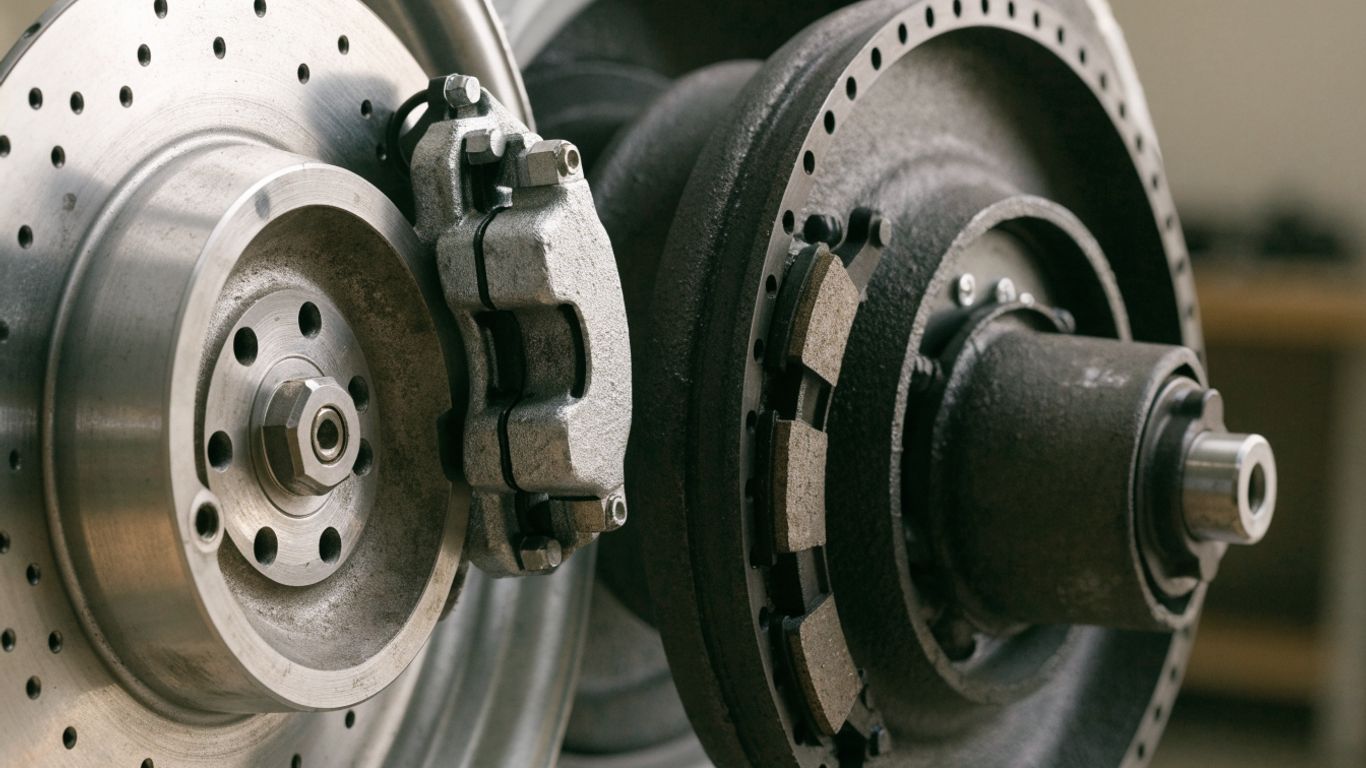
The parts at the wheels provide the friction that slows rotation. Many passenger vehicles use disc brakes at the front, while the rear may use discs or drums; some vehicles use discs at all four wheels. The components and their arrangement vary, so it is useful to identify the brake type before discussing a repair or replacement.
Brake pads and shoes
Brake pads are the friction pieces used with disc brakes, while brake shoes are used with drum brakes. These parts wear as they press against the rotor or drum, and their condition can affect braking performance. Wear rates depend on the vehicle, the parts fitted, and how the vehicle is driven, so inspection is more useful than relying on a single mileage estimate.
Rotors and drums
Rotors turn with the wheel and provide the surface that disc-brake pads clamp against. Drums rotate with the wheel, enclosing the shoes that press outward against their inner surface. The comparison below summarizes where each part works and what contacts it during braking.
| Part | Brake type | Friction material contacts |
|---|---|---|
| Rotor | Disc | Pads clamp on the rotor faces |
| Drum | Drum | Shoes press against the inner surface |
| Pad | Disc | Rotor |
| Shoe | Drum | Drum |
These parts can develop wear or surface damage, but an appearance check alone does not tell the whole story. A technician considers the condition of the friction material and the rotating surface together, as well as the vehicle maker’s service requirements.
Calipers and wheel cylinders
A caliper holds the pads and applies them to a rotor when hydraulic pressure moves its piston or pistons. In a drum brake, wheel-cylinder pistons push the shoes outward against the drum. Both parts translate hydraulic pressure into movement at the wheel, though their construction and service needs differ.
Hydraulic parts that transfer pressure
Hydraulic components carry the force created at the pedal to the brakes at each wheel. The system depends on sealed passages and suitable brake fluid; leaks or air in the system can interfere with pressure transfer. Understanding the route helps explain why a pedal that feels different should not be ignored.
The master cylinder and brake pedal
The brake pedal provides the driver’s input, and the master cylinder turns that input into hydraulic pressure. Many vehicles use a master cylinder with separate circuits, so a problem in one part of the hydraulic system does not necessarily affect every wheel in exactly the same way. The specific design varies by vehicle, and diagnosis should follow its service information.
Brake lines and hoses
Rigid brake lines carry fluid along the vehicle, while flexible hoses allow movement between the body and components that move with the suspension or steering. Both need to remain intact and free of leaks, corrosion, kinks, or damage. Because some line sections are difficult to see without raising the vehicle, a proper inspection checks the full route rather than only the visible areas near the wheels.
Brake fluid and the reservoir
The reservoir holds brake fluid for the master cylinder, and its level can provide a useful visual check. A low level may be associated with worn friction parts or a leak, so topping it up without finding the cause may conceal a problem. Fluid type and service intervals should follow the vehicle’s specifications; different fluid types should not be mixed casually.
Electronic parts that support braking
Electronic controls can help manage braking, especially when a wheel is at risk of locking. Their sensors and control components work alongside the conventional hydraulic system rather than replacing it. The exact equipment varies by vehicle, and a warning indicator may call for diagnostic checks even when the brakes still seem to operate normally.
Anti-lock braking system sensors and control unit
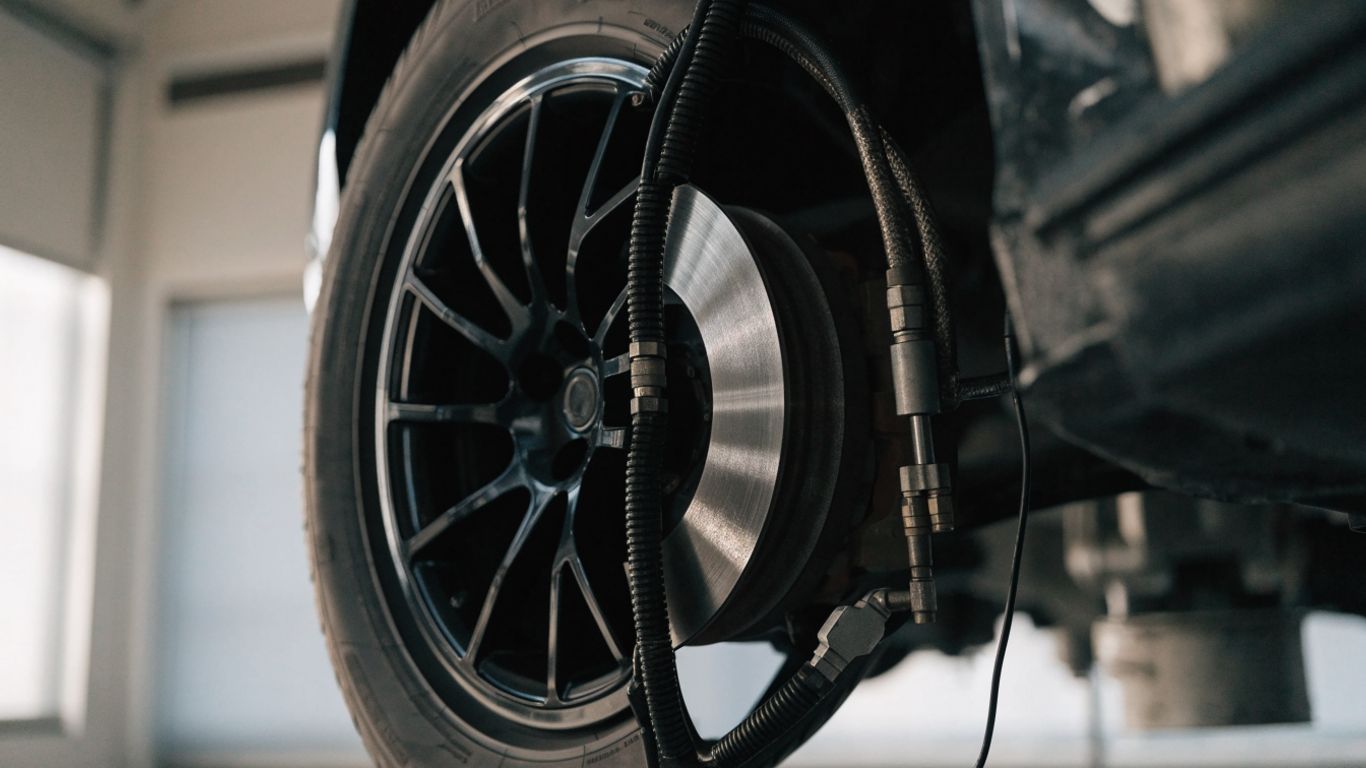
ABS wheel-speed sensors monitor wheel rotation and send information to a control unit. If the system detects a wheel slowing in a way that suggests lockup, it can adjust hydraulic pressure. ABS is designed to help maintain wheel rotation during hard braking, but it does not eliminate the need to leave adequate following distance or maintain the brake hardware.
ABS pump and valves
The ABS hydraulic unit uses valves to adjust pressure at the wheels, and a pump can restore pressure as the system cycles. Drivers may feel pedal pulsing or hear a brief mechanical sound when ABS activates; these sensations can be normal during that event. A persistent warning light or unusual behavior outside an ABS event should be checked rather than assumed to be routine operation.
Brake booster and electronic brake-force distribution
A brake booster reduces the force needed to press the pedal. Electronic brake-force distribution, when fitted, can adjust braking force between axles according to vehicle conditions and design. These features support the driver’s braking input, but they rely on the underlying brakes, tires, and hydraulic components being in suitable condition.
Signs that braking parts may need attention
Changes in sound, feel, or warning indicators can be useful early clues that something deserves inspection. A single symptom does not identify a failed part on its own, since several components can cause similar signs. If braking feels unsafe or the vehicle does not respond normally, stop driving when it is safe to do so and arrange professional help.
Noises, vibration, and changes in pedal feel
Squealing, grinding, or repeated scraping can point to friction-part wear or contact problems, while vibration during braking may have several possible causes. A pedal that feels unusually soft, sinks, or takes more effort than usual also merits attention. Note when the symptom occurs—such as at low speed or during firm braking—because that context can help a technician assess it.
Warning lights and fluid leaks
A brake warning light or ABS light may indicate that a system needs attention. A visible fluid leak near a wheel or beneath the vehicle is also a reason to seek prompt inspection, since hydraulic pressure is essential to braking. Avoid assuming that a warning light is harmless just because the vehicle can still be driven.
How worn parts can affect stopping distance
Worn or damaged parts can reduce braking performance, and changes in tires, road surface, load, and speed also affect how far a vehicle takes to stop. If braking seems weaker than usual, avoid testing it in traffic. A few practical observations can help make a service conversation more useful:
- Note whether the change is constant or happens only in certain conditions.
- Listen for noises and identify which wheel area they seem to come from, if possible.
- Check whether a dashboard warning light remains on.
- Describe any recent change in pedal feel or fluid level.
These notes do not replace a mechanical inspection, but they help communicate what has changed. Do not wait for several symptoms to appear before asking for advice.
Brake system inspection and replacement considerations
Inspection looks at how the brake system works as a whole, not just the most visible part. A worn pad, for example, is considered alongside the rotor, caliper, and other relevant components. Parts should match the vehicle’s specification and the repair being performed; if you are unsure what fits, confirm the vehicle details before ordering.
Which parts are inspected during routine service
A routine brake inspection may include friction material, rotors or drums, calipers or wheel cylinders, hoses, visible lines, fluid level, and warning indicators. The scope depends on the vehicle and service procedure. The aim is to identify wear, damage, leaks, or other conditions that could affect safe operation.
For a useful service discussion, it helps to gather a few details before the vehicle is inspected:
- The vehicle’s make, model, year, and any relevant trim or specification.
- The symptoms and when they occur.
- Any warning lights or recent changes in pedal feel.
- Previous brake work, if known.
These details can help clarify which parts and checks are relevant, though they do not determine a diagnosis by themselves. A technician can then inspect the system and explain what is needed for that vehicle.
When components may need replacement together
Some parts are often assessed in pairs across an axle so braking remains balanced, but the right repair depends on condition and manufacturer guidance. For example, a technician may check the rotor when replacing pads and may recommend further work if it is damaged or outside specification. Replacing every nearby component is not automatically necessary; the decision should follow inspection findings and the vehicle’s service requirements.
How vehicle type and driving conditions affect part selection
Vehicle design, weight, brake configuration, and intended use influence which parts are suitable. Frequent heavy loads, steep routes, stop-and-go traffic, or repeated hard braking can also affect wear. Need-first evaluation is useful in many kinds of maintenance: guides to dental equipment and tissue repair also concern matching choices to specific needs, while field service scheduling deals with organizing maintenance work. Those topics are different from vehicle brakes, but the general lesson is to confirm the application before choosing a part.
If maintenance is coordinated for multiple vehicles, planning and accurate records can help keep inspections from being overlooked. In other everyday decisions, people also compare details and suitability, whether considering wine tasting or privacy protections. These are unrelated subjects, but they underline why a decision should be based on the specific requirements rather than a label alone. For braking components, confirm fitment and suitability against the vehicle’s specifications.
Conclusion
Braking system parts work as a connected chain: the pedal starts the process, hydraulics transfer pressure, and friction at the wheels slows the vehicle, with electronic controls supporting some systems. Knowing the role of each component makes it easier to notice changes and describe them clearly, but inspection and part selection should always account for the vehicle’s design and condition.
Frequently Asked Questions
What are the main parts of a braking system?
Common parts include the brake pedal, master cylinder, brake fluid, lines and hoses, friction components, rotors or drums, and calipers or wheel cylinders. Vehicles equipped with ABS also have electronic components that support brake control.
What is the difference between brake pads and brake shoes?
Pads are used in disc brakes and press against a rotor. Shoes are used in drum brakes and press against the drum’s inner surface.
Do all vehicles have disc brakes on all four wheels?
No. Some vehicles have disc brakes at all four wheels, while others combine front disc brakes with rear drum brakes. The arrangement depends on the vehicle.
What does the master cylinder do?
The master cylinder converts pressure from the brake pedal into hydraulic pressure that travels through the brake system to the wheel brakes.
What does ABS do during braking?
The anti-lock braking system can adjust hydraulic pressure when it detects a wheel is at risk of locking. Its operation and equipment depend on the vehicle.
What can cause a soft brake pedal?
Possible causes include air in the hydraulic system, a fluid leak, or a problem with a hydraulic component. A pedal that feels unusually soft should be inspected promptly.
How often should braking parts be inspected?
Follow the vehicle manufacturer’s maintenance schedule and arrange an inspection sooner if you notice a warning light, leak, unusual noise, vibration, or change in pedal feel.