

Key Takeaways
A careful inspection and a few fitment checks can help prevent buying the wrong suspension part. Use symptoms as clues, then confirm the repair with the vehicle’s details and a qualified inspection when needed.
- Compare part listings with the J3’s year and vehicle details before ordering.
- Treat noises, leaks, handling changes, and uneven tire wear as reasons to inspect—not as a diagnosis by themselves.
- Check whether a part is for the front or rear and for the correct side.
- Ask what hardware is included and whether an alignment is needed after the repair.
- Compare repair quotes using the same parts, labor, and inspection scope.
Understand the Chery J3 suspension system
Suspension parts connect the vehicle body and wheels while helping the tires stay in contact with the road. Their layout and specifications can vary, so avoid assuming that every J3 uses the same component arrangement. Knowing what each part generally does makes it easier to describe symptoms and ask useful questions during an inspection.
How the front suspension supports steering and handling
At the front, suspension components work alongside the steering system as the wheels move over bumps and through turns. Worn or damaged parts can affect how the vehicle responds, but a change in steering feel does not identify a single failed component. Describe when it happens—over bumps, while turning, or during braking—so an inspection can narrow down the cause.
How the rear suspension contributes to stability
The rear suspension helps support the vehicle and manage wheel movement over uneven surfaces. A problem at the rear may show up as unusual noise, a change in ride comfort, or instability, although tires and other systems can also contribute. The precise arrangement is best confirmed from the vehicle’s specifications rather than inferred from a general diagram.
What shocks, struts, springs, and mounts do
Springs support vehicle weight and compress as the wheels travel over bumps. Shocks control that movement, while a strut combines a shock absorber with a structural role in the suspension; mounts secure components and can help isolate vibration. Not every vehicle uses these parts in the same combination, so check the J3’s configuration before ordering. For a visual overview of the work involved, this suspension inspection and repair video can provide useful context, but it cannot confirm your car’s fault or part fitment.
Where bushings, ball joints, and stabilizer links fit in
Bushings cushion movement where components connect, ball joints allow controlled pivoting, and stabilizer links connect parts of the anti-roll system. Wear in these areas may cause looseness or noise, but several faults can produce similar symptoms. If you are comparing parts, stabilizer mounting bushings are one example of a component whose shape and mounting details should be checked against the vehicle.
Identify common suspension problems
Suspension symptoms are clues, not a diagnosis. A noise or handling change can come from more than one component, and tire condition can complicate the picture. Note when a symptom occurs and whether it is changing; that information gives a technician a more useful starting point.
Recognize worn shocks or struts
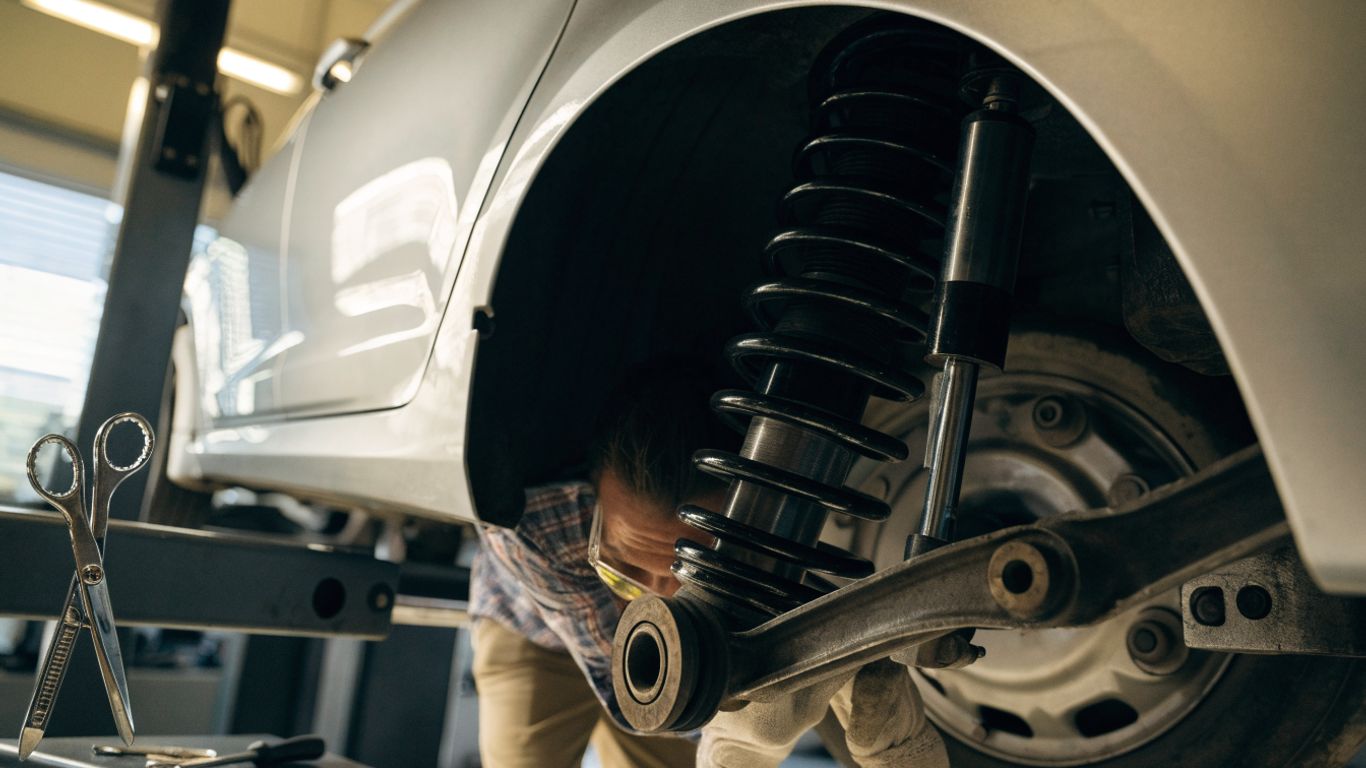
A ride that feels unusually unsettled, visible fluid on a shock or strut, or repeated bouncing after a bump can justify an inspection. None of these signs proves that a particular unit has failed, and a dry exterior does not establish that it is working correctly. Ask the technician to inspect the component and its mount together, especially if the sound or ride has changed recently.
Spot damage to bushings, ball joints, and stabilizer links
Cracked or displaced rubber, looseness, or a clunk over uneven ground may point to wear in a joint or connection. A mechanic can check for movement and damage using safe inspection methods; avoid reaching under a vehicle supported only by a jack. Reports of a clunk or movement around a mount may also warrant checking the strut top mount signs, while remembering that a similar noise can have another source.
Connect uneven tire wear with possible suspension faults
Uneven tire wear can be associated with alignment or suspension issues, but tire pressure, rotation history, and driving conditions matter too. The pattern is useful evidence, not proof of a particular failed part. Keep a record of where the wear appears and have the tires and suspension assessed together.
A simple comparison can help organize what you have noticed before booking an inspection:
| Observation | Possible area to inspect | Useful next step |
|---|---|---|
| Repeated bouncing after a bump | Shock or strut performance | Request a suspension inspection |
| Clunk over uneven ground | Joint, link, mount, or bushing | Note when and where it occurs |
| Uneven tire wear | Alignment, tires, or suspension | Check tire condition and alignment |
| Loose or unsettled handling | Several possible causes | Arrange a prompt assessment |
These are starting points, not at-home diagnostic rules. Share the details with a technician and let the inspection determine which components, if any, need replacement.
Know when noise or poor handling needs prompt inspection
A sudden change in handling, a loud new noise, or a feeling that the vehicle is difficult to control deserves prompt attention. If steering or stability feels unsafe, stop driving when it is safe to do so and arrange professional help. Less dramatic but persistent noises still merit inspection before they become harder to trace.
Choose the right replacement parts
The right replacement is not simply the part with the closest-looking photograph or lowest listed price. Match the component to the exact vehicle details, then compare its condition, source, and return terms. Superspares describes its offering as connecting customers with used, genuine, and aftermarket parts; availability and suitability still need to be confirmed for the individual vehicle.
Match parts to the J3 model year and vehicle specifications
Start with the model year and the vehicle identification number (VIN), and provide any other details requested by the supplier or repairer. Listings may cover a particular year or specification rather than every J3. For instance, Chery J3 parts are listed for a 2014 model, but a listing alone is not confirmation that a specific component fits your car.
Compare OEM, aftermarket, and used components
Original-equipment, aftermarket, and used parts can differ in source, condition, and documentation. Ask what the listing actually includes, whether the part is new or used, and what return or warranty terms apply. A general Chinese generator buying guide covers checks specific to generator purchases, while the useful lesson here is to judge each part by the evidence and terms relevant to its own category.
Check material quality, warranty, and supplier details
Read the part description carefully and ask for clarification if the material, condition, or included items are unclear. Check the supplier’s contact details and written warranty or return policy before paying. Superspares describes its nationwide parts network as connecting customers with used, genuine, and aftermarket parts, but buyers should still verify the exact listing and its terms.
Replace related components together when appropriate
A technician may recommend replacing related worn parts at the same time when inspection shows that they are also damaged or near the end of their service life. That can avoid repeating labor, but it is not a reason to replace sound components automatically. Ask for the inspection findings and the reason each additional part is included in the estimate.
Confirm fitment before ordering
A correct-looking part can still have different mounting points or dimensions. Confirm compatibility before purchase, and keep the vehicle’s identifying details close at hand when speaking with a supplier. A search result or category page can help locate options, but the final match should be checked against the specific vehicle and part number where available.
Use the VIN and vehicle details to verify compatibility
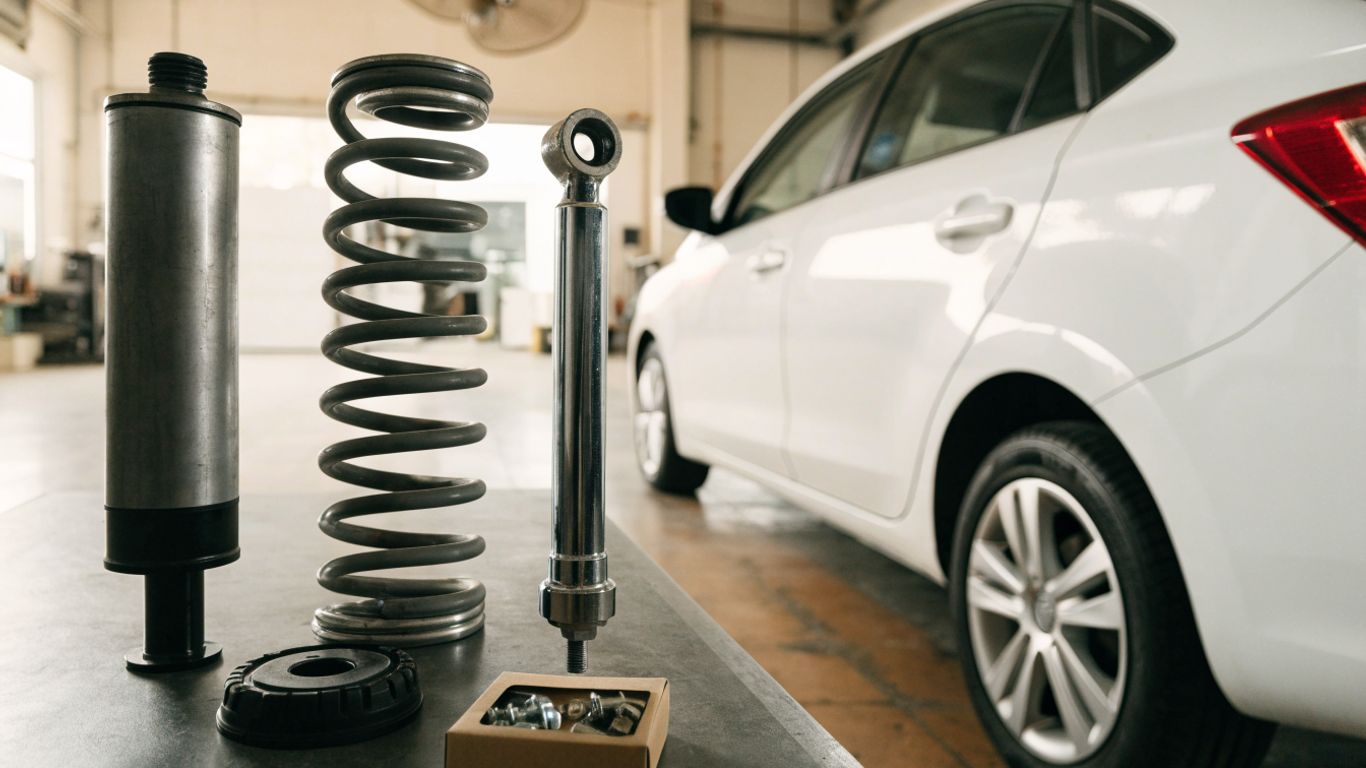
Give the supplier the VIN, model year, and any other details requested to identify the vehicle. Ask whether the part is confirmed for that exact specification, rather than relying on a broad model name alone. A J3 parts category may help with browsing, but its current contents or availability can change and should not be treated as a fitment guarantee.
Distinguish between front and rear parts
Check whether the replacement is intended for the front or rear suspension. Similar-looking components can have different dimensions or mounting arrangements at different positions. Confirm the position in the written description, and have the repairer compare it with the part being removed if there is any doubt.
Check left- and right-side fitment
Some suspension components are side-specific, while others may be interchangeable. Look for a clear left- or right-side designation and confirm whether the seller identifies the side from the driver’s or passenger’s perspective. Do not assume that a pair contains both sides unless the listing explicitly says so.
Before placing the order, work through a short fitment check with the supplier:
- Confirm the VIN and model year used to identify the vehicle.
- Verify front or rear position and, where applicable, left or right side.
- Compare the listing’s part number with the number supplied by the repairer.
- Ask whether the sale includes mounting hardware or related pieces.
That small check can catch common order mismatches before delivery. Keep the supplier’s confirmation with the order details so the repairer can compare it with the vehicle before fitting.
Confirm whether hardware or mounting components are included
Listings may show a main component without specifying whether fasteners, bushes, or mounts are part of the package. Ask for a written list of included items and whether any hardware must be reused or ordered separately. If the answer is unclear, confirm it before purchase rather than discovering a missing piece during the repair.
Plan a suspension parts replacement
A suspension repair can involve loaded springs, heavy components, and connections that affect vehicle control. Decide early whether the work is suitable for a qualified technician, and ask what checks will follow the installation. A clear plan also helps separate the part itself from related labor or alignment work.
Decide which work requires a qualified technician
Work involving springs, struts, joints, or a suspected safety issue is best assessed by someone with the right equipment and training. A professional can inspect connected parts and determine whether the reported symptom matches the proposed repair. If the vehicle feels unstable or difficult to control, do not treat continued driving as a way to test the fault.
Prepare for alignment after replacing key components
Some suspension repairs can affect wheel alignment, so ask the repairer whether an alignment check is recommended for the specific work. It is useful to establish this before approving the job, since alignment may be a separate charge. Follow the technician’s advice based on the component replaced and the vehicle’s condition.
Replace worn parts without overlooking connected components
Ask for an inspection of the nearby parts that connect to or support the component being replaced. That does not mean every adjacent item needs renewal; it means the estimate should account for any observed wear that could affect the repair. Superspares’ listings span several parts categories, but the repair scope should still be set by the vehicle inspection, not by a broad catalogue search.
Follow safe lifting and inspection practices
Never work beneath a vehicle supported only by a jack, and do not handle a spring or suspension assembly without suitable tools and training. Even a basic visual check should be done on stable, level ground, with the vehicle secured according to the manufacturer’s instructions. If you cannot inspect safely, leave the assessment to a workshop.
Maintain suspension performance
Routine attention can help catch changes before they become more disruptive. Pay attention to new noises, altered ride comfort, and changes in tire wear, and mention them at service visits. Maintenance intervals and inspection priorities should reflect the vehicle’s use and condition rather than a one-size-fits-all schedule.
Inspect suspension parts at routine service intervals
Ask for suspension components to be checked during routine service, particularly if a symptom has appeared since the last visit. A visual check can identify obvious damage, while a technician may use additional methods to assess wear or looseness. Keep the focus on observed condition instead of replacing parts on age alone.
Check tires and alignment for early warning signs
Look at tire condition regularly and note uneven wear, damage, or a change in pressure. If a tire wears unevenly, ask for the tire, alignment, and suspension to be considered together. This approach reduces the chance of assuming a suspension part is responsible when another factor may be involved.
Adjust inspections for rough roads and heavy use
Frequent travel over rough surfaces or unusually heavy use can make it sensible to discuss more frequent checks with a technician. The right interval depends on the vehicle and how it is used. Mention repeated impacts or a change in driving conditions when arranging service, since that context can guide the inspection.
Keep records of parts, repairs, and mileage
Save invoices, part numbers, inspection notes, and mileage for each repair. A record helps distinguish a new symptom from an old one and makes it easier to compare quotes later. It can also help a future technician understand what has already been replaced and when.
Estimate costs and compare repair options
A repair estimate is easier to assess when it separates parts, labor, inspection, and any alignment work. Ask what is included and whether the recommendation is based on an observed fault or preventive maintenance. Compare like with like, then decide whether the scope is proportionate to the condition of the vehicle.
Separate parts costs from labor and alignment
Request a breakdown that identifies the parts, labor, and any alignment or additional inspection charges. The lowest part price may not be the lowest total repair cost if the item differs in condition or the package omits required hardware. Superspares positions its network around finding used, genuine, and aftermarket parts nationwide; confirm the specific item, price, and terms for your repair before comparing totals.
Compare quotes using the same repair scope
Check that each quote covers the same components and labor, and that any alignment recommendation is treated consistently. A written list makes differences easier to spot and gives you a practical basis for questions. Other purchasing guides address different categories—for example, engineered wood sanding, sports flooring options, and outsourced customer service—so their technical checks should not be substituted for a vehicle-specific repair estimate.
Assess whether a partial or full replacement makes sense
A partial replacement may be reasonable when inspection identifies a specific failed part and related components remain in serviceable condition. Broader replacement may be justified if several connected parts are worn, but ask the technician to explain the evidence and expected benefit. For another example of why a vehicle’s maintenance history matters when assessing ownership costs, see this Alfa Romeo reliability overview; the repair decision for a J3 should still rest on its own inspection and records.
Budget for related wear items discovered during inspection
Set aside room in the estimate for related wear items if inspection uncovers damage, but ask for approval before extra work begins. A repairer should be able to identify the item, explain its condition, and clarify whether it is essential now or can be monitored. Clear communication helps you make a considered choice without turning every inspection finding into an automatic replacement.
Conclusion
Choosing Chery J3 suspension parts is a process of identifying the symptom, confirming the vehicle’s exact specifications, and checking the proposed repair against a proper inspection. Take time to verify position, side, included hardware, and total repair scope. When handling, steering, or stability feels unsafe, arrange a prompt professional assessment rather than relying on guesswork.
Frequently Asked Questions
Can I identify a suspension fault from a noise alone?
No. A clunk, squeak, or rattle can have several possible causes. Note when it occurs and have the vehicle inspected before ordering a replacement part.
Does uneven tire wear always mean a suspension part has failed?
No. Alignment, tire pressure, tire condition, and other factors can contribute. Have the tires and suspension assessed together to find the cause.
Should related suspension parts always be replaced in pairs?
Not automatically. The appropriate repair depends on the parts’ condition and the manufacturer’s guidance. Ask the technician to explain any recommendation to replace more than one component.
Is it safe to drive with a suspension noise?
It depends on the cause and how the vehicle behaves. If handling or steering feels unsafe, stop driving when safe and arrange professional assistance; persistent new noises should also be checked promptly.
Do I need an alignment after suspension work?
Some repairs can affect alignment, while others may not. Ask the repairer whether an alignment check is recommended for the specific components replaced.
What information should I provide when ordering a suspension part?
Provide the VIN, model year, and any additional vehicle details requested. Also confirm the part number, position, side, and included hardware before purchase.
What should a suspension repair quote include?
Ask for a clear breakdown of parts, labor, any inspection or alignment charge, and the reason for the recommended work. Comparing quotes with the same scope makes the differences easier to understand.