

Key Takeaways
Understanding the foundational mechanics of a vehicle helps owners make better decisions regarding maintenance and long-term care. This overview provides a clear look at how intricate subsystems work together to move your car efficiently.
- The internal combustion engine relies on a cycle of intake, compression, combustion, and exhaust.
- Proper lubrication and cooling are essential to prevent heat-related mechanical failure.
- Fuel and air must be precisely managed for optimal engine efficiency and emission control.
- Drivetrain components are responsible for sending generated power from the engine to the wheels.
- Electrical and sensor networks ensure modern vehicles run with computer-aided precision.
Core components of the internal combustion engine
Modern automotive engineering centers on the complex interaction of heavy metal components cycling at high speeds. These parts are forged to withstand intense pressure and heat while maintaining precise tolerances to ensure reliability over thousands of miles. By studying the Engine & Mechanical Parts that comprise these systems, drivers can better appreciate the innovation behind their daily commute.
Cylinder block and crankcase fundamentals
The cylinder block serves as the foundation for the entire engine, housing the cylinders where combustion occurs. It provides the rigid structure necessary to hold the crankshaft, which translates the linear force of the pistons into rotational motion. This cast iron or aluminum base is essential for maintaining the alignment of all internal moving parts.
Piston assemblies and connecting rods
Pistons function as the primary force-transferring components, moving up and down within the cylinders during the power stroke. These components are connected to the crankshaft via rods that withstand massive amounts of stress generated during each explosion. A typical piston assembly includes:
- Compression rings to seal the combustion gases inside the cylinder.
- An oil control ring to manage lubrication on the cylinder walls.
- A wrist pin that attaches the piston to the connecting rod.
- The piston head, which absorbs the direct energy of combustion.
These parts must maintain perfect integrity to avoid major engine repair needs.
The structural role of the cylinder head
The cylinder head sits atop the engine block and is sealed by a head gasket to prevent fluid leaks. It houses the intake and exhaust valves, alongside the spark plugs or fuel injectors in specific configurations. Its architecture dictates the airflow efficiency and determines the compression ratio, which directly influences engine output and thermal efficiency.
Timing systems and valve train mechanics
Timing systems ensure that the valves open and close in exact synchronization with the movement of the pistons. Often controlled by a timing belt or chain, this mechanism keeps the valve train operating safely. If the timing is off by even a few degrees, the engine can sustain catastrophic damage, highlighting why enthusiasts often look for quality components to ensure longevity.
Understanding the fuel and air intake system
Efficient combustion requires a specific ratio of fuel and oxygen to produce energy cleanly. The intake system manages how air flows into the engine while the fuel system ensures that liquid fuel is atomized for rapid ignition. This balance is monitored by electronics to keep the internal combustion engine running within factory specifications.
Fuel injectors and fuel delivery systems
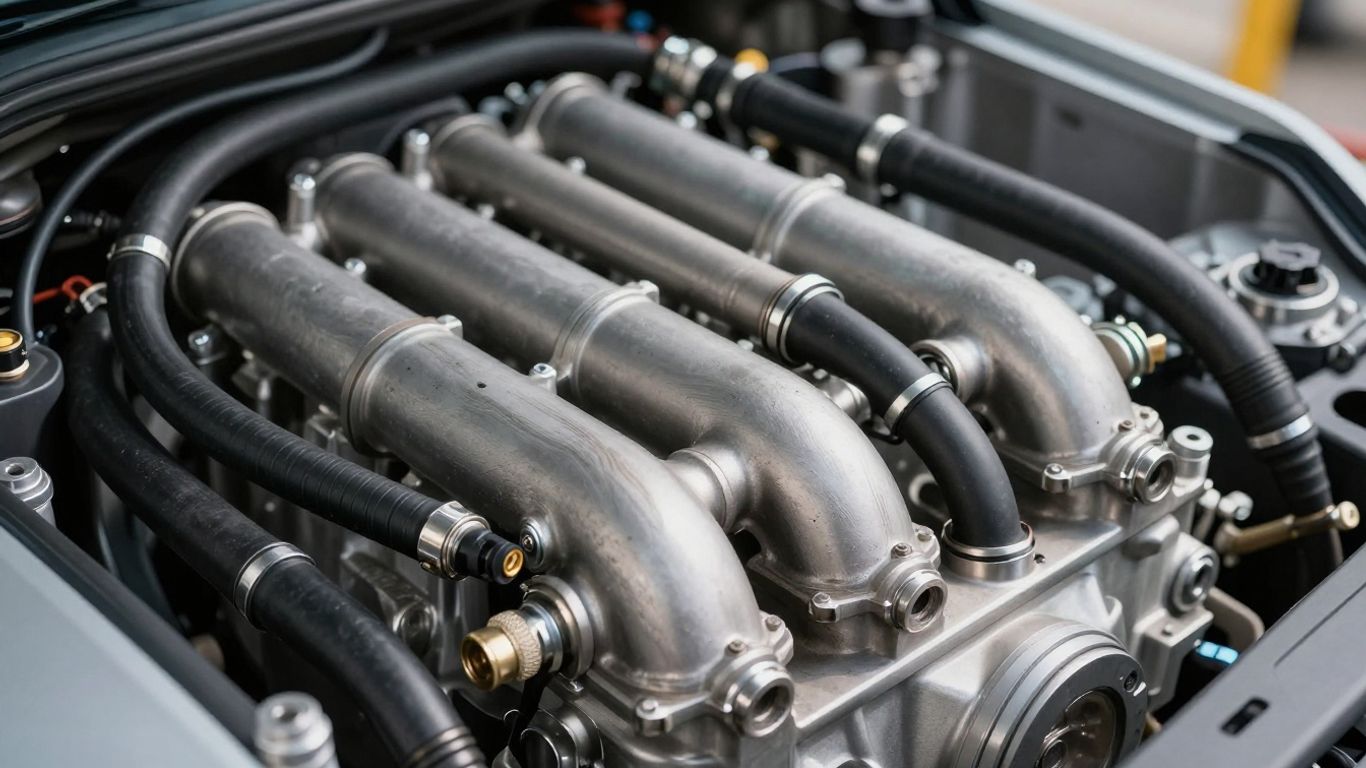
Modern fuel delivery relies on high-pressure injectors that spray precisely measured amounts of fuel directly into the combustion chamber or intake port. This controlled spray pattern ensures a rapid and complete burn of the fuel. By utilizing advanced fuel management, engines can maintain high performance while adhering to strict environmental standards.
Functionality of the intake manifold
The intake manifold distributes the incoming air-fuel mixture or air-only charge to the individual cylinders. Its design, including runner length, is tuned to maximize volume and velocity depending on the intended engine speed range. The manifold design acts as a bridge, ensuring each cylinder receives a consistent charge for balanced operation.
Air filter housing and mass airflow sensors
Air filtration is critical to preventing microscopic debris from scoring the cylinder walls or damaging delicate internal surfaces. Along with filtration, the system uses sensors to measure precisely how much air is entering the engine. Monitoring systems like those documented in this engine components guide help the computer adjust fuel injection levels in real-time.
| Sensor Type | Function | Location |
|---|---|---|
| Mass Airflow | Measure air mass | Post-filter |
| Throttle Position | Detect pedal input | Throttle body |
| Oxygen Sensor | Analyze exhaust | Exhaust pipe |
These sensors provide the essential data loops required for modern fuel efficiency.
Exhaust manifold and emissions control components
Once combustion is complete, the exhaust manifold gathers burnt gases and channels them toward the catalyst and tailpipe. Emissions control components, including catalytic converters, play a crucial role in reducing harmful output. This process ensures the vehicle remains street-legal while maintaining optimal power extraction from the exhaust pulses.
The role of cooling and lubrication systems
Heat management is the most significant challenge in maintaining a durable engine block. Friction, if left unchecked, would destroy essential metal parts in minutes. The lubricants and coolants work in tandem to pull heat away from critical areas, allowing the essential engine parts to function without failure.
How the water pump circulates engine coolant
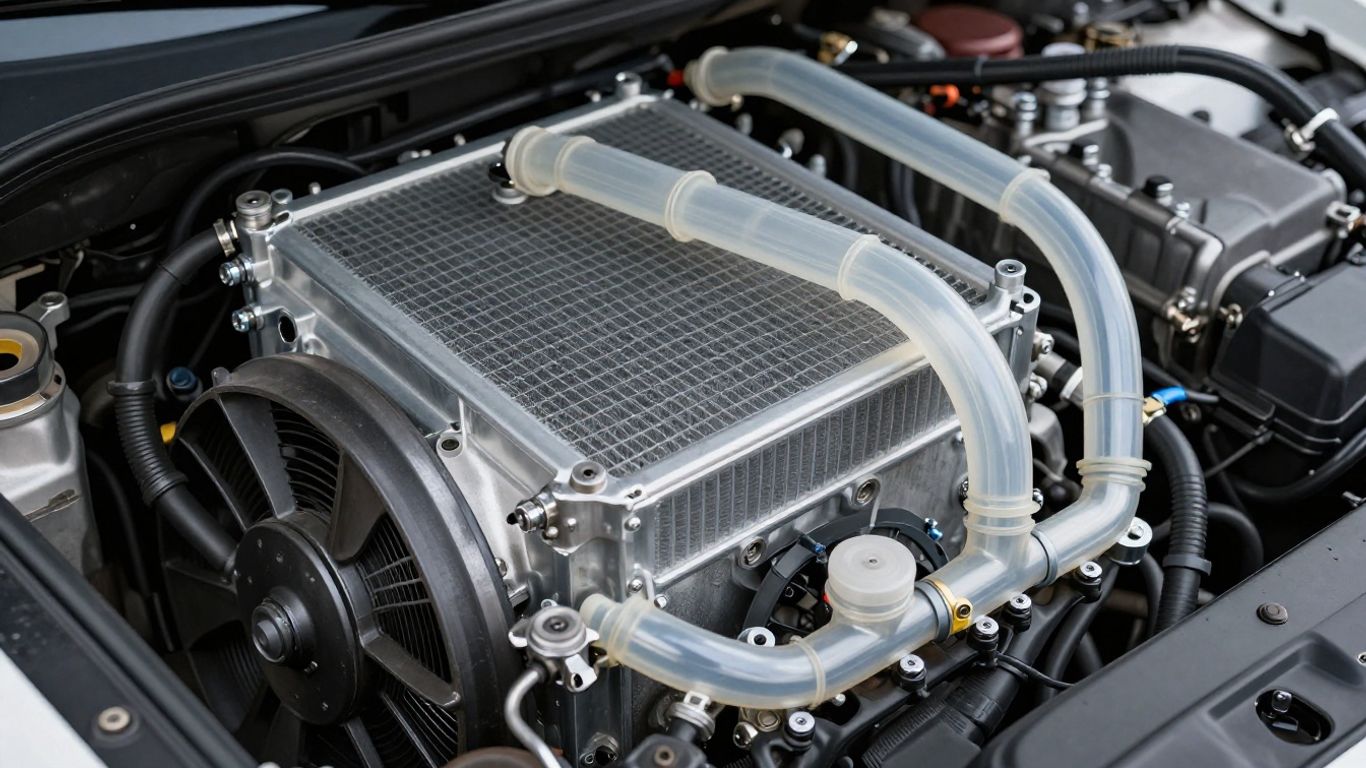
The water pump acts as the heart of the cooling system, continuously forcing coolant through the engine block and cylinder head. By drawing heat away from these metal masses, the liquid prevents overheating and maintains a stable operating temperature. The longevity of a water pump is vital for avoiding roadside emergencies.
Importance of oil pumps and filtration systems
Oil pumps generate the pressure needed to keep a film of oil between moving components, preventing direct metal-to-metal contact. This pressurized oil is cleaned via filters that strip metallic shavings and other impurities from the fluid path. Clean oil maintains the health of bearings, pistons, and camshafts across thousands of operating hours.
Radiators and thermostat operation
The radiator provides a large surface area where coolant sheds heat into the ambient air. A thermostat acts as the gatekeeper, regulating the flow between the engine and the radiator to help the motor reach its operating temperature quickly. This thermal regulation is essential for both fuel economy and reducing internal wear.
Cooling fans and thermal management
When the vehicle is idling or moving slowly, cooling fans pull fresh air across the radiator to maintain temperature control. This secondary airflow is vital when natural wind speed is insufficient to shed heat. If the fans fail to engage, the engine temperature can spike, potentially causing severe internal trauma.
Transmissions and drivetrain mechanical parts
Power generated by the engine must be efficiently transferred to the wheels through a series of gear sets and shafts. This drivetrain system is designed to provide the mechanical advantage required for acceleration and the stability needed for highway cruising. Without these mechanical links, the rotational engine force would remain stranded at the flywheel.
Internal gear sets in manual transmissions
Manual gearboxes use selected gear pairs and synchronizers to dictate the torque delivery to the wheels. Drivers manually engage these gears to manage the engine speed relative to the vehicle’s road speed. This tactile interaction is beloved by driving enthusiasts who value complete control over their gear selection.
Automatic transmission torque converters
Automatic gearboxes rely on a fluid coupling called a torque converter to transfer power from the crankshaft to the gears. This device allows the engine to keep spinning even when the vehicle is stationary. Some performance-oriented car engine components require locking features within the converter to maximize efficiency.
Driveshafts and axle assembly dynamics
Driveshafts connect the transmission output to the final differential, bridging the distance between center-mounted engines and the drive wheels. Axles then distribute that force to the hubs, providing the final link in the power chain. These steel rods must be balanced to prevent vibration at high rotational speeds.
Differential gears and power distribution
The differential allows the drive wheels to rotate at different speeds when turning or traversing uneven terrain. By redistributing torque between the driven wheels, it prevents damage to the drivetrain while ensuring stable traction. It is a critical component for both everyday handling and specialized off-road performance.
Essential electrical and sensor components
Modern vehicles are sophisticated computers on wheels, relying on an electrical nervous system to monitor performance. Each sensor provides data that tells the vehicle’s management software how to optimize the burn and transmission shift points. When one of these components fluctuates, the driver often notices an immediate change in engine responsiveness.
Spark plugs and ignition coil packs
Ignition systems provide the high-voltage electricity required for the spark plug to ignite the air-fuel mixture within the cylinder. Coil packs transform lower battery voltage into the thousands of volts needed to jump the plug gap. A strong, timed spark is the difference between a smooth-running engine and one that misfires under load.
Alternator function and charging circuits
The alternator provides continuous current to the vehicle’s battery and all electrical systems while the engine is running. Its charging circuit ensures that energy demands do not drain the battery during use. An alternator that provides stable output is necessary for keeping sensors and the main computer operational.
Engine control unit (ECU) communication
The ECU serves as the central brain, processing inputs from dozens of sensors to manage engine timing, fuel injection, and emission controls. Through a high-speed communication network, it ensures every system works in harmony. It is the core of modern diagnostics, providing fault codes when something deviates from the programmed norm.
Crankshaft and camshaft position sensors
These sensors track the exact speed and phase of the engine internals, telling the ECU precisely when to spark or inject fuel. By monitoring the rotation of the main engine components, the computer can safeguard against mistimed combustion. These parts are highly precise instruments that keep a high-speed engine in perfect sync.
Conclusion
Learning how these systems interact provides a deeper appreciation for the engineering that powers modern transportation, transforming an intimidating mechanical landscape into something accessible and manageable. By focusing on maintenance and understanding the function of major components, vehicle owners can ensure their machines run reliably for years to come, confirming that basic knowledge is the ultimate tool for any responsible driver.
Frequently Asked Questions
Why does the engine temperature rise unexpectedly?
An unexpected rise in temperature usually indicates a failure in the cooling system, such as a leaking radiator, a stuck thermostat, or a malfunctioning water pump that is no longer moving coolant effectively through the block.
How often should I perform routine engine maintenance?
Routine maintenance intervals vary by manufacturer, but most experts recommend changing the oil every 5,000 to 7,500 miles and inspecting critical components like belts and filters annually at a minimum.
What are the symptoms of a failing fuel injector?
A failing fuel injector often causes rough idling, misfiring under load, a noticeable drop in fuel economy, or the check engine light triggering due to an incorrect air-to-fuel ratio reported by exhaust sensors.
Why is the transmission shifting roughly or slipping?
Transmission issues often stem from low fluid levels, degraded fluid that has lost its viscosity, or physical wear on the internal clutches and gear sets within the torque converter or valve body.
How do modern sensors impact overall vehicle performance?
Sensors provide the vital data allow the central computer to adjust real-time parameters for air intake and fuel delivery, effectively maximizing efficiency and power while minimizing harmful tailpipe emissions.
Is it normal to hear ticking sounds from the valvetrain?
While some minor mechanical noise is normal, persistent ticking can indicate tight valve clearances, worn lifters, or low oil pressure, all of which require professional inspection to avoid long-term internal damage.
How does the alternator affect my car’s stability?
If the alternator fails to supply consistent voltage, individual sensors may trigger false errors or fail entirely, leading to erratic engine performance, lighting dimming, and potentially leaving the vehicle without power once the battery depletes.