

Key Takeaways
A sound replacement engine begins with precise identification, not the lowest advertised price. Check the engine code, inspect its history, confirm fitment, and calculate the complete installed cost before paying.
- Record the vehicle identification number, engine code, and transmission details.
- Compare complete engines with long blocks and account for missing accessories.
- Ask for mileage, testing evidence, service records, and written warranty terms.
- Confirm sensors, wiring, mounts, and related components before shipment.
- Use qualified technicians and replace routine wear parts during installation.
Understand your Chery engine replacement needs
Replacing an engine is a matching exercise as much as a purchasing decision. A listing that says it fits a Chery model may still refer to a different engine variant, transmission arrangement, or electronic setup. Before searching for used Chery engines for sale, collect the vehicle details that allow a seller to identify the correct assembly.
Identify your Chery model and engine variant
Start with the exact model, model year, market, body style, and fuel type. The same nameplate can use more than one engine, and vehicles built for different markets may have different emissions equipment or wiring. Photograph the engine label and record the displacement, cylinder count, and any number stamped on the block rather than relying on memory.
The vehicle identification number is useful, but it should not be the only reference. Your repair shop may also have the original engine number, and the service paperwork can reveal whether the engine has already been replaced. Those details make an initial inquiry far more productive.
Compare engine codes and compatibility details
An engine code is usually more useful than a general description such as “1.6-liter Chery engine.” Compare the code, displacement, fuel system, cylinder head arrangement, and the intended transmission. A similar-looking engine may require different sensors, brackets, software, or accessory drives.
Make a short comparison sheet before contacting sellers. Include the original code, the requested replacement code, the transmission type, and any components that must be transferred from your current engine. Exact identification saves money because it reduces the chance of buying an assembly that cannot be installed without expensive modifications.
Decide between a complete engine and a long block
A complete engine normally includes more external equipment, while a long block generally centers on the block, cylinder head, and internal components. The terminology is not perfectly consistent between sellers, so ask for a component-by-component list. Confirm whether the intake, exhaust manifold, injectors, alternator, starter, sensors, flywheel, and compressor are included.
A long block can be sensible when your existing accessories are known to be good and the mechanic can transfer them. A complete assembly may shorten the work if the original engine suffered extensive damage, but it can also include parts that do not match your vehicle. The right choice depends on condition, labor, and verified compatibility.
Assess your budget, timeline, and installation requirements
Set a budget that includes more than the engine itself. Removal, installation, fluids, filters, seals, shipping, taxes, diagnostic work, and possible core charges can change the final figure substantially. Ask the workshop how long it expects the vehicle to remain unavailable and whether special tools or programming will be needed.
A cheap engine that arrives late can be more expensive than a slightly higher-priced unit with clear documentation and dependable dispatch. Build some time into the plan for inspection on arrival, since damage or an incorrect part should be reported before installation begins.
Know where to find used Chery engines for sale
The best source depends on how much information you need and how quickly you need it. Salvage yards may provide a donor vehicle and visible context, while specialist dealers may offer testing records or a defined warranty. Online marketplaces widen the search, but they also make it easier for vague listings to pass as precise ones.
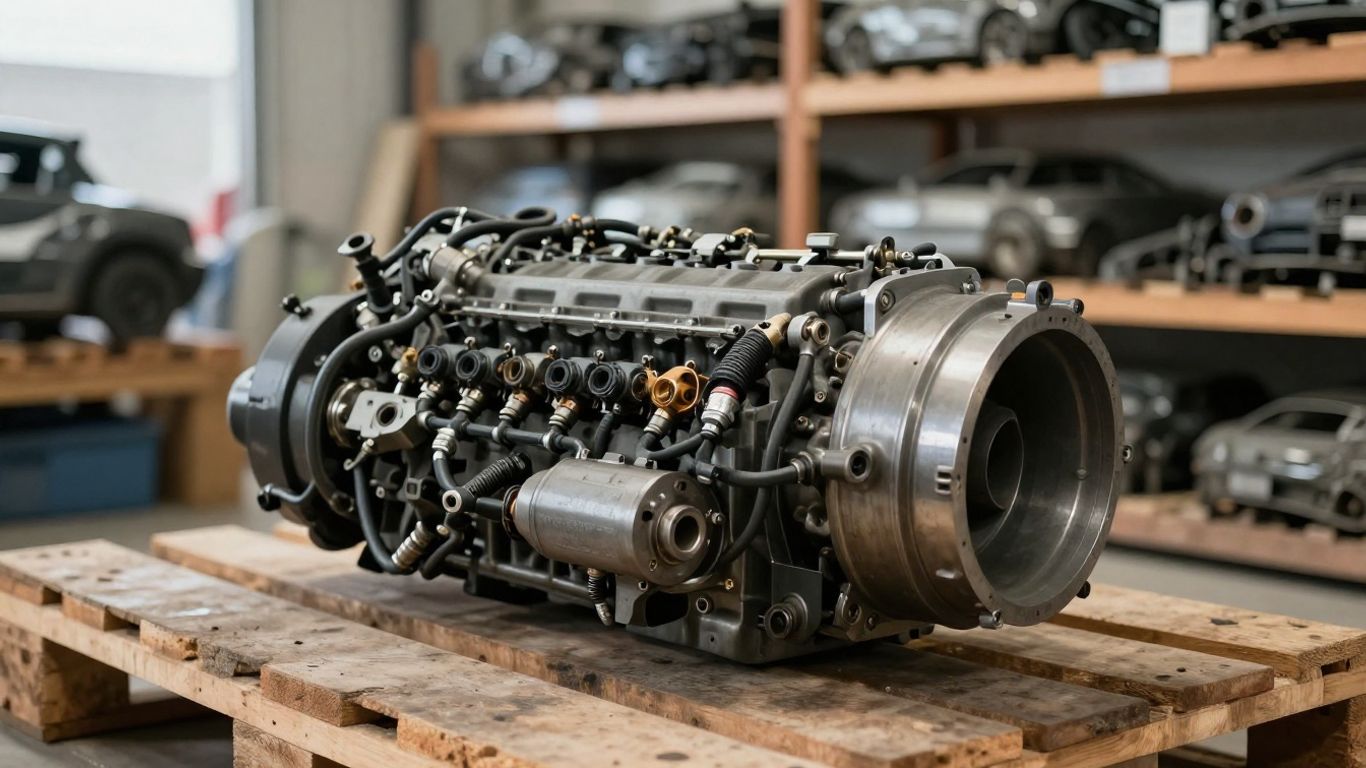
Compare salvage yards, specialist dealers, and online marketplaces
A salvage yard can tell you the donor vehicle, approximate mileage, and whether the engine was running before dismantling. A specialist dealer may offer more standardized inspection and packing. A marketplace can expose you to more stock, although the buyer must examine the seller’s evidence and terms carefully.
When comparing sources, consider how each one handles identification, testing, returns, and damage in transit. A listing is only the starting point. For broader supplier research, used Chery engines in South Africa can be a useful comparison point, while the source describing Chinese engine suppliers may help when exploring international options.
Check local and international supplier options
Local purchasing can simplify inspection, collection, returns, and communication with the installer. International sourcing may offer a larger selection, but customs, currency conversion, freight damage, and warranty logistics need to be understood first. Ask whether the quoted price includes export packing and whether the seller can provide the documents required by your destination.
Do not assume that a supplier’s location proves that the engine came from a particular market. Request the donor vehicle details, photographs of identification marks, and a shipping estimate to your exact address. This is also where Chery International may serve as a background reference for checking general vehicle and market information, rather than as proof that a particular used engine will fit.
Evaluate seller experience with Chery vehicles
Experience matters when the seller can explain engine codes, common interchange questions, and the difference between a bare engine and a complete assembly. A knowledgeable seller should answer specific questions without changing the description from one message to the next.
Look for a physical business identity, clear contact details, consistent stock descriptions, and written policies. Be cautious when a seller refuses to share an engine number, gives only generic photographs, or pushes for payment before confirming fitment. A confident sales tone is not a substitute for evidence.
Request stock information before making an inquiry
Send a concise request that includes your vehicle identification number, model year, engine code, transmission, location, and the parts you need included. Ask for the donor mileage, test status, warranty, price, shipping method, and return conditions. This gives different sellers the same brief and makes their replies easier to compare.
A simple request should also ask whether the unit is available now or merely expected. Keep the replies together with the photos and quoted terms. That record can resolve misunderstandings later, especially when several visually similar engines are being discussed.
Inspect the condition of a used Chery engine
Used engines vary widely because their past work, storage, and removal methods differ. Mileage is useful, but it does not tell the whole story; service history, oil condition, compression results, and the donor vehicle’s circumstances add context. Treat every claim as something to verify before installation.
Review mileage, service history, and vehicle origin
Ask how the mileage was obtained and whether it belongs to the donor vehicle or the engine itself. A written service history may show oil-change intervals, overheating repairs, timing-belt work, or a previous rebuild. The donor vehicle’s accident history can also matter: a front-end impact may damage accessories or mounts even when the block appears intact.
Ask why the vehicle was dismantled and how long the engine has been stored. Long storage does not automatically make an engine unusable, but it increases the value of careful inspection and fresh seals. If the history is incomplete, price the unit as a higher-risk purchase rather than treating the missing information as neutral.
Check compression, oil condition, and visible wear
If possible, request compression readings for each cylinder and ask how the test was performed. Uneven results deserve an explanation, particularly when the seller describes the engine as tested. Inspect the oil for coolant traces or metallic debris, and look for cracks, damaged threads, corrosion, leaks, and broken mounting points.
A photograph can reveal external damage, but it cannot confirm internal clearances or bearing condition. Ask which components were inspected and whether the engine was turned by hand or run under load. The more specific the answer, the easier it is for your technician to judge the risk.
Ask whether the engine has been tested or refurbished
“Tested” and “refurbished” are not interchangeable descriptions. Ask whether the engine was started, compression-tested, leak-tested, or disassembled. If it was refurbished, request the scope of the work, the parts replaced, and any measurements recorded during assembly.
A rebuilt unit may have different warranty terms from a used, unrebuilt unit. Make sure the invoice uses the same description as the listing and states what is included. If the seller cannot explain the test process, do not assume that a clean exterior means the engine has been mechanically verified.
Understand photos, inspection reports, and video evidence
Photos are most useful when they show the engine number, all sides of the block, mounting points, ports, connectors, and included accessories. Ask for current photographs rather than catalogue images. A short running video can add context, but it should not replace written test results or a physical inspection.
Use the evidence to create questions, not to declare the engine sound. For example, a video may show that an engine starts, while saying nothing about oil pressure, smoke after warm-up, or compression balance. If the report and images disagree, pause the purchase until the seller clarifies the discrepancy.
Verify fitment before you buy
Fitment problems often appear after delivery, when returning a heavy engine is difficult and installation time has already been booked. Compare the replacement with the original in mechanical and electronic detail. A model-level match is helpful, but the engine number and surrounding components provide stronger evidence.
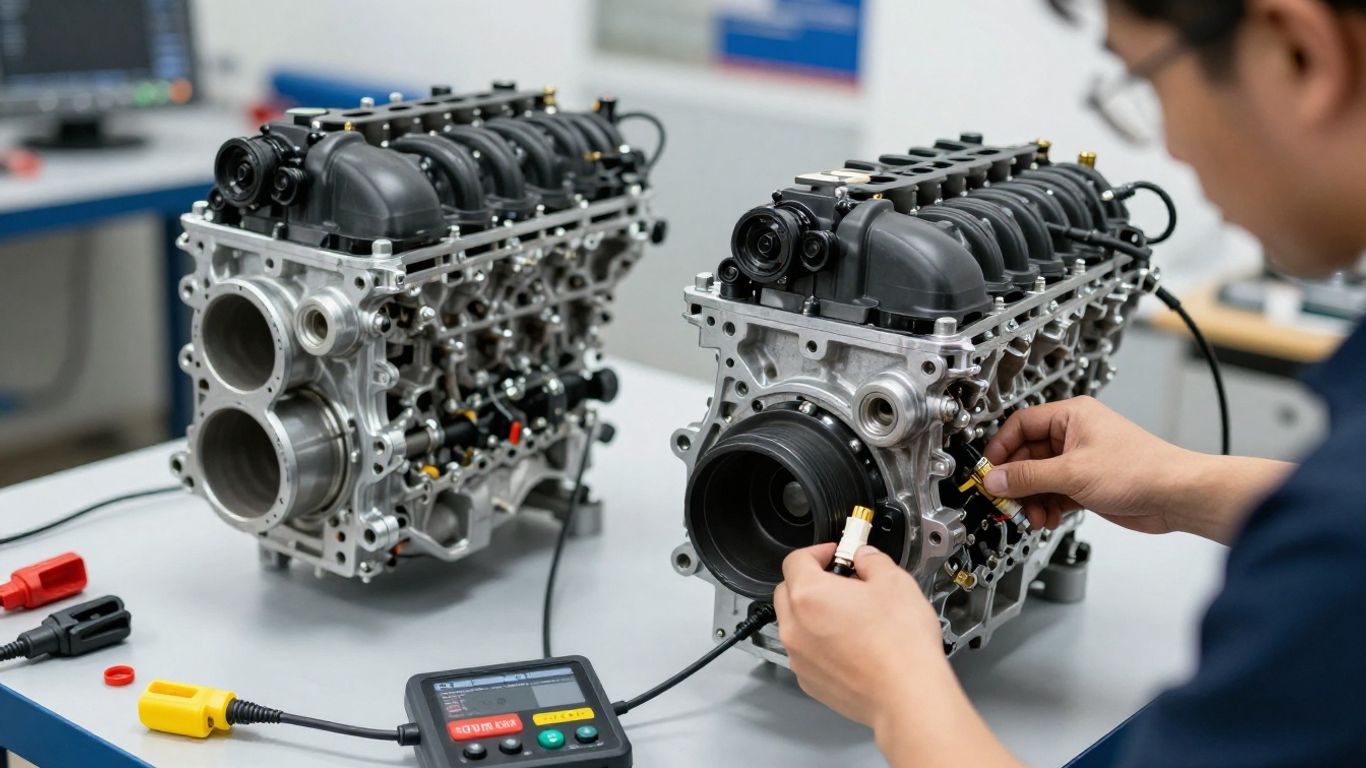
Match the engine number and transmission configuration
Confirm the exact engine number with the seller and compare it with your vehicle’s original unit. Then check whether the replacement was paired with a manual or automatic transmission and whether the bellhousing pattern, flywheel, clutch, and starter position correspond to your vehicle.
Do not rely on displacement alone. Two engines with the same capacity may differ in mounting points, crank sensors, oil pans, or transmission interfaces. Ask your technician to review the photographs and number before you authorize shipping.
Confirm sensors, wiring, and electronic compatibility
Modern engine swaps can fail at the electronics stage even when the block physically fits. Compare crankshaft and camshaft sensors, throttle equipment, injectors, oxygen sensors, engine control modules, and wiring connectors. Find out which components are included and which must be transferred from the original engine.
The replacement may need programming, adaptation, or diagnostic checks after installation. Ask who will perform that work and whether it is included in the estimate. A seller who confirms only the mechanical fit has not necessarily confirmed the complete installation.
Compare intake, exhaust, and accessory components
Inspect the intake and exhaust port arrangement, manifold mounting, throttle body, alternator brackets, air-conditioning compressor, power-steering equipment, and cooling connections. These parts can make a nominally compatible engine difficult or costly to install.
A useful way to avoid surprises is to compare photographs side by side with the removed engine. List every difference, then decide whether it is a simple component transfer or a genuine incompatibility. This step is especially valuable when buying a bare or long-block assembly.
Use your vehicle identification number for final verification
Send the vehicle identification number to the seller and your installer, but ask each party to confirm what it verifies. The number can help identify the vehicle specification; it does not excuse checking the engine code, transmission, and electronic equipment. Keep the written confirmation with the purchase documents.
If the seller gives a guarantee based on the identification number, ask what happens if the part still arrives incorrect. Clarify whether return freight is covered and whether the engine must remain uninstalled for a claim. Fitment should be settled before payment, not negotiated after delivery.
Compare pricing, warranties, and total costs
The advertised engine price is only one line in the replacement budget. Two units with similar prices may differ greatly in testing, included parts, warranty coverage, and freight arrangements. Compare them on an equivalent basis, using the same assumptions for labor and consumables.
Break down the advertised engine price
Ask whether the price is for a complete engine, long block, bare block, or an exchange unit. Check for core charges, refundable deposits, included accessories, and separate fees for testing or preparation. Also confirm whether the advertised price is current and whether taxes are added at checkout.
A transparent quote should identify the engine code, mileage, condition, included components, and dispatch terms. If a seller will not itemize the offer, it is difficult to compare it fairly with another quotation. The lowest headline figure may simply exclude more parts.
Calculate shipping, taxes, and installation expenses
Estimate freight for the engine’s actual packed weight and destination, not just a generic shipping charge. Add customs duties, brokerage, local delivery, storage, and possible damage inspection. Your installer can then estimate removal, installation, fluids, filters, seals, programming, and troubleshooting.
The following table can help organize a like-for-like comparison:
| Cost area | Questions to ask | Why it matters |
|---|---|---|
| Engine unit | What assembly and parts are included? | Prevents missing-component surprises |
| Freight | Is packing, insurance, and delivery included? | Heavy parts can incur significant extra charges |
| Workshop labor | What removal, installation, and diagnosis are covered? | Labor can exceed the price difference between engines |
| Consumables | Which seals, fluids, filters, and belts are new? | Old service items can undermine a fresh installation |
Use the completed total, not the listing price, when comparing offers. A slightly more expensive unit may be the better value if it arrives with stronger evidence and fewer unknowns.
Review warranty length and coverage conditions
Read the warranty before purchase and identify the start date, covered internal parts, labor limits, exclusions, and claim process. Some warranties require professional installation, documented oil pressure, or proof that the cooling system and related parts were serviced. Others exclude overheating, neglect, modified vehicles, or transferred ownership.
Ask whether a replacement unit or refund is offered when a valid claim is accepted. Keep invoices, installation records, diagnostic results, and photographs from delivery. A warranty is useful only when its conditions are realistic and the seller can be reached.
Compare return policies for incorrect or damaged parts
An incorrect engine should be reported promptly, preferably before it is installed or altered. Check the inspection window, return authorization process, packaging requirements, and responsibility for return freight. For transit damage, photograph the crate and engine before unpacking fully and notify the carrier and seller according to their instructions.
Do not assume that a return policy covers an engine that has been fitted and then found incompatible. Ask about restocking fees and whether the core deposit is held until the returned part is received. Written terms are safer than a verbal promise made during a sales call.
Complete the purchase and installation safely
Once the engine is selected, the work is not finished. The handoff from seller to workshop determines whether the replacement can be installed, documented, and supported if a problem appears. Plan the inspection, installation, and first test together rather than treating delivery as the final step.
Ask the seller for written documentation
Request an invoice showing the engine code, donor mileage, condition, included parts, test results, warranty, and delivery details. Save the listing, messages, photographs, and payment receipt in one folder. This paperwork gives the technician a reference and gives you evidence if the delivered unit differs from the agreement.
If the engine has a core-return requirement, record the deadline and the acceptable condition of the returned core. Ask how to label the shipment and who pays the freight. Small administrative details can become expensive when they are left until after installation.
Use qualified technicians for removal and installation
Choose a technician familiar with engine replacement and electronic diagnosis. Before work begins, have the technician compare the delivered engine with the original and document any discrepancy. The workshop should follow the vehicle manufacturer’s procedures where applicable and use the correct torque settings, fluids, and diagnostic equipment.
A qualified installation also helps protect the warranty. Do not pressure the mechanic to skip inspection simply because the vehicle has already been off the road for several days. A careful pause before fitting is usually cheaper than removing an incorrect engine later.
Replace seals, fluids, filters, and related wear parts
The installer should assess rear and front seals, gaskets, belts or chains, filters, spark plugs or glow plugs, coolant, engine oil, and transmission fluid as appropriate. Hoses, mounts, the thermostat, water pump, clutch, and accessory belts may also deserve inspection depending on their condition and accessibility.
Replace only what is justified by the vehicle and the technician’s findings, but do not reuse cheap service items simply because they are already present. A fresh engine installation is an efficient time to address parts that would otherwise require another labor charge soon afterward.
Test the engine and monitor performance after installation
Before the first road test, check fluid levels, leaks, warning lights, abnormal noise, belt tracking, and cooling-system operation. Confirm that the engine reaches normal temperature and that diagnostic codes are read rather than ignored. A short, controlled test can reveal issues before the vehicle returns to regular use.
For the first several drives, monitor oil and coolant levels, smoke, starting behavior, idle quality, temperature, and unusual vibration. Follow the seller’s break-in instructions if the engine was rebuilt, and keep a written record of observations. Prompt reporting improves the chance of resolving a genuine fault within the warranty period.
Conclusion
Choosing a used Chery engine is a process of reducing uncertainty: identify the exact unit, inspect its evidence, confirm every fitment detail, compare the complete cost, and install it with proper documentation. Patient checking before payment is usually far less costly than correcting a mismatch after delivery.
Frequently Asked Questions
Is mileage the most important factor when choosing a used Chery engine?
No. Mileage matters, but service history, compression, oil condition, storage, donor vehicle history, testing evidence, and warranty terms can be equally important. A well-documented higher-mileage unit may be a safer choice than one with an unsupported mileage claim.
What information should I send when asking for an engine quote?
Send the vehicle identification number, model year, exact model, engine code, fuel type, transmission, location, and whether you need a complete engine or long block. Include photographs of the original engine number and any unusual connectors or mounts.
What does a long block usually include?
A long block generally includes the main block, cylinder head, and internal engine components, but seller definitions vary. Confirm the exact inclusions in writing, especially manifolds, injectors, sensors, flywheel, starter, alternator, and other accessories.
Can a similar-displacement engine be used as a replacement?
Not necessarily. It may differ in mounting points, transmission interface, electronics, sensors, intake, exhaust, or emissions equipment. Compatibility should be confirmed by engine code and vehicle specification, not displacement alone.
Should I buy a tested or refurbished engine?
Either can be suitable if the description is specific and supported. Ask what tests were performed, what parts were replaced, who completed the work, and what the warranty covers. “Refurbished” without a defined scope does not provide enough information.
What should I do when the engine arrives damaged?
Photograph the packaging and engine before installation, note the damage on delivery paperwork when possible, and notify the carrier and seller promptly. Keep all packaging and follow the written claim or return procedure.
How can I protect the engine replacement warranty?
Use qualified technicians, follow the stated installation requirements, retain invoices and diagnostic records, and document fluid and filter changes. Ask about any required oil-pressure readings, cooling-system work, programming, or break-in procedure before installation.