

Key Takeaways
A sound replacement starts with identification, measurement, and a realistic budget rather than a low advertised price.
- Confirm the Chery model, production year, engine code, and displacement.
- Establish whether the listing is for a bare block, short block, or complete assembly.
- Ask for measurements, inspection photographs, and evidence of the engine’s source.
- Add machining, parts, shipping, taxes, and installation to the purchase price.
- Put warranty, returns, and import requirements in writing before payment.
Understand what a second hand Chery engine block includes
The phrase second hand Chery engine blocks can describe several levels of completeness. A listing may contain only the cast block, a partially assembled short block, or a larger assembly with internal parts already fitted. Those differences affect both price and the work still waiting at your machine shop.
Bare blocks, short blocks, and complete assemblies
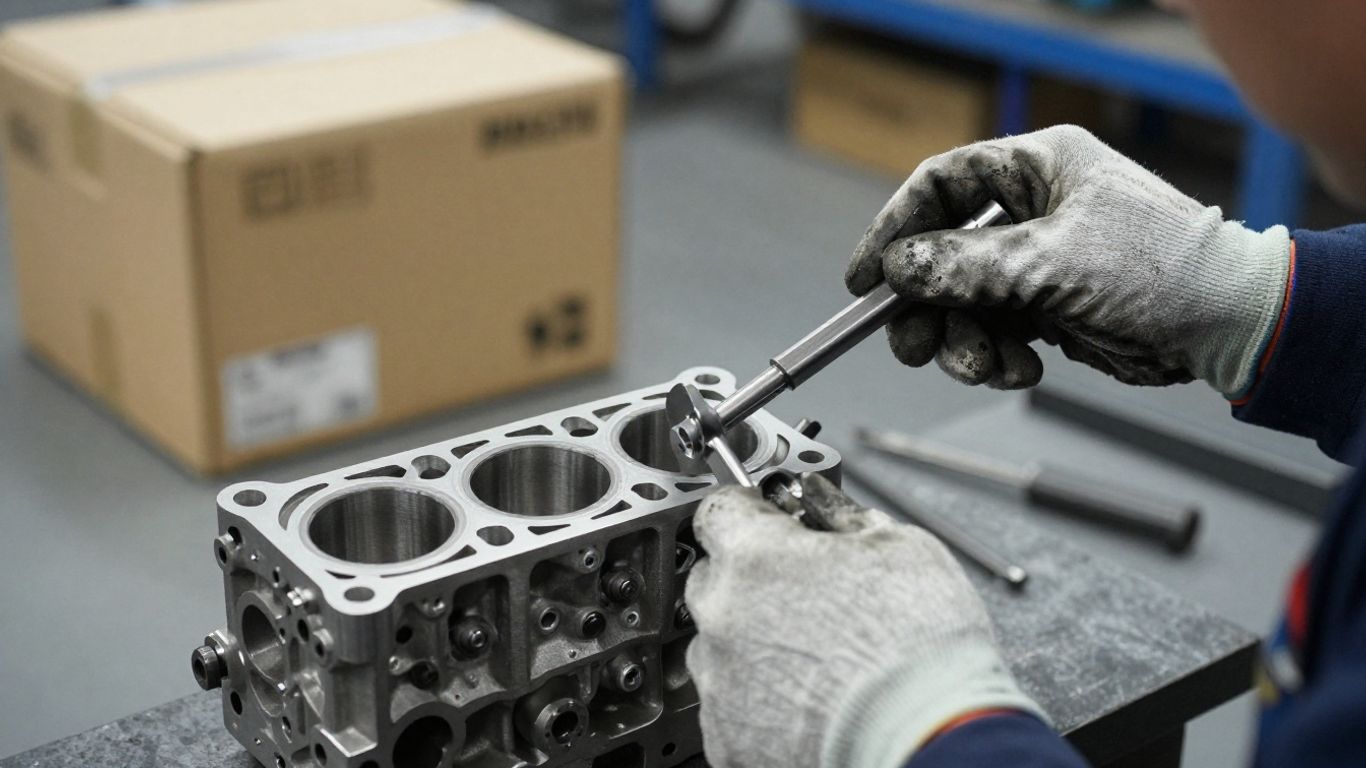
A bare block generally means the casting without the crankshaft, pistons, connecting rods, or cylinder head. A short block normally includes the block and selected rotating parts, while a more complete assembly may include additional internal components. Read the inventory line by line; photographs alone can make a stripped block look more complete than it is.
Common Chery engine block materials and configurations
Engine blocks may use cast iron or aluminum, with design details varying by engine family and application. Pay attention to cylinder arrangement, deck design, bore spacing, mounting bosses, and the locations of oil and coolant passages. The block’s material also influences machining choices, inspection methods, and the final rebuild plan.
How the block differs from a complete used engine
A used engine may arrive with accessories, intake or exhaust components, sensors, wiring, and a cylinder head, but the exact contents vary by seller. A block is a foundation, not a ready-to-install power unit. Before comparing offers, write down which parts from your original engine can be reused and which must be sourced separately.
Why the original engine code matters
The engine code is more precise than a model name and often more useful than displacement alone. It helps the seller identify the correct casting and lets a technician compare crankshaft, cylinder head, and mounting details. If the code is unreadable, request a clear photograph of the identification mark before sending money.
Match the engine block to your Chery vehicle
Compatibility should be established before condition or price becomes the focus. Two vehicles carrying a similar badge may use different engine versions, transmissions, electronics, or mount locations. Gather your vehicle identification number, registration details, production date, and original engine information first.

Identify the exact Chery model and production year
Record the full model designation, body style, market, and production year rather than relying on a shortened name in a marketplace listing. Facelifts and regional variants can introduce different powertrains. A dismantler should be able to connect the offered block to a donor vehicle or a traceable stock reference.
Verify the engine code and displacement
Compare the code stamped or cast on the offered block with your service records and the original unit. Displacement is a useful screening detail, but it does not prove interchangeability. Also check cylinder count, fuel type, induction arrangement, and the specification used in your market.
Check compatibility with the cylinder head and crankshaft
A replacement block must work with the cylinder head and crankshaft you intend to use. Check deck height, head-bolt pattern, oil-feed locations, bearing sizes, and crank dimensions. If the seller cannot provide these details, have a machinist compare the parts before treating the block as compatible.
Confirm transmission, fuel system, and mounting requirements
The block may physically fit while still creating problems with the transmission bellhousing, engine mounts, sensors, or fuel system. Confirm the location of mounting bosses and accessory brackets, as well as the provisions for the intended intake, exhaust, and emissions equipment. Compatibility is a complete system question, not simply a question of whether the casting fits between the fenders.
Inspect the condition before buying
A used block should be assessed as a machined component, not as an attractive photograph. Surface cleanliness can hide cracks, corrosion, worn bores, or damage from a previous rebuild. Ask for inspection evidence and, where possible, make the purchase conditional on an independent examination.
Look for cracks, warping, and corrosion
Inspect the deck, cylinder walls, main-bearing areas, freeze-plug openings, and external mounting points. Cracks near coolant passages or bolt holes deserve particular caution, while heavy rust can indicate poor storage or water exposure. Dye penetrant, magnetic-particle, or pressure testing may be appropriate depending on the material and suspected fault.
Measure cylinder bores and bearing surfaces
Visual inspection cannot establish bore taper, out-of-round wear, or the condition of main-bearing tunnels. Request recorded measurements from a calibrated bore gauge and micrometers, including standard references where available. Measured condition beats appearance when deciding whether a block is a sensible rebuild candidate.
Check the deck, threaded holes, and coolant passages
A straightedge and feeler gauge can reveal deck distortion, but a proper machine-shop inspection is more reliable. Check damaged threads, missing plugs, pulled fasteners, and blocked coolant passages. Small repairs may be manageable; widespread damage can quickly exceed the value of the original purchase.
Review signs of overheating or previous machining
Discoloration, localized cracking, uneven deck cuts, oversized bores, and unusual bearing wear can point to overheating or earlier repair work. Ask what machining has already been performed and why. A block that has been bored or line-honed may still be useful, but its current dimensions must be documented.
Evaluate suppliers and vehicle history
The seller’s process often tells you as much as the part itself. A professional listing should identify the component, explain what was tested, and state what is included. Treat vague descriptions, stock photographs, and pressure to pay immediately as reasons to slow down.
Compare dismantlers, rebuilders, exporters, and private sellers
Dismantlers may provide donor-vehicle information, rebuilders may offer measured and machined parts, exporters may simplify international shipping, and private sellers may have less documentation. None is automatically the best choice. Compare the evidence, services, packaging, and support included with each offer.
Request clear photos, test results, and identification details
Ask for photographs of every side of the casting, the identification mark, deck, bores, bearing saddles, and threaded holes. Request compression or pressure-test information only when it actually applies to the listed assembly. For broad marketplace searches, a Chery engine inventory may help you compare descriptions, but each individual listing still needs verification.
Verify mileage, removal source, and service history
Mileage is useful only when it is tied to a credible donor record. Ask whether the block came from a running vehicle, a collision-damaged vehicle, or an engine that had already failed. Service invoices, teardown photographs, and the stated reason for removal can reveal more than a seller’s mileage estimate.
Check seller reputation and export documentation
Review transaction history, dispute procedures, business registration, packaging standards, and references from buyers in your region. Exported parts may also require accurate invoices, harmonized tariff information, origin details, and customs paperwork. A supplier directory described as Chery Tiggo block suppliers can broaden the search, but directory inclusion is not a guarantee of quality.
Some online pages encountered during research may concern unrelated purchases, such as hair growth oil, Camperig trekking poles, or the Urtopia Chord e-bike. They do not establish engine compatibility or supplier reliability, so keep automotive evidence separate from general shopping content. Likewise, SMS copywriting tips and a phentermine guide have no bearing on a mechanical inspection and should not be treated as automotive sources.
Calculate the real cost of a used Chery engine block
The advertised price is only the first line in the budget. A bargain block may need machining, internal parts, special packaging, and a long-distance return if the identification is wrong. Build the estimate before buying so that a used component can be compared fairly with rebuilding your existing block or purchasing a more complete assembly.
Compare the purchase price with rebuilding costs
Ask a machine shop to estimate cleaning, crack testing, boring, honing, decking, line honing, and any sleeve work. Then compare that figure with the cost of a verified block that is already within usable limits. The least expensive listing is not necessarily the least expensive route once labor and failed parts are included.
Include shipping, customs, taxes, and handling fees
International freight may involve crating, insurance, port charges, brokerage, storage, and local delivery. Customs treatment can differ according to whether the shipment is a bare casting, an engine assembly, or a remanufactured component. Request a delivered-cost estimate in writing rather than relying on a product-page price.
Budget for machining, gaskets, bearings, and replacement parts
A rebuild budget should cover the parts that cannot be judged until teardown and measurement. A practical allowance commonly includes seals, bearings, gaskets, fasteners where specified, plugs, fluids, and any damaged sensors or brackets. Keep a contingency for discoveries made after cleaning.
Assess warranty coverage and return conditions
Find out whether the warranty covers the block only or the complete installed engine, and whether machining voids coverage. Clarify the time limit, proof required for a claim, freight responsibility, and acceptable evidence of failure. A written return process is especially valuable when the seller and buyer are in different countries.
Prepare for installation and rebuilding
A replacement block should enter the workshop with a documented plan. The technician needs the block’s measurements, the intended piston and bearing sizes, and the specifications for the cylinder head and crankshaft. This preparation prevents the common mistake of assembling around assumptions made from a marketplace description.
Decide which components should be replaced
Replace worn or doubtful components rather than transferring them automatically from the failed engine. Inspect the crankshaft, rods, pistons, oil pump, timing components, fasteners, seals, and core plugs according to the engine’s condition and repair requirements. Reusing a part is a technical decision based on measurement, not on how clean it looks.
Have the block professionally cleaned and machined
A machine shop can remove sludge and corrosion, inspect hidden surfaces, and establish whether machining is needed. Cleaning should precede final measurement because deposits can distort readings. Keep a written record of bore sizes, deck condition, main tunnel dimensions, and any oversize or undersize parts selected.
Match tolerances to Chery repair specifications
Use the applicable repair manual and specification data for clearances, surface finishes, torque values, and assembly sequences. Do not substitute generic tolerances simply because the block looks similar to another four-cylinder design. Every selected bearing, piston, and gasket must agree with the measured block and crankshaft.
Use qualified technicians for assembly and testing
Engine assembly requires clean working conditions, calibrated tools, and careful verification of oil and coolant passages. After assembly, the technician should follow a controlled startup and testing procedure, checking leaks, oil pressure, temperature, and abnormal noise. A qualified workshop is often cheaper than correcting contamination or incorrect clearance later.
Avoid common buying mistakes
Most costly mistakes happen before the block reaches the workshop. Buyers accept a familiar model name, overlook missing measurements, or assume that a low price compensates for uncertainty. A short verification routine protects both the repair budget and the time invested in installation.
Choosing by model name without checking the engine code
A model badge is a starting point, not a part number. Confirm the engine code, displacement, production period, and market specification against the offered casting. If any of those details conflict, pause the transaction until a technician or parts specialist resolves the difference.
Ignoring measurements and inspection reports
A seller’s statement that a block is “good” does not replace bore, deck, and bearing measurements. Ask who performed the inspection, what tools were used, and whether the figures are before or after machining. Missing evidence should be reflected in the price or treated as a reason to walk away.
Buying a low-priced block with hidden damage
Unusually cheap parts may have cracked castings, damaged threads, seized fasteners, or dimensions beyond the next available repair size. Include inspection and return costs in the comparison. If the seller refuses close-up photographs or independent testing, the apparent saving is mostly risk.
Overlooking local regulations and import requirements
Before ordering across borders, check customs rules, environmental requirements, documentation, and restrictions on used automotive parts. The correct paperwork can affect clearance time and total cost. A compliant shipment is easier to insure, receive, and return than one described vaguely on the invoice.
Failing to confirm the return and warranty policy
Get the policy before payment, including the definition of a defective part and the steps for reporting a problem. Confirm whether the block may be inspected or machined before a return is accepted. Keep the listing, photographs, messages, invoice, and inspection report together as part of the purchase record.
Conclusion
Choosing second hand Chery engine blocks is a process of matching identification, measured condition, supplier evidence, and total cost. When those four pieces agree, a used block can be a practical foundation for a careful rebuild; when one is missing, a cheap purchase can become an expensive delay.
Frequently Asked Questions
Is a bare engine block ready to install?
No. A bare block normally requires cleaning, inspection, measurement, and often machining before internal components can be assembled. It also lacks many parts needed for a complete engine installation.
How can I confirm that a used block fits my vehicle?
Compare the engine code, displacement, production year, market specification, mounting points, cylinder head pattern, crankshaft dimensions, and transmission interface. Have a technician verify the match when records are incomplete.
What measurements matter most during inspection?
Cylinder-bore diameter, taper, out-of-round wear, deck flatness, main-bearing tunnel condition, and crankshaft journal dimensions are key measurements. The correct limits come from the applicable repair specifications.
Should I buy a short block or a bare block?
A short block may reduce assembly work, but only if its included parts, measurements, and specifications are documented. A bare block can offer more control, though it may require additional machining and components.
Is mileage enough to judge a used engine block?
No. Mileage is useful context but does not show whether the engine overheated, lacked lubrication, or was previously machined. Condition reports and measurements are more reliable indicators.
What should an engine-block warranty cover?
The policy should state the covered component, claim period, exclusions, inspection requirements, labor terms, and responsibility for return freight. Confirm whether machining or assembly changes the coverage.
What costs are easy to forget when importing a block?
Commonly missed costs include crating, insurance, brokerage, customs charges, taxes, storage, local delivery, currency conversion, and return freight. Add them before comparing the offer with a local rebuild.