

Key Takeaways
A recycled cylinder head can be a sensible repair option, but only when its identity, condition, and included components are confirmed before purchase.
- Match the head to the exact engine code, not just the vehicle badge.
- Ask for evidence of crack testing, pressure testing, and machining.
- Confirm whether the listing is for a bare head or a complete assembly.
- Add gaskets, bolts, fluids, freight, and labor to the advertised price.
- Treat installation details and post-repair monitoring as part of the purchase decision.
Understanding recycled Chery cylinder heads
Recycled Chery cylinder heads come from engines or vehicles that have already been in service and are being returned to the parts market. The term describes the part’s origin, not a guaranteed level of preparation. One head may be sold as removed, while another may have been cleaned, measured, pressure-tested, and machined. That difference is why the description and inspection history matter as much as the price.
What “recycled” means in the automotive parts market
A recycled head is generally a previously used casting recovered for another repair. It may retain its original valves and springs, or it may be sold without internal hardware. Reuse can reduce waste and provide access to an otherwise difficult-to-source part, but it does not remove the need for identification and testing. A careful buyer asks what work was actually performed rather than treating “recycled” as a quality grade.
The broader used-parts market includes everything from dismantled components to inspected assemblies. A used parts sourcing guide can provide useful background on how dismantling and reuse fit into that market, but a supplier’s own report still needs to support the specific head being offered.
Used, refurbished, and remanufactured cylinder heads compared
These labels are often used loosely, so read the seller’s definition. Used usually means the part is sold largely as removed. Refurbished commonly suggests cleaning and selected repairs, although the exact work varies. Remanufactured generally implies a more controlled rebuild process, but the included operations should still be listed rather than assumed.
A bare head is another distinct category: it may include the casting and machined surfaces but exclude valves, springs, seals, and other hardware. This bare cylinder head explanation is helpful when comparing listings, especially because a low headline price may simply reflect fewer included parts.
Common Chery models and engine applications
Chery vehicles have appeared with different engine families, displacements, revisions, and equipment levels across markets. A model name alone is therefore an unreliable ordering reference. Even two vehicles with the same badge can use different cylinder-head castings or different arrangements for sensors, camshafts, and intake or exhaust hardware.
Start with the engine code, vehicle identification number, production year, and the old head’s markings. If any of those details are missing, pause the purchase and ask the supplier to verify them from photographs or factory references.
Why cylinder heads fail and require replacement
Overheating is a common reason a head is removed, because excessive heat can distort sealing surfaces or contribute to cracking. Coolant loss, failed cooling fans, blocked passages, poor maintenance, and combustion-gas leaks can all play a role. Valve-train wear, corrosion, damaged threads, and earlier machining errors may also make a head uneconomical to repair.
The original failure still needs to be diagnosed. Installing another head without correcting the cooling or lubrication problem can repeat the damage, turning an apparent bargain into a second repair.
Confirming compatibility before you buy
Compatibility is more than a visual match. The replacement must suit the engine’s dimensions, fastening pattern, oil and coolant passages, valve-train arrangement, and required sensors. Gather the old part number and vehicle information before contacting sellers. A few minutes spent comparing those details can prevent freight costs, delays, and an unusable core.
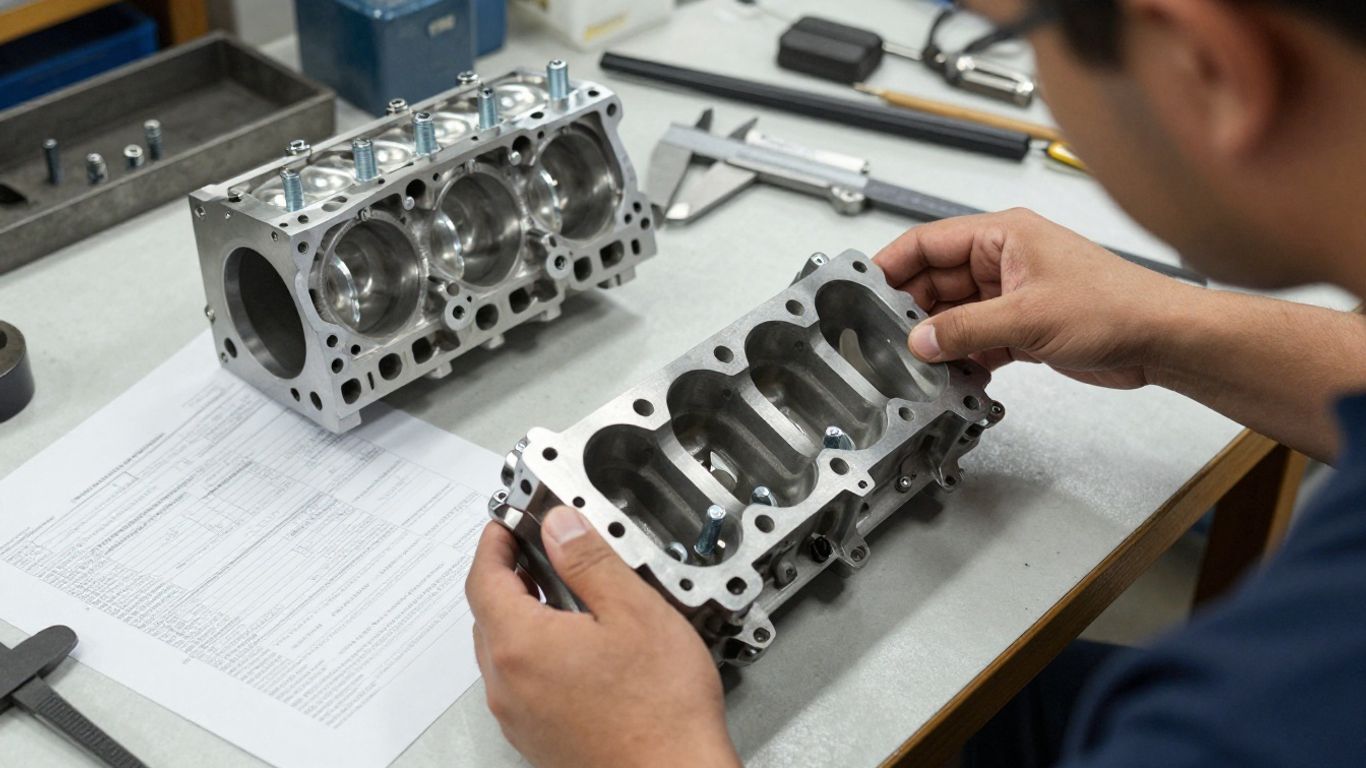
Matching the cylinder head to the exact engine code
The engine code is usually the strongest starting point because it identifies the engine family more precisely than a model name. Compare it with the supplier’s written fitment information and ask whether the head was removed from the same engine family. If the code is absent from the listing, request confirmation in writing before paying.
Do not rely on a seller’s statement that a part “fits Chery” without a specific application. The phrase may describe a broad range of vehicles and still leave important differences unresolved.
Checking model year, displacement, and vehicle configuration
Model year and displacement help narrow the search, but they are supporting details rather than substitutes for the engine code. Regional specifications, transmission pairings, emissions equipment, and production changes can affect the casting and attached components. Record the vehicle configuration from its documents and compare it with the donor information.
Photographs of the old head, including the ends, ports, mounting face, and stamped markings, give the supplier more to work with than a single top-down image.
Comparing casting numbers and original equipment references
Casting numbers can identify a family of castings, while an original equipment reference may identify a service replacement or assembly. Neither should be treated as conclusive without checking the complete number and its location. Ask for clear photographs of every marking and compare them with the number on the removed part.
Keep a written record of the references used to approve the purchase. That record is useful if the delivered part differs from the listing or if a workshop needs to resolve a fitment question.
Avoiding problems with incomplete or incompatible assemblies
A listing can appear correct while omitting valves, springs, camshafts, covers, sensors, or plugs. Those omissions change both the price and the installation plan. Before ordering, request a component-by-component description and ask whether the photographed parts are included in the sale.
A simple pre-purchase checklist keeps the conversation focused:
- Engine code and vehicle identification details
- Casting and original equipment references
- Included valves, springs, camshafts, and accessories
- Testing and machining documentation
- Warranty, return terms, and freight arrangements
This list does not replace professional verification, but it makes vague listings much easier to identify.
Inspecting the condition and quality
A cylinder head can look clean and still have a serious sealing or valve-train problem. Inspection should cover the casting, machined faces, combustion chambers, oil passages, and every component the seller claims is included. Ideally, the supplier provides measurements and test results rather than only polished photographs. The aim is to understand what can be installed immediately and what must be rebuilt first.
Examining the head for cracks, warping, and corrosion
Look closely around combustion chambers, valve seats, coolant passages, threaded holes, and narrow sections of the casting. Corrosion around water jackets can reduce sealing area, while a warped deck may require machining or replacement. A straightedge and feeler gauge can help assess flatness, but the allowable limit must come from the applicable engine specification.
Surface cleanliness is not evidence of structural soundness. Ask how cracks were checked and whether the head was pressure-tested after machining.
Checking valve seats, guides, springs, and camshaft surfaces
Valve seats should be examined for recession, impact marks, and uneven contact. Guides need measurement for wear, and springs should be checked for damage and specification where they are included. Camshaft journals and bearing surfaces must be free from scoring that could restrict lubrication or create excessive clearance.
If the head is bare, price the missing hardware separately. Reusing worn valves or springs simply because they came with the casting can undermine the repair.
Reviewing pressure-test and machining reports
A useful report identifies the test performed, the date, and the part or job reference. Machining notes should state whether the deck was resurfaced, valve seats were cut, guides were replaced, or other work was completed. Ask how the final dimensions were checked and whether the report belongs to the exact head being sold.
The difference between documented work and an unsupported promise is significant. Written test evidence matters because it lets the buyer and installer judge the part using information that can be revisited.
Identifying signs of previous overheating or poor repairs
Discoloration, hardened deposits, damaged fastener holes, uneven deck marks, and repeated weld repairs can point to earlier trouble. None proves that the part is unusable, but each warrants a closer question. A repaired crack may be acceptable in some circumstances only when the repair method, location, and subsequent testing are documented.
If the seller cannot explain obvious damage or refuses to share measurements, move on. A modestly higher price for a traceable part is often preferable to uncertainty inside a closed engine.
Choosing a reliable recycled parts supplier
Supplier quality is reflected in the questions they can answer before the sale. A dependable listing should identify the donor application, condition, included components, and any machining already performed. It should also explain what happens if the part does not match the agreed specification. Clear communication is a practical quality-control step, not merely good customer service.
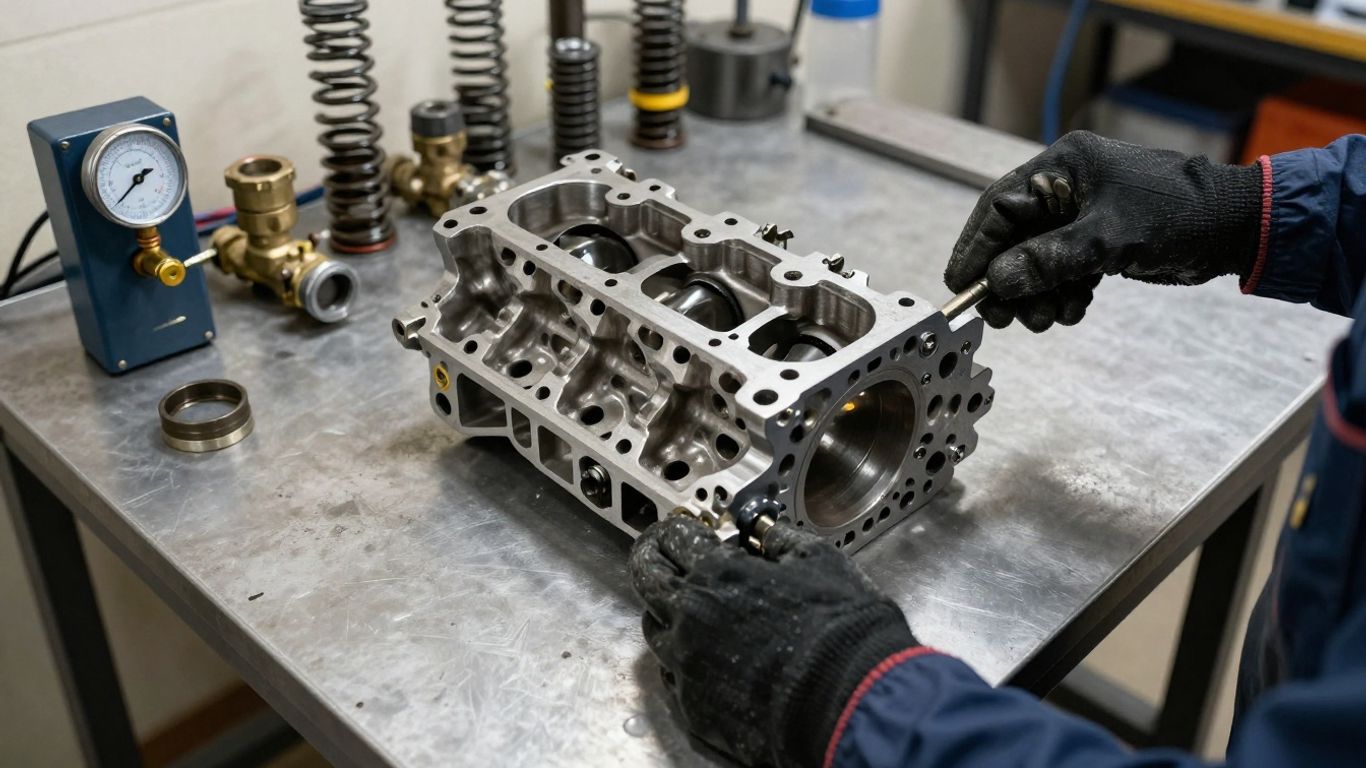
Questions to ask about testing, machining, and sourcing
Ask whether the part was removed from a running engine, whether it was cleaned and measured, and which tests were completed. Clarify whether pressure testing occurred before or after machining. Also ask for the donor vehicle or engine information when that history is available.
A supplier who answers with specific procedures and records gives you something useful to compare. General phrases such as “checked” or “ready to fit” are not enough on their own.
Evaluating warranties, return policies, and technical support
Read the warranty for coverage limits, time limits, installation requirements, and exclusions related to overheating or incorrect assembly. Return terms should address an incorrect part, concealed damage, and the condition in which the head must be returned. Confirm who pays freight and whether a workshop inspection is required.
For broader research, even unrelated service pages such as Corrective Chiropractic Care, puppy training services, peptide therapy, app idea validation, and 950 silver guidance illustrate why a clear description of scope matters; here, the same principle means asking the parts seller to define exactly what is included. These links are not substitutes for a technical parts warranty or fitment confirmation.
Comparing bare heads with complete cylinder head assemblies
A bare head gives the installer control over the valves, springs, seals, and other hardware, which can be useful when the existing components have been measured and found serviceable. A complete assembly may reduce build time, but only if its parts match the engine and their condition is known. Compare the total installed cost rather than the casting price alone.
| Listing type | Typically includes | Main question to ask | Best suited to |
|---|---|---|---|
| Used assembly | Existing head hardware, condition varies | What was tested? | A budget repair with inspection |
| Refurbished head | Cleaning and selected repair work | Which operations were completed? | A repair needing documented preparation |
| Bare head | Casting and machined surfaces may vary | Which hardware is excluded? | A rebuild with measured components |
| Remanufactured assembly | Rebuilt components, scope varies | What standards and parts were used? | A more controlled replacement |
The table is a starting point, not a universal definition. Supplier terminology differs, so the invoice should spell out the actual contents and work performed.
Recognizing misleading listings and unusually low prices
Be cautious when a listing uses one generic photograph, avoids engine codes, or describes every part as fitting multiple applications. A very low price may exclude valves, freight, taxes, core charges, or machining. It may also reflect a head that has not been pressure-tested.
Compare like with like. A documented, tested bare head cannot be fairly compared with an uninspected complete assembly until the missing work and components are priced.
Calculating the total replacement cost
The purchase price is only one line in the repair estimate. A head replacement often requires machine-shop work, seals, fasteners, fluids, and labor that do not appear in a marketplace listing. Build the estimate before ordering so an apparently inexpensive part does not create an unexpected second bill. A workshop can also identify parts that should not be reused.
Comparing recycled, new, and remanufactured options
A recycled head may have the lowest initial price, while a new or remanufactured option may offer more predictable preparation. The right comparison depends on availability, warranty terms, machining requirements, and the value of the vehicle. Ask for each option to be priced to the same installation-ready standard.
If one quote includes valves and pressure testing while another covers only the casting, the difference is not a genuine price advantage. Normalize the scope first, then compare.
Accounting for gaskets, bolts, seals, and replacement components
Plan for a head gasket, appropriate head bolts where required, valve-cover and intake or exhaust seals, coolant, oil, and a filter. Depending on the diagnosis, the repair may also need timing components, hoses, thermostat parts, or damaged fasteners. The exact list should follow the engine service procedure and the inspection findings.
Reusing stretch bolts or old seals without checking the manufacturer’s requirements can compromise the repair. Consumables are small compared with labor, but they are essential to a sound installation.
Estimating shipping, core charges, and installation labor
Freight can be substantial because cylinder heads are heavy and vulnerable to impact. Confirm packaging, delivery insurance, and whether a refundable core charge applies. Labor estimates should include disassembly, cleaning, surface checks, timing setup, fluid replacement, and post-installation testing.
Request a written estimate with separate lines for the part, machining, shipping, refundable charges, parts, and labor. That makes it easier to spot a low quote that has simply moved costs elsewhere.
Balancing upfront savings with expected service life
The cheapest head is not necessarily the least expensive repair. A part with uncertain history may require additional machining or fail sooner, while a documented head can reduce diagnostic time and rework. Service life still depends on correct assembly and on fixing the original cause of failure.
Use warranty length, inspection records, installation support, and the expected use of the vehicle alongside the initial price. A sensible decision is one you can explain from the complete estimate, not just the listing headline.
Installing and maintaining a recycled Chery cylinder head
Installation is where a good part can be lost through rushed preparation or incorrect assembly. The block, fasteners, timing system, cooling system, and lubrication system all affect the result. Use the service information for the exact engine rather than a general tightening pattern. Once the engine runs, deliberate checks can reveal a problem before it becomes major damage.
Preparing the engine block and related components
Clean the block deck without gouging it, remove old gasket material from passages, and inspect threaded holes for debris or damage. Check the deck for flatness and confirm that dowels, oil passages, and coolant passages are clear. The replacement head should be clean, dry where specified, and protected from contamination during assembly.
Inspect related components at the same time. A cooling-system fault or damaged timing component can defeat a correctly prepared cylinder head.
Following torque sequences and manufacturer specifications
Use the specified tightening sequence, stages, torque values, and angle procedure for the exact engine. Some fasteners have a single-use requirement, and lubricant or thread condition can change the applied clamping force. A calibrated torque wrench and the correct sequence are basic safeguards.
Do not substitute a familiar procedure from another engine. If the supplier provides no installation data, obtain the manufacturer’s service information before beginning work.
Replacing essential gaskets, bolts, and fluids
Install the correct head gasket orientation and replace fasteners, seals, oil, and coolant as required by the service procedure. Prime or lubricate components according to the engine instructions, then set timing carefully before cranking. Check that connectors, hoses, grounds, and covers are restored to their original positions.
The parts list should reflect the inspection rather than habit. A bare head may require a different set of seals and valve-train components than a complete assembly.
Monitoring coolant temperature, oil pressure, and engine performance
After startup, watch for coolant leaks, oil leaks, unusual exhaust smoke, misfires, and abnormal noises. Confirm coolant temperature and oil pressure using reliable readings, and bleed the cooling system correctly. Recheck fluid levels and fasteners where the service procedure calls for it.
A short road test followed by another inspection is preferable to assuming success after the first idle period. If temperature rises, pressure readings are abnormal, or coolant and oil mix, stop the engine and investigate promptly.
Conclusion
Recycled Chery cylinder heads can offer practical value when the buyer verifies the exact application, reviews the part’s condition, and calculates the complete installed cost. Clear records, compatible components, correct assembly, and attention to the original failure are more meaningful than a low price alone.
Frequently Asked Questions
Are recycled Chery cylinder heads reliable?
They can be reliable when the casting is compatible, properly inspected, and correctly installed. Reliability depends on the part’s actual condition, documented preparation, and resolution of the original engine problem.
How do I identify the correct cylinder head?
Use the engine code, vehicle identification details, casting numbers, and original equipment references together. Confirm the match with the supplier before ordering rather than relying only on the model name.
What is the difference between a bare and complete cylinder head?
A bare head generally refers mainly to the casting and machined surfaces, while a complete assembly includes some or all valve-train hardware. The exact contents vary, so request a written component list.
Should a recycled cylinder head be pressure-tested?
Pressure testing is a valuable way to check for leaks that may not be visible during a basic visual inspection. Ask whether the test was performed on the exact head and request the result or report.
Can an overheated cylinder head be reused?
Sometimes, depending on the extent and location of damage. The head should be measured and checked for cracks, and any repair or resurfacing must remain within the applicable specifications.
What extra parts should I budget for?
Common additions include a head gasket, bolts, seals, oil, coolant, and a filter. The engine’s service procedure may also call for timing parts, hoses, thermostat components, or other replacement items.
What should I monitor after installation?
Watch coolant temperature, oil pressure, fluid levels, leaks, exhaust smoke, misfires, and unusual noises. Reinspect the engine after initial operation and stop promptly if warning signs appear.