

Key Takeaways
Choosing brake pads starts with exact vehicle and axle details, not just the model name. A careful fitment check, timely inspection and appropriate installation all matter.
- Confirm the model year, variant, engine and axle before ordering.
- Compare pad materials in light of noise, dust, driving conditions and compatibility.
- Treat unusual sounds, pedal changes and warning lights as reasons to arrange an inspection.
- Replace pads in axle pairs and follow the installer’s bedding-in instructions.
- Compare the full parts-and-labour cost and keep monitoring pad and rotor condition.
How to identify the right brake pads for your Chery
Finding Chery brake pads Australia drivers can confidently order starts with careful identification. A similar model name does not guarantee that a pad set will fit every year or variant. The front and rear axles can also use different parts. Take a few minutes to confirm the vehicle details before comparing products.
Confirm your model, year, variant, and engine
Start with the full model name, build year, variant and engine size, then provide those details to the parts supplier. Small differences within a model range may affect the required pad shape or hardware. If a catalogue asks for additional vehicle details, give them rather than relying on a broad model match. This makes it easier to resolve uncertainty before you buy.
Check the vehicle identification number and owner’s manual
The VIN can help a parts supplier identify the vehicle more precisely, while the owner’s manual can help you confirm model and service information. Keep both to hand when asking for a fitment check. A reliable answer should account for the actual vehicle, not just a search result that looks close. Confirm the fitment in writing if the listing leaves any doubt.
Match front or rear pads to the axle being serviced
Brake pads are axle-specific, so check whether you need front or rear pads before placing an order. A listing for a front set is not interchangeable with one for the rear. To keep the request clear, tell the supplier which axle is being serviced and ask them to verify the application against your vehicle details. That simple distinction can prevent a wrong-part delay.
Verify pad shape and fitment with a parts supplier
When catalogue details are unclear, ask the supplier to confirm the application before purchase. For example, the listing for RDA GP Max specifies front pads for the Chery J11 2.0L from 2011–2014; that does not establish fitment for other Chery models or axles. Treat any product example as specific to its stated application, and confirm the profile and fitment for your own vehicle. A photo or part number may help the supplier check, but it should not replace vehicle identification.
Brake pad types and how they differ
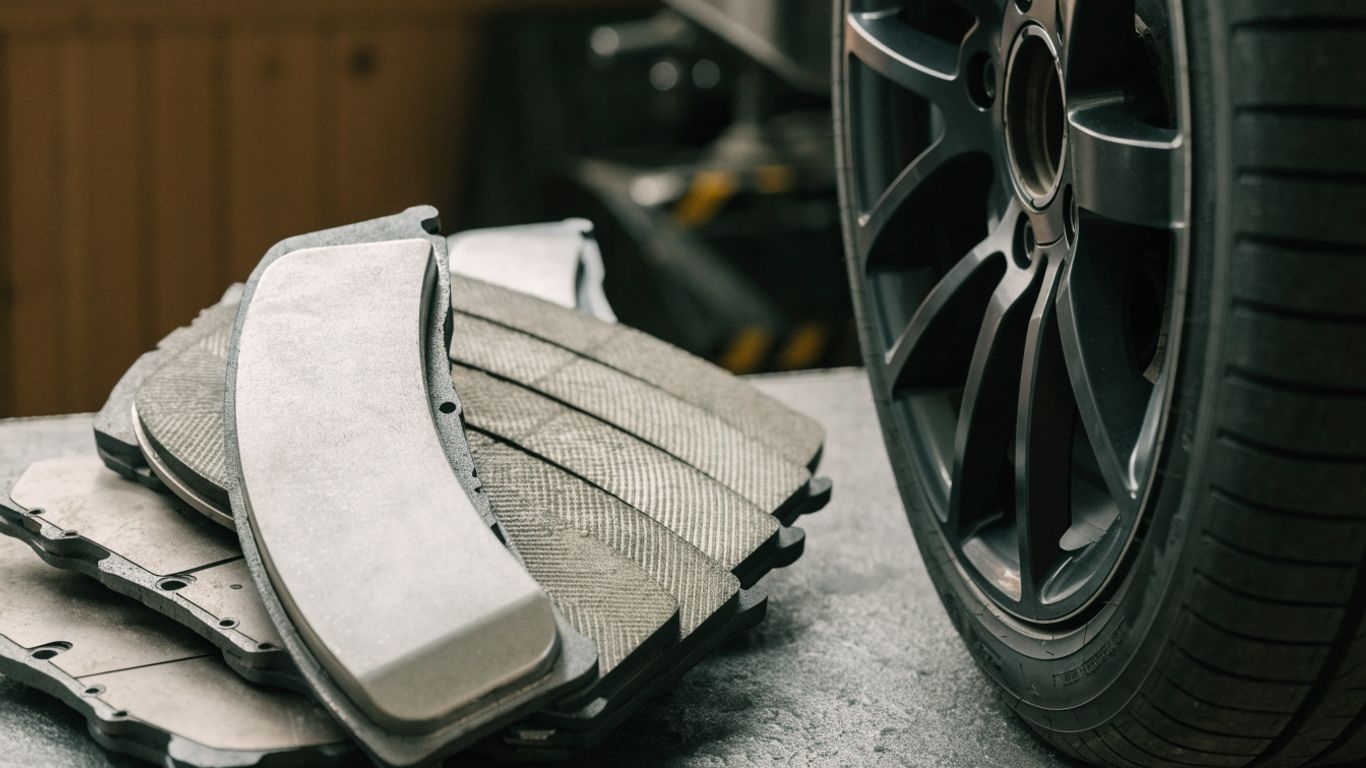
Brake pads are made with different friction materials, and there is no single formulation that suits every driver. The right choice depends on the vehicle’s confirmed fitment as well as your expectations for noise, dust and everyday use. Product descriptions can help narrow the options, but they do not replace a compatibility check. Think about how the car is driven before deciding which trade-offs matter most.
Compare ceramic, semi-metallic, and other formulations
Ceramic and semi-metallic pads are common categories, but the name alone does not tell you whether a particular pad suits your car. Formulations vary, and products within the same broad category may be designed for different uses. Compare the manufacturer’s stated application and instructions rather than assuming that one material is universally quieter, longer-lasting or more powerful. Choose only among options confirmed for your vehicle.
Weigh noise and dust against braking performance
A pad’s everyday feel includes more than whether it slows the car. Some drivers place a high value on limiting dust or reducing noise, while others focus on the demands of their regular routes. No description should be read as a promise that a pad will be silent or leave wheels clean in every condition. Read product information carefully and ask the supplier to explain any claim that affects your decision.
Consider driving conditions and vehicle use
A car used mostly for short suburban trips has different routines from one that regularly carries heavy loads or travels on steep roads. Consider the roads you use, how often the car is heavily loaded and whether your driving involves frequent stops. Those details give a mechanic or parts supplier useful context when discussing suitable options. They should still confirm the exact pad application before recommending a product.
Check compatibility before choosing an upgrade
An upgrade is only a sensible option if it fits the vehicle and suits its intended use. A listing for OEM-fit ceramic brake pads describes a product option, but the details on that page do not confirm compatibility with every Chery. Check the listed application and have the supplier verify it against your model, year and axle. A material preference should never take priority over correct fitment.
Signs your Chery may need new brake pads
Brake wear can develop gradually, so drivers may first notice a change in sound or feel rather than an obvious fault. No single symptom confirms that pads are the cause; other parts of the braking system may need attention too. Pay attention to changes from the car’s usual behaviour and arrange a professional check when something feels wrong. Prompt inspection can clarify what needs attention before you continue as normal.
Listen for squealing, scraping, or other unusual sounds
A squeal or scrape when braking is a reason to investigate, particularly if it is new or persistent. Noise can have more than one cause, so it does not by itself prove that the pads are worn out. Avoid ignoring a harsh grinding sound or a change that keeps returning. Have the brakes inspected so the source can be identified rather than guessed at.
Notice changes in pedal feel or stopping distance
Take changes in pedal feel seriously, including a pedal that feels unusual or a car that seems to take longer to stop. These symptoms can point to a concern beyond pad wear, which is another reason not to rely on a quick visual guess. Leave extra room and avoid unnecessary driving if braking feels compromised. Arrange an inspection promptly, especially if the change is sudden.
Check for warning lights and wear indicators
If a brake warning light appears, consult the owner’s manual and arrange a check rather than assuming it relates only to pad thickness. Some vehicles use wear indicators, but equipment and warning methods can vary. A visual check may also be limited if the pads are difficult to see through the wheel. When a warning appears, let a qualified person inspect the system and explain the finding.
Arrange an inspection when symptoms appear
Describe the sound or change clearly, including when it happens and whether it is getting worse. If you are unsure what to tell a workshop, a short record of the symptoms can make the conversation more useful. Keep the key observations simple:
- When the noise or change first appeared.
- Whether it happens during light or firm braking.
- Any warning light or change in pedal feel.
- Whether the symptom is constant or intermittent.
Those details help a mechanic assess the concern, but they are not a substitute for inspection. If braking feels unsafe, stop driving when it is safe to do so and seek professional assistance.
What to expect during brake pad replacement
Brake pad replacement involves more than fitting a new set of friction material. The surrounding braking components should be checked, and the work needs to match the vehicle’s service requirements. A workshop can explain what it finds before proceeding with additional repairs. Ask what is included in the quote so the job and its price are clear.
Inspect the rotors, calipers, and related components
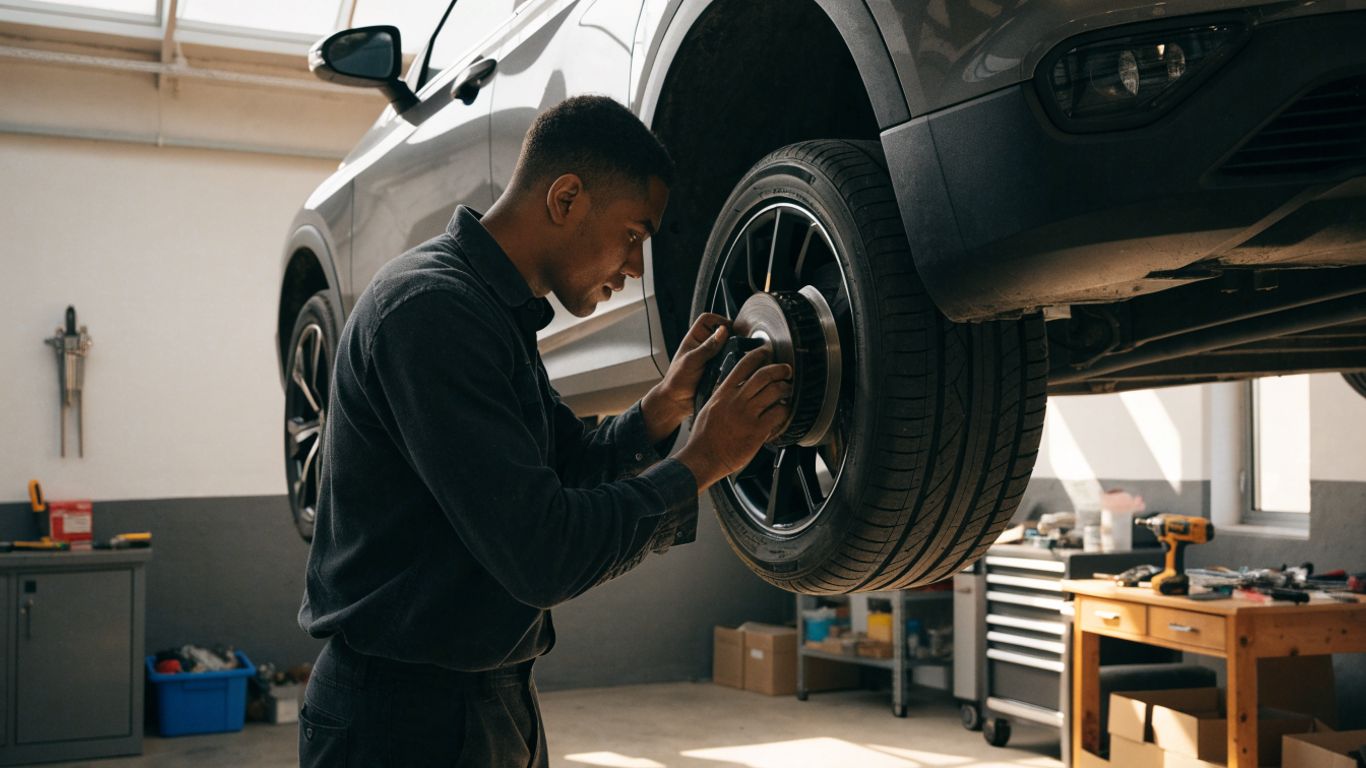
During a brake service, the technician should check the condition of the rotors, calipers and related components, not just the old pads. The inspection can reveal wear or damage that changes what work is appropriate. Ask the workshop to explain any recommended additional work and why it is needed. The decision should be based on the condition of the parts, not an assumption that every replacement requires the same extras.
Replace pads in axle pairs
Pads are generally replaced as a pair on the axle being serviced so that both sides receive matching components. The technician can confirm whether the front or rear axle needs attention and whether the other axle also requires inspection. Keep the work order clear about which pads are included. That avoids confusing one axle’s replacement with a complete set for the vehicle.
Follow bedding-in guidance after installation
New pads may need a bedding-in process, and the correct instructions depend on the product and the installer’s guidance. Ask the technician what to do during the first drives, including any cautions about braking. Follow those directions rather than applying generic advice from an unrelated pad type. If braking feels unusual after installation, contact the workshop for guidance.
Know when a mechanic should handle the job
Brake work is safety-critical, and a mistake can affect stopping performance. If you lack the right tools, experience or confidence to complete the job correctly, use a qualified mechanic. A workshop can also check related components while replacing the pads and explain any findings. Choose professional help whenever the work is beyond your ability to carry out safely.
Buying Chery brake pads in Australia
When buying locally, compare the exact application, what is included and how the parts will reach you. Genuine and aftermarket options may differ in availability, specification and price, so ask questions rather than judging by a label alone. Check whether the quote covers parts only or includes installation. A written fitment confirmation is useful if there is any uncertainty.
Compare genuine, aftermarket, and performance options
Compare options only after confirming the required pad application. Ask what the product is designed for, what the package includes and whether it is intended for ordinary road use or another purpose. For a specific J11 application, RDA GP Max is described as a semi-metallic front-pad option; its stated vehicle range should not be extended to other models by assumption. For a warranty question, Chery Motor Australia’s new car warranty information outlines coverage and exclusions; check the source for details rather than assuming a replacement part is covered.
Confirm local fitment, stock, and delivery details
Before ordering, confirm that the seller has checked your vehicle details and the required axle. Ask whether the parts are in stock, when dispatch is expected and what delivery options are available to your area. A low listed price is less useful if the item is incorrect or the delivery timing does not suit your repair. Keep the confirmation and order details until the parts have been fitted.
Ask about parts and installation warranties
Check what warranty applies to the part and whether installation is covered separately. Ask about the conditions, exclusions and what documentation you need to keep. Vehicle warranty information is a separate matter from a pad manufacturer’s parts warranty, so do not assume one automatically covers the other. If you are uncertain, get the terms explained before buying or authorising work.
Compare the full cost, including labour
A useful comparison includes the pads, fitting, any inspection charges and the possibility of additional work if the rotors or other components need attention. Ask whether a quote includes parts, labour and applicable taxes, and what would trigger a revised price. You can compare local brake repair quotes for a Chery front pad and rotor job, then confirm exactly what each quote covers before booking. The lowest initial figure is not always the clearest or most complete one.
How to maintain your new brake pads
After replacement, regular attention helps you notice changes before they become harder to diagnose. Follow the installer’s advice and the service schedule for your vehicle rather than relying on a universal interval. Driving style and conditions affect wear, so replacement timing can vary. A prompt response to new symptoms is more useful than waiting for a convenient service visit.
Use smooth braking to help manage wear
Leave enough space to slow down progressively where road conditions allow. Sudden, repeated braking can add heat and wear, while a smoother approach is often easier on the braking system. Drive to the conditions and do not compromise safety just to reduce wear. If you regularly travel routes that demand frequent braking, mention that during routine servicing.
Keep an eye on pad and rotor condition
Ask for the pads and rotors to be checked during scheduled servicing, especially if you have noticed a change in braking. The rate of wear depends on use, so visual appearance at one point does not predict exactly when replacement will be needed. A mechanic can assess the condition and explain whether monitoring or repair is appropriate. Keep a record of service findings to help track changes over time.
Address brake noises or changes promptly
If a new sound, warning light or change in pedal feel appears, arrange an inspection instead of assuming it is normal. Describe when it happens and whether it has changed since the last check. Avoid continuing to drive if the brakes feel unsafe. A prompt assessment can establish whether the concern is pad-related or comes from another part of the system.
Follow the service schedule for your Chery
Use the owner’s manual and service information for the relevant vehicle when planning routine checks. If you are unsure which guidance applies, ask a workshop to confirm it using the car’s details. More generally, careful matching matters in many specialist decisions, whether choosing an orthopedic doctor, considering a full body MOT, planning Maui wedding ideas, arranging Karma Hill Photography, or comparing a Tissot PRX. For brake maintenance, though, follow vehicle-specific advice and have concerns assessed by a qualified professional.
Conclusion
Choosing and replacing brake pads is safest when fitment is confirmed against the exact vehicle and axle, symptoms are checked promptly, and installation follows the product and vehicle guidance. Compare the full cost, ask clear questions and keep monitoring the brakes after the work is done.
Frequently Asked Questions
How do I know which brake pads fit my car?
Check the vehicle’s model, year, variant, engine and axle, then ask a parts supplier to confirm the application. The VIN and owner’s manual can help clarify vehicle details.
Should front and rear brake pads be the same?
Not necessarily. Front and rear pads can have different applications and shapes, so identify the axle being serviced and confirm the correct part before ordering.
Are ceramic brake pads always quieter?
No single material guarantees a particular noise level in every vehicle and condition. Check the product information and confirm that the pad is compatible with your car.
What does a squealing brake sound mean?
Squealing can have several causes, including pad wear, but sound alone cannot diagnose the problem. Arrange an inspection if it is new, persistent or accompanied by another change.
Can I replace brake pads myself?
Brake work is safety-critical and requires the correct tools, knowledge and installation procedure. If you are not confident you can do the job safely, have a qualified mechanic handle it.
Do brake pads need bedding in after installation?
Some products require a bedding-in process. Ask the installer for instructions specific to the pads fitted and follow that guidance during the first drives.
How often should brake pads be replaced?
There is no single interval that suits every driver because use and driving conditions affect wear. Follow the vehicle’s service guidance and have the brakes inspected when symptoms appear.