

Key Takeaways
Control arms help locate the wheel and connect suspension movement to the vehicle body, so their condition affects steering, comfort, tire wear, and alignment. A careful inspection is the best starting point when searching for Chery control arms Melbourne.
- Control arms work with bushings and ball joints to guide wheel movement.
- Knocks, steering changes, uneven tire wear, and visible damage deserve attention.
- Melbourne potholes, curbs, and rough road surfaces can accelerate suspension wear.
- Replacement parts should match the vehicle model, year, specification, and budget.
- A wheel alignment and follow-up inspection help protect the repair.
Understanding Chery control arms and their role
A control arm is a suspension link that helps hold the wheel assembly in its intended position while allowing it to move over bumps. It usually connects the steering knuckle to the vehicle’s frame or subframe. When looking at Chery control arms Melbourne drivers should consider the entire assembly, not just the metal arm.
The arm, bushings, and ball joint all share the work of controlling movement. Wear in one part can alter the way the others behave, which is why replacement decisions should follow an inspection rather than a guess based on noise alone.
What control arms do in a Chery suspension system
Control arms allow the wheel to travel vertically while helping manage its relationship with the body and steering system. Their pivot points need to move smoothly but should not allow excessive looseness. If the arm bends after an impact, the wheel may no longer sit at the intended angle.
That change can affect straight-line stability and may make the vehicle feel less settled on uneven roads. A technician will generally assess the arm in relation to the knuckle, subframe, spring, damper, and alignment angles rather than treating it as an isolated component.
How bushings and ball joints work together
Bushings are flexible mounts that cushion movement and reduce vibration where the control arm attaches to the body. The ball joint provides a pivot between the arm and steering knuckle, allowing the wheel to steer while the suspension moves. Both parts must remain secure and move within their designed range.
A cracked bushing may permit the arm to shift under braking or acceleration. A worn ball joint can create play at the wheel and, in more serious cases, compromise precise steering control. The symptoms can overlap, so hands-on testing matters.
Common Chery models that may need control arm servicing
The need for control arm servicing depends more on mileage, road exposure, impacts, and maintenance history than on the badge alone. A model reference can still help a supplier narrow the search, particularly when the vehicle has different suspension specifications across years or markets.
Owners can use a Chery model list to check model naming and then confirm the exact variant with the vehicle identification number. The Chery Tiggo 9 is one example of a model reference that may help distinguish a vehicle before parts are ordered, but it does not replace a specification check.
For broader background, a Chery vehicle list can clarify naming differences across model lines. These references are useful for identification; they are not evidence that a particular model currently needs a control arm replacement.
Why control arm condition affects handling and tire wear
The control arm helps preserve the geometry that places the tire against the road. If a bushing deflects or a ball joint develops play, the wheel angle can change as the vehicle brakes, turns, or passes over a bump. The driver may notice wandering, a delayed steering response, or a vehicle that feels nervous over broken pavement.
Small geometry changes can also scrub the tread unevenly. Early diagnosis can prevent wider wear across tires and related suspension parts, although a worn control arm is only one possible cause of alignment or handling symptoms.
Signs your Chery control arms need attention
Suspension wear rarely announces itself in one perfectly clear way. A noise might come from a bushing, ball joint, stabilizer link, strut mount, or another component, while a tire-wear pattern may reflect alignment or inflation. The useful approach is to record when the symptom occurs and have the complete front or rear suspension checked.
The following signs are reasons to arrange an inspection rather than proof that the control arm is faulty. If steering feels unsafe or a wheel appears loose, avoid unnecessary driving until the vehicle has been assessed.
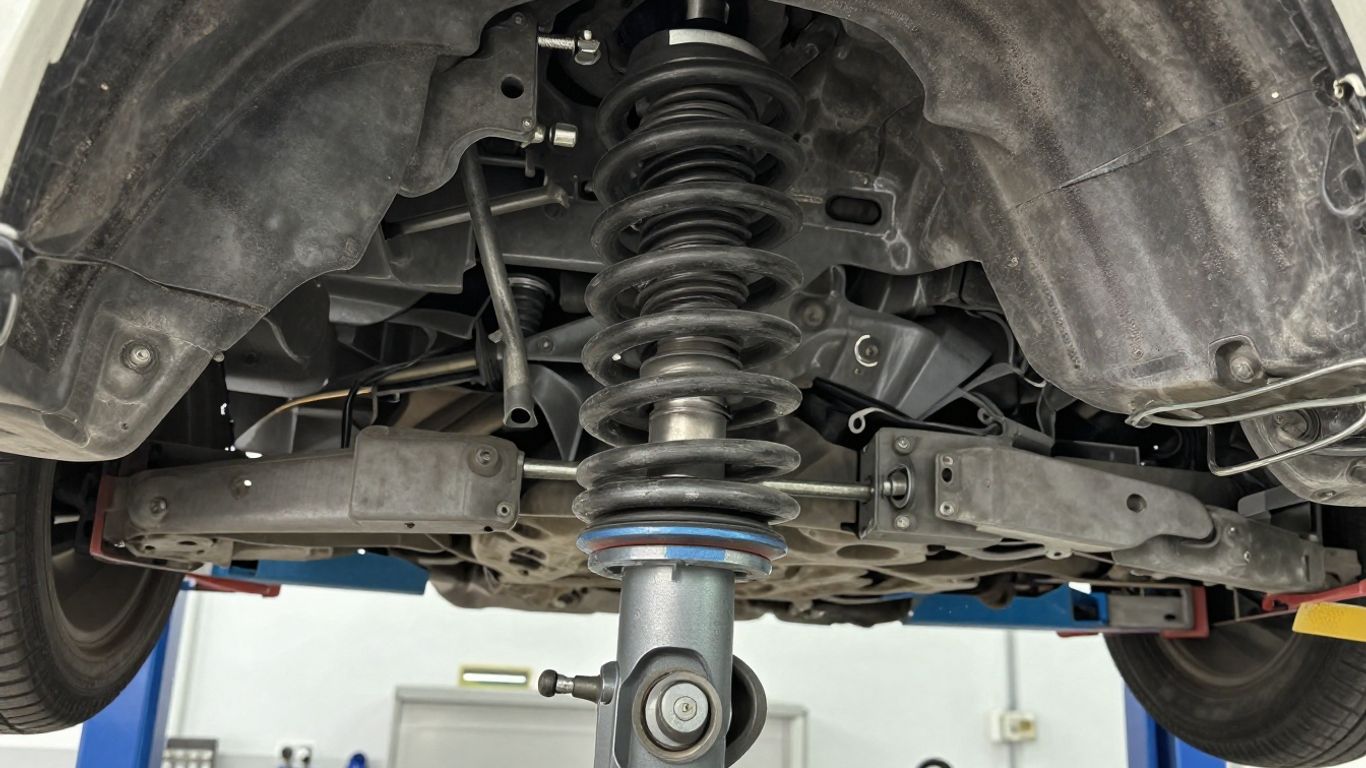
Clunking, knocking, and other suspension noises
A clunk over a speed hump or pothole can occur when a bushing no longer controls movement or when a joint has looseness. Repeated knocking may become more noticeable during low-speed turns, braking, or changes in road level. The location and timing of the sound help a technician narrow the source.
Not every suspension noise comes from the control arm. A professional may reproduce the sound during a road test and then inspect the vehicle on a hoist, checking for movement, damaged rubber, loose fasteners, or contact between components.
Steering pull, vibration, or unstable handling
A vehicle that pulls to one side may have an alignment issue, unequal tire pressure, a tire problem, or suspension damage. Vibration can also come from wheel balance, tire deformation, or steering components. Control arm wear becomes more likely when these sensations accompany visible joint play or a history of impact.
Pay attention to whether the symptom occurs during braking, acceleration, cornering, or at a particular speed. Those details give the technician a more useful starting point than a general report that the car feels unusual.
Uneven tire wear and wheel alignment changes
Control arm wear can allow alignment angles to change under load, but tire wear should never be used alone to identify the failed part. Check tread edges, tread depth, tire pressures, and the vehicle’s alignment history. A recent pothole strike is also relevant, especially if the steering wheel is no longer centered.
A tire that is worn on one edge may point to camber or toe changes, while cupping may suggest a damper or balance issue. The repair plan should address the underlying cause before new tires are fitted.
Visible damage, corrosion, or worn bushings
During an inspection, look for a visibly bent arm, torn bushing rubber, separation around a mounting point, damaged dust boots, or corrosion that has affected the component. Surface dirt and light oxidation are not automatically signs of failure, so appearance needs to be considered alongside movement and condition.
Do not place your body under a vehicle supported only by a jack. A qualified technician can inspect the assembly safely and determine whether the arm, bushing, ball joint, or mounting hardware needs replacement.
Diagnosing control arm problems in Melbourne
A diagnosis should connect the driver’s complaint with physical evidence. Melbourne vehicles may encounter patched roads, tram corridors, potholes, gutters, and frequent stop-start driving, but road conditions alone do not identify the failed component. The inspection should establish what is worn, what is damaged, and what remains serviceable.
For parts sourcing, it helps to know the model, year, engine, body style, drive layout, and any relevant suspension variation. A supplier can then compare the requested part with the vehicle details instead of relying on a similar-looking photograph.
What a professional suspension inspection includes
A suspension inspection commonly begins with a discussion of symptoms and a visual check of the tires, steering, suspension links, bushings, and fasteners. The technician may test wheel movement, examine joint play, inspect the arm for distortion, and review alignment readings where appropriate.
A road test can add useful information, particularly when the noise or instability appears only under a certain load. The final recommendation should explain whether the concern is urgent, whether related parts need attention, and whether alignment is required after the repair.
How roads, potholes, and curbs can cause damage
A sharp impact can bend a control arm, deform a wheel, damage a tire, or disturb the subframe. Repeated smaller impacts can also stress rubber bushings and accelerate cracking. Striking a curb while turning may load the suspension differently from hitting a pothole straight on.
Record the approximate date and location of a significant impact, along with any immediate change in steering or noise. This history can help separate gradual wear from sudden damage and may prevent a technician from overlooking a second affected component.
Distinguishing control arm faults from other suspension issues
Several parts can produce similar symptoms. A stabilizer link may knock, a strut mount may creak, a tie-rod end may create steering play, and a wheel bearing may produce a humming sound. Tire pressure, wheel balance, and alignment can also change the way a vehicle feels without a failed control arm.
A useful diagnosis compares the symptom with inspection findings rather than replacing parts by trial and error. This is also where a supplier’s experience with quality used parts can be relevant to a budget discussion, although the linked material is general and every used suspension component still needs condition and compatibility checks.
When a wheel alignment check is necessary
An alignment check is sensible after replacing a control arm if the work can affect suspension geometry, if the vehicle has struck a pothole or curb, or if tire wear and steering symptoms were present beforehand. Alignment measurements can show whether the vehicle is within the manufacturer’s specified range.
The check should follow the mechanical repair, since worn joints or loose bushings can make alignment readings unreliable. If the vehicle cannot be aligned within specification, further inspection may be needed for bent components or shifted mounting points.
Choosing replacement Chery control arms
Replacement decisions usually balance fit, condition, price, warranty, and availability. A lower purchase price is not useful if the part is incorrect, incomplete, or difficult to return. Conversely, the most expensive option is not automatically the right choice for every vehicle or repair budget.
When sourcing Chery control arms Melbourne owners can ask whether the part includes bushings or a ball joint, whether those items are pre-installed, and what identifying information was used to confirm compatibility. Clear answers make the final quote easier to compare.
Genuine, aftermarket, and used control arm options
Genuine parts are made for the vehicle manufacturer’s original supply chain, while aftermarket parts come from independent manufacturers and can vary in design and specification. Used parts may offer a practical solution when they are inspected, correctly identified, and sold with clear condition information.
A used arm should not be selected solely because the metal looks straight. Bushings, ball joints, mounting surfaces, and corrosion all need evaluation. A reputable parts network can explain what has been checked and what is included in the sale.
Matching parts to your Chery model and model year
Confirm the vehicle identification number, model, model year, engine, drive configuration, and side of the vehicle before ordering. Left- and right-hand control arms may differ, and front and rear assemblies are not interchangeable simply because they look similar.
A broader Chery background guide may help with general model identification, while the parts supplier should verify the actual fitment. If the vehicle has been modified or imported, provide photographs and existing part numbers as supporting information rather than as the only proof.
Comparing material quality, bushings, and ball joints
Compare the arm’s construction, the finish of its mounting points, the quality of included rubber components, and whether the ball joint is replaceable or supplied as part of the assembly. Ask whether the quoted part is new, refurbished, or used, and whether the photo is of the exact item.
This is a sensible place to write down the options before deciding. The following questions keep the comparison focused:
- Does the part match the vehicle identification and side required?
- Are bushings and ball joints included, pre-installed, or sold separately?
- Has a used component been checked for play, cracks, distortion, and corrosion?
- Does the price include delivery, returns, or fitting-related hardware?
The answers can reveal why two apparently similar control arms have different prices. They also make it easier to choose a part based on evidence rather than appearance alone.
Checking warranties and supplier reliability
Read the warranty terms before purchase, including exclusions for incorrect installation, modified vehicles, wear items, and consequential damage. Confirm the return process and ask how the supplier handles a part that does not match the vehicle after fitment has been attempted.
A reliable supplier should communicate clearly about availability, condition, identification, and delivery. It is also reasonable to ask whether the part is being supplied through a wider network; nationwide parts availability can matter when a local shelf does not have the correct specification.
What to expect from control arm replacement
The exact job varies with the vehicle’s layout, corrosion, access, and whether the control arm is supplied as a complete assembly. Some repairs are straightforward; others require additional time when fasteners are seized or adjacent parts have been damaged. A written estimate should distinguish the part, labor, inspection, and alignment work.
Before approval, ask what the technician found and whether the recommendation is for one side or both. Replacing only the failed component can be appropriate, while replacing related parts may be sensible when they are also worn or have been disturbed during removal.
How technicians remove and install the assembly
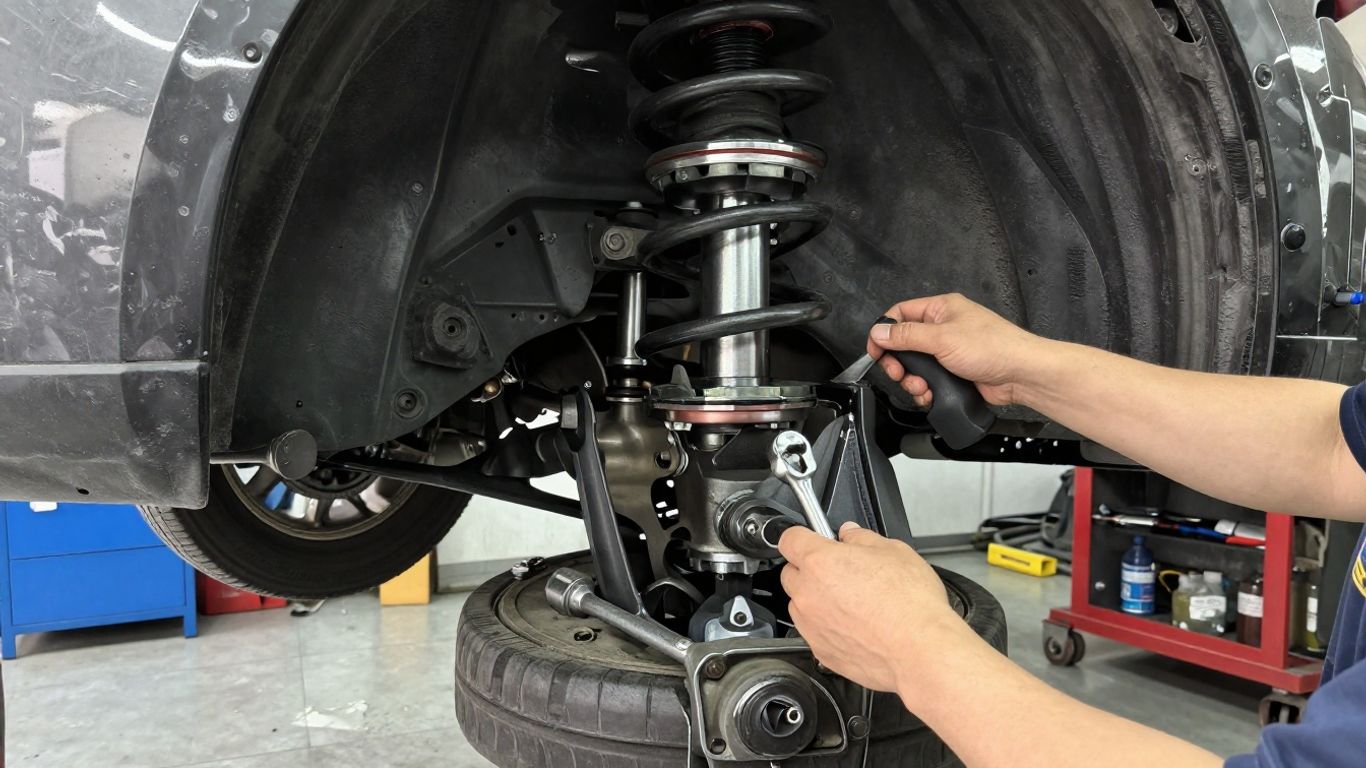
The vehicle is secured safely, the wheel is removed, and the technician supports the suspension as needed before disconnecting the control arm. Fasteners at the body or subframe and the ball-joint connection are removed, then the old assembly is compared with the replacement before installation.
The new part is fitted with the correct hardware and checked for clearance and movement. The wheel is refitted, the vehicle is lowered appropriately, and the technician carries out any required checks before a road test and alignment assessment.
Why related suspension components may need inspection
A worn control arm may not be the only part affected by age or an impact. The technician may inspect the opposite-side arm, ball joints, tie-rod ends, stabilizer links, struts, wheel bearings, tires, and subframe mounting points. This does not mean every nearby component needs replacement.
The purpose is to avoid completing one repair while leaving a separate safety or alignment concern unresolved. A clear report should identify urgent faults, advisories, and components that are currently serviceable.
The importance of correct torque and ride-height positioning
Some suspension fasteners need to be tightened with the suspension positioned at its normal ride height. Tightening flexible bushings while the arm hangs at full droop can preload the rubber and shorten its service life. Torque specifications and the vehicle manufacturer’s fitting procedure therefore matter.
After installation, the technician should check that fasteners are secure, the joint moves correctly, and no brake, wheel-speed sensor, or steering component has been disturbed. Correct fitting is as important as selecting a physically compatible part.
Typical factors that affect replacement costs in Melbourne
Cost depends on the part type, whether bushings or ball joints are included, labor access, corrosion, seized fasteners, additional damage, and whether an alignment is required. Delivery time and the availability of a genuine, aftermarket, or inspected used option can also affect the final figure.
A useful quote lists these variables instead of giving only a single unexplained total. If the repair follows an impact, budget for the possibility that a wheel, tire, alignment, or another suspension component may also need assessment.
Maintaining Chery suspension components after replacement
A replacement control arm should restore the intended connection between the wheel and body, but maintenance still matters. Regular checks can identify tire wear, looseness, or new impact damage before the symptoms become disruptive. Good records also help the next technician understand when the part was fitted and what alignment work followed.
Maintenance does not mean avoiding every rough road, which is not realistic in Melbourne. It means responding sensibly to impacts, keeping tires correctly inflated, and arranging an inspection when the vehicle’s behavior changes.
Scheduling follow-up wheel alignment checks
Have the alignment checked after replacement when recommended by the technician or whenever the vehicle pulls, the steering wheel is off-center, or tire wear changes. A follow-up check is particularly useful after a substantial pothole or curb impact.
Keep the alignment report with the repair invoice. Comparing later measurements with the original results can help identify whether a new issue has developed or whether the earlier repair needs review.
Protecting control arms from road damage and corrosion
Approach potholes and curbs slowly where possible, avoid mounting a curb at an angle that loads one wheel sharply, and keep the underside reasonably clean after exposure to mud or corrosive road contamination. Do not pressure-wash delicate boots and bushings at close range.
Visual checks during routine servicing can catch torn rubber, fresh impact marks, or unusual corrosion. Surface dirt is normal, but flaking metal or damage around a mounting point deserves professional assessment.
Monitoring tires and steering after repairs
For the first few drives after repair, notice whether the steering remains centered, the vehicle tracks straight, and the original noise has disappeared. Check tire pressures and look for fresh feathering or edge wear as the vehicle accumulates distance.
If a symptom returns, stop treating it as normal settling. A loose fastener, an unrelated worn part, an alignment issue, or a second impact may need investigation, so contact the workshop before continuing to use the vehicle heavily.
When to book another suspension inspection
Arrange another inspection if you hear repeated knocking, feel new steering play, see uneven tire wear, notice fluid or damage around a strut, or experience a strong pull after an impact. A periodic inspection is also sensible when the vehicle has high mileage or regularly travels on rough surfaces.
A short video or written note describing when the symptom occurs can help the workshop reproduce it. For a visual explanation of suspension checks, this control arm inspection video is a useful general search resource, though it should not replace an in-person diagnosis.
Conclusion
Control arms are small parts with a large influence on wheel control, steering feel, tire wear, and alignment. By confirming the diagnosis, matching the replacement carefully, using correct installation procedures, and following up after the repair, Melbourne drivers can make a more informed decision and keep suspension problems from spreading into larger repairs.
Frequently Asked Questions
What is a control arm?
A control arm is a suspension link that connects the wheel assembly to the vehicle body or subframe while allowing controlled suspension movement.
How long do control arms usually last?
Service life varies with road conditions, mileage, impacts, vehicle load, rubber quality, and maintenance. There is no universal replacement interval.
Can a damaged control arm affect wheel alignment?
Yes. A bent arm or worn mounting point can alter suspension geometry, although alignment changes can also result from tires, steering parts, wheels, or other suspension components.
Is it safe to drive with a noisy suspension?
A minor noise may not indicate an immediate failure, but repeated knocking, steering looseness, or unstable handling should be assessed promptly. Avoid driving if control feels seriously compromised.
Should both control arms be replaced at the same time?
Not always. The decision depends on the condition of each side, the vehicle’s history, and whether the parts have similar age and wear.
Does replacing a control arm require a wheel alignment?
An alignment check is commonly recommended after control arm work, especially when suspension geometry may have changed or the vehicle had steering or tire-wear symptoms.
What information is needed to order a replacement control arm?
Provide the vehicle identification number, model, model year, engine and drive details, the required side and axle, and any existing part number or inspection report.