

Key Takeaways
Suspension & Steering Parts work as a connected system, so a small symptom deserves attention before it becomes a safety problem.
- Suspension components support the vehicle, absorb road impacts, and help maintain tire contact.
- Steering parts convert driver input into controlled wheel movement.
- Noises, uneven tire wear, pulling, bouncing, and steering play can all point to wear.
- Correct fitment depends on the vehicle’s year, make, model, drivetrain, and suspension design.
- Alignment and post-installation checks are essential after many steering or suspension repairs.
Understanding how suspension and steering systems work
Suspension and steering are separate systems, but they share several mounting points and moving components. Together, they help the vehicle stay stable, follow the driver’s input, and keep its tires in contact with the road. This steering and suspension guide is a useful companion when you want a broader overview of how the two systems interact.
The role of suspension in ride quality and vehicle control
The suspension carries the vehicle’s weight while allowing the wheels to move over bumps and dips. Springs support the load, while shocks or struts control how quickly that movement occurs. Without that control, the body would continue bouncing after every impact, reducing comfort and making the tires less consistent on the road.
A healthy suspension also helps maintain predictable braking and cornering. Worn components can change wheel angles under load, which may affect tire wear and the driver’s sense of control.
How steering components direct the vehicle
The steering system transfers rotation from the steering wheel through the column, rack or gearbox, and linkage to the front wheels. Tie rods and related joints allow the wheels to pivot while the suspension moves up and down. The result should be smooth, proportional response rather than looseness, binding, or delay.
Rack-and-pinion systems are common on cars and many light vehicles, while recirculating-ball and other gearbox designs remain relevant in larger or heavier applications. The steering design affects which replacement parts are needed, so identification should come before ordering.
How suspension and steering systems work together
The front suspension must allow vertical movement without losing the steering angle set by the driver. Ball joints, control arms, knuckles, and tie rods each have a distinct job, yet wear in one can place extra movement or load on another. That is why a vibration or pull should not automatically be blamed on a single part.
Small changes can travel through the system: a worn bushing may alter wheel position, while a loose tie rod can affect both steering feel and tire wear. A complete inspection gives a clearer answer than replacing parts by guesswork.
Differences between independent and solid-axle designs
With independent suspension, each wheel can move with less direct effect on the opposite side. This can improve ride control and packaging, though it also means more individual joints, bushings, and links to inspect. A solid axle connects the wheels more directly and is valued for strength and load handling, but movement at one wheel can influence the other.
The design also changes replacement procedures and alignment considerations. Always compare the vehicle’s actual layout with the parts catalogue rather than relying on a visual match alone.
Common suspension parts and their functions
Suspension parts vary by vehicle, but their jobs are easier to understand when grouped by how they support, locate, or control wheel movement. Some components carry significant load, while others mainly isolate vibration or limit unwanted motion. The right replacement is therefore about function as well as shape.
Control arms, ball joints, and bushings
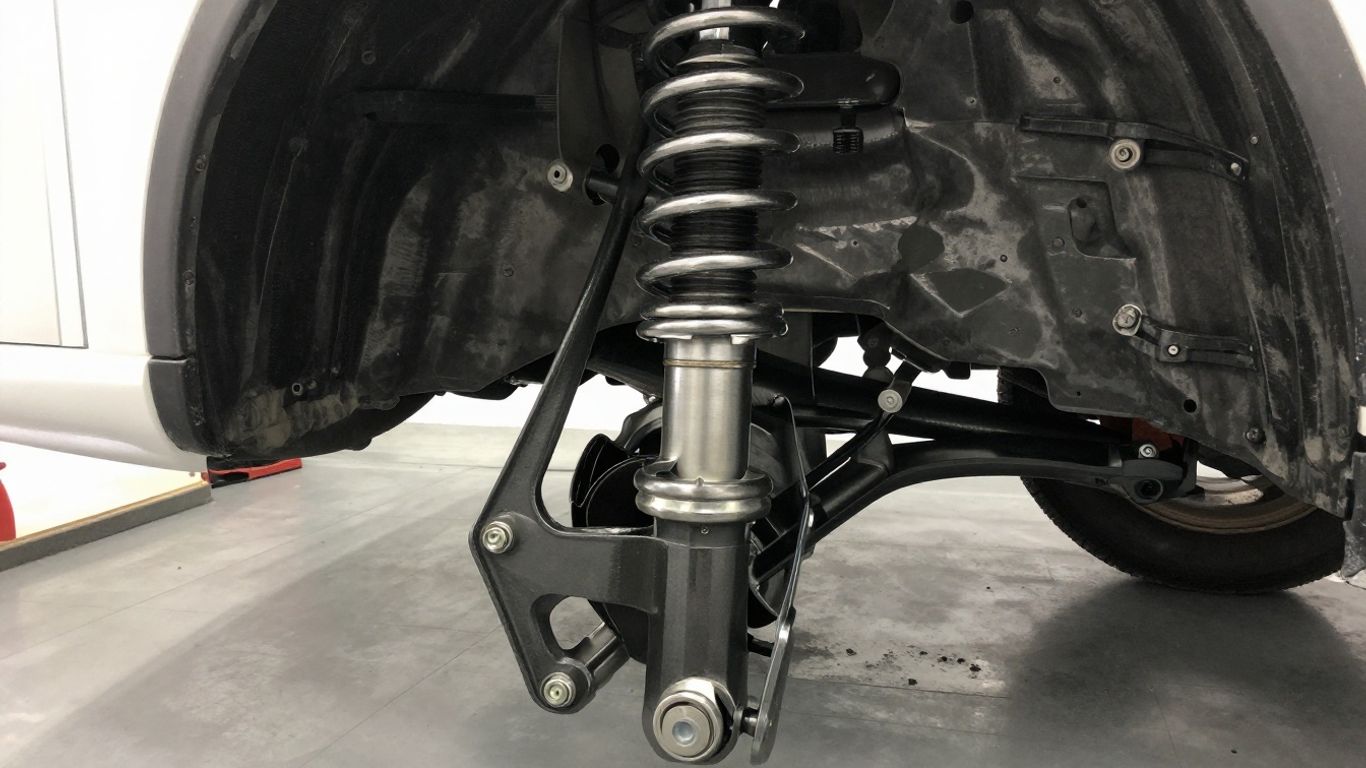
Control arms connect the wheel assembly to the vehicle structure and guide its movement. Ball joints provide a pivot between moving parts, while bushings cushion vibration and allow controlled flex. Wear may appear as looseness, cracking, torn rubber, or movement that is visible during an inspection.
Because these parts influence wheel position, their condition can affect alignment. Some assemblies combine a control arm, bushing, and ball joint, while others use separate serviceable components.
Shocks, struts, and coil springs
Coil springs support the vehicle’s weight, and shocks damp the spring’s compression and rebound. A strut combines structural and damping functions in many designs, forming part of the wheel location and steering assembly. A leaking damper, damaged spring, or sagging corner can change both ride quality and handling.
A useful comparison is to separate support from control: the spring holds the vehicle up, while the damper manages the motion. Replacing one does not automatically correct a fault in the other.
Sway bars, links, and stabilizer bushings
A sway bar, also called an anti-roll bar, connects parts of the suspension to resist excessive body roll during cornering. End links transfer movement to the bar, and stabilizer bushings hold it in place while limiting noise and vibration. These parts are relatively small, but looseness can create a sharp clunk over uneven surfaces.
The best inspection looks for torn bushings, bent links, missing hardware, and contact marks. Replacing only the visibly noisy part may be enough, but related wear should still be checked.
Leaf springs, air springs, and torsion bars
Leaf springs combine springing and axle-location duties and are common in many load-carrying vehicles. Air springs use pressurised air to support the vehicle and may allow adjustable ride height. Torsion bars use twisting force in a steel bar to provide spring action.
These designs require different checks. A broken leaf, leaking air component, or incorrectly adjusted torsion bar can affect ride height, alignment, and load behaviour. A vehicle-specific service procedure is safer than applying assumptions from another suspension type.
Essential steering parts and their functions
Steering components must transmit driver input with very little unwanted movement. They also need to tolerate road shock, suspension travel, heat, and weather. A steering fault can feel subtle at first, which makes regular inspection especially valuable.
Tie rods, steering knuckles, and ball joints
Tie rods connect the steering mechanism to the wheel assembly and help set the toe angle. The steering knuckle carries the hub or spindle and provides mounting points for steering and suspension components. Ball joints allow the knuckle to pivot as the wheel turns and moves vertically.
Excess play in any of these parts may create vague steering or irregular tire wear. Since several joints can move together, diagnosis often involves comparing movement at the wheel with the steering linkage.
Steering racks, gearboxes, and columns
The steering column transfers rotation from the steering wheel to the steering mechanism. A rack-and-pinion unit converts that rotation into side-to-side movement, while a steering gearbox uses internal gears and linkage to achieve the same broad purpose. Mounts, seals, and intermediate shafts are also part of the inspection picture.
For a closer look at rack-and-pinion variations and heavier steering designs, the steering system types guide offers useful background. The exact unit fitted to a vehicle still needs to be confirmed before ordering.
Power steering pumps, hoses, and electric systems
Hydraulic power steering uses a pump, fluid, hoses, and a steering assist unit to reduce the effort needed at the wheel. Electric systems use a motor and sensors, with assistance controlled electronically. A low fluid level, leaking hose, failing pump, or electrical fault can make steering noisy, heavy, or inconsistent.
The symptom alone does not identify the failed part. Check fluid condition where applicable, inspect for leaks, and scan electronic systems when the vehicle’s design calls for it.
Idler arms, pitman arms, and center links
Idler arms, pitman arms, and center links are found mainly in steering linkage arrangements used by certain trucks and larger vehicles. They help transfer movement across the front end and keep the wheels responding together. Wear can produce play, wandering, or uneven tire wear.
Linkage parts should be assessed as a system because movement at one pivot can mask movement at another. Correct tightening and alignment are just as important as the part itself.
Signs your suspension or steering parts need attention
Symptoms rarely identify one failed component with certainty. Tire condition, wheel balance, alignment, brakes, and suspension wear can overlap, so diagnosis should consider the whole vehicle. Still, certain patterns are strong reasons to arrange an inspection rather than postponing repairs.
Uneven tire wear and vehicle pulling
Feathered, cupped, or unevenly worn tread can indicate incorrect alignment, worn joints, weak damping, or an inflation problem. Pulling may also come from tire pressure differences or brake drag, so it should not automatically be assigned to steering parts.
Record when the symptom appears and whether it changes during braking, acceleration, or cornering. That detail can help narrow the inspection.
Clunking, squeaking, and grinding noises
A clunk over bumps may come from a loose link, worn bushing, ball joint, or mounting point. Squeaks can be associated with dry or deteriorated bushings, while grinding deserves prompt attention because it may involve a bearing or another component in contact.
Noise location and timing matter. A sound that occurs only while turning differs from one that appears when the suspension compresses, and both differ from a noise that follows wheel speed.
Excessive bouncing, dipping, or body roll
A vehicle that keeps bouncing after a bump may have weak damping. Excessive nose dive under braking, rear squat under acceleration, or pronounced body roll can also indicate suspension wear, though load, tire condition, and vehicle design affect normal behaviour.
A simple road impression is useful but not conclusive. A workshop can inspect for leaks, damaged springs, loose mounts, and unequal ride height before recommending parts.
Steering play, vibration, and difficulty turning
Free play at the steering wheel, vibration at speed, or difficulty turning should be treated seriously. Possible causes include worn linkage, wheel imbalance, alignment issues, tire faults, power-assist problems, or damaged suspension joints.
If steering suddenly becomes heavy, unstable, or unresponsive, reduce speed safely and stop driving when conditions allow. Continuing to use a vehicle with a serious steering fault can increase risk.
How to choose the right replacement parts
Choosing Suspension & Steering Parts starts with accurate vehicle information, not just a photograph of the old component. Year, make, model, engine, body style, drivetrain, and production changes can all affect fitment. A reputable supplier can help cross-check those details against the catalogue.
Matching parts to the vehicle’s year, make, and model
Use the registration or vehicle identification number where available, then confirm the make, model, engine, and build details. Some vehicles use different parts on the left and right sides or across trim levels. Measurements and mounting details can provide a second check, but they should not replace catalogue verification.
If you are also weighing the wider cost of vehicle ownership, an auto loan guide can help frame finance decisions separately from the technical choice of parts.
Comparing original equipment and aftermarket components
Original equipment parts are built to the vehicle maker’s specification, while aftermarket components vary by manufacturer, design, materials, and testing. A suitable aftermarket part can be a practical choice when its fitment, construction, and warranty are clearly documented.
For example, MOOG provides suspension parts and lets users search for a fit by vehicle year, make, and model. That documented search approach is useful, but the final selection should still be checked against the exact vehicle.
Choosing between individual parts and complete assemblies
An individual component may make sense when surrounding parts are in good condition and labour is straightforward. A complete assembly can save time when several related pieces are worn or when a preassembled unit reduces the chance of installation errors.
Consider labour, fasteners, existing wear, and whether the assembly includes every required component. The cheapest item on the shelf is not always the lowest total repair cost.
Checking fitment, materials, warranties, and certifications
Before purchase, review fitment notes, materials, included hardware, warranty terms, and any relevant certifications. Keep records of the part number and supplier in case a return or warranty claim is needed. A used part may be appropriate for some applications, but it deserves especially careful inspection for corrosion, cracks, distortion, and hidden wear.
A used scooter buying guide illustrates the same broader habit: inspect condition, confirm paperwork, and check parts availability before committing. For a car repair, also compare the part against the old unit without assuming identical appearance means identical fit.
Suspension and steering parts replacement and maintenance
Replacement work should restore safe movement, not merely remove a noise. Some jobs are manageable for an experienced home mechanic, while others require specialist tools, accurate torque settings, or an alignment rack. Plan the inspection and follow the vehicle’s repair information before loosening critical fasteners.
When professional inspection is necessary
Seek professional help when there is steering play, a damaged spring, a suspected ball-joint failure, fluid leakage, electronic steering faults, or uncertainty about safe lifting points. A technician can check movement under load and identify related faults that are difficult to see with the vehicle on the ground.
A professional inspection is also sensible after a collision, severe pothole impact, or sudden change in ride height. These events can bend parts without leaving an obvious crack.
Basic inspection steps for wear and damage
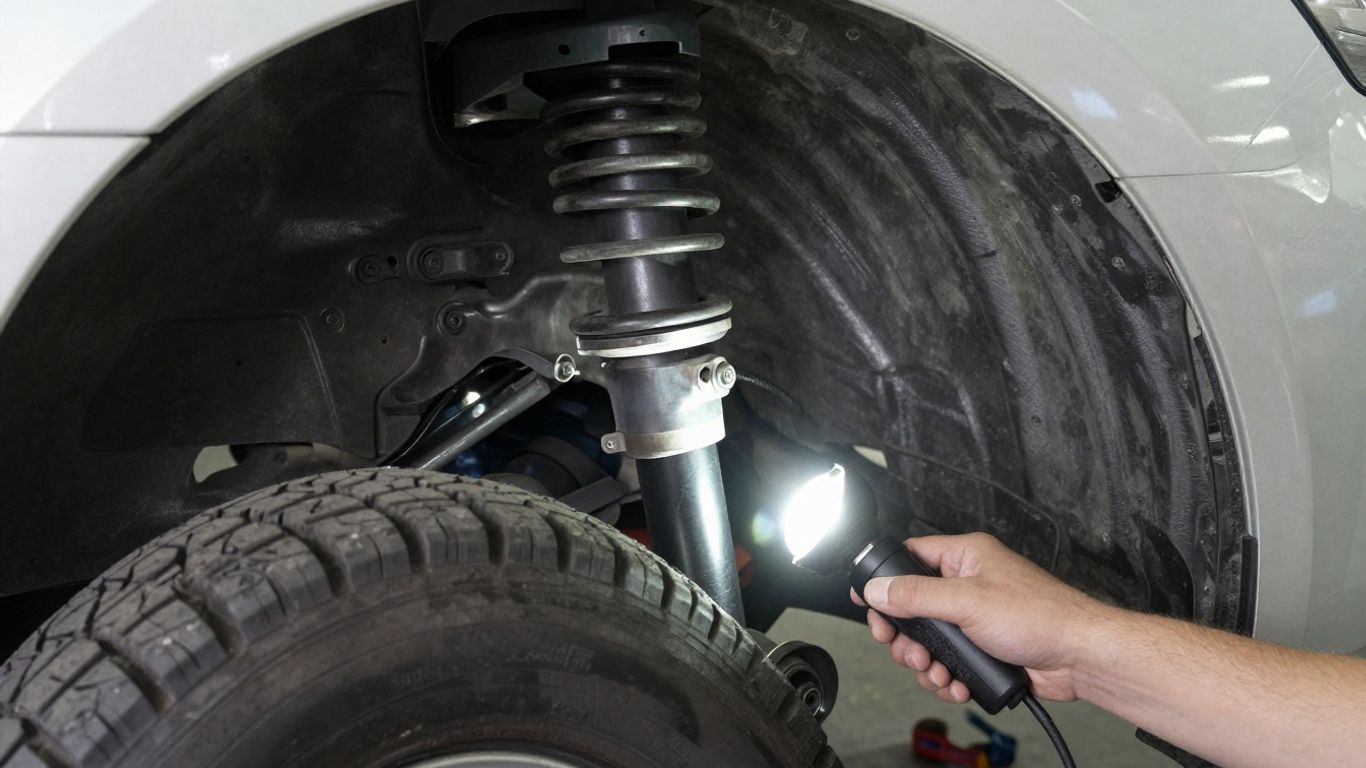
Begin with tire pressure, tread condition, visible leaks, and ride height. With the vehicle safely supported, inspect bushings, joints, springs, links, mounts, hoses, and fasteners for damage or movement. Do not place any part of your body under a vehicle supported only by a jack.
A compact inspection sequence keeps the process consistent:
- Confirm the symptom and when it occurs.
- Check tires, wheels, and visible fluid leaks.
- Inspect joints, bushings, springs, dampers, and mounts.
- Compare left and right sides for damage or unusual movement.
These steps do not replace a complete diagnosis, but they can reveal obvious faults and provide useful information before parts are ordered.
Why wheel alignment follows certain repairs
Replacing tie rods, control arms, ball joints, or other locating components can change camber, caster, or toe. Even a small change may affect straight-line tracking and tire wear. Alignment is therefore often part of the repair, not an optional finishing touch.
The vehicle should be aligned after the suspension is settled and all relevant fasteners are correctly tightened. Ask for the before-and-after readings so any remaining issue can be discussed clearly.
Preventive maintenance for longer component life
Keep tires correctly inflated, address worn components early, and avoid ignoring small leaks or new noises. Road salt, water, heavy loads, towing, rough roads, and frequent short trips can all influence component life. Regular tire rotations and inspections make changes easier to spot.
For GM vehicles, ACDelco lists GM Genuine Parts Original Equipment and ACDelco Aftermarket Steering and Suspension Parts, including products designed for simple and precise installation. That information is specific to the documented product range, so fitment should still be verified for the vehicle.
Safety checks after installation
After installation, confirm that every fastener is tightened to the specified torque and that brake hoses, wiring, and wheel-speed sensors are routed safely. Check that steering turns freely from lock to lock without binding, then perform a cautious road test in a low-traffic area.
Recheck for new noises, pulling, warning lights, or changes in steering feel. When relevant, arrange an alignment and keep the installation record with the vehicle’s service history.
A separate auto insurance guide can explain coverage concepts, but insurance does not replace the need to maintain mechanically safe steering and suspension components. For owners of golf carts, E-Z-GO also provides steering and suspension parts such as tie rods, ball joints, shocks, and springs for its vehicles; those applications should not be treated as interchangeable with passenger-car parts.
Conclusion
A sound suspension and steering system depends on many parts working together, from springs and dampers to joints, racks, and linkage. Learn the symptoms, verify fitment carefully, and treat alignment and final safety checks as part of the repair. Thoughtful inspection usually costs less than guessing, and it helps keep every replacement focused on reliable control.
Frequently Asked Questions
What do suspension parts do?
Suspension parts support the vehicle’s weight, absorb road impacts, control wheel movement, and help keep the tires connected to the road.
What do steering parts do?
Steering parts transfer the driver’s input through the column, steering mechanism, and linkage so the road wheels can change direction.
Can worn suspension parts affect steering?
Yes. Worn joints, bushings, mounts, or control arms can alter wheel position and create looseness, pulling, vibration, or uneven tire wear.
How can I tell if a shock or strut is worn?
Common clues include repeated bouncing, leaking fluid, uneven tire wear, excessive body movement, or a less controlled response over bumps.
Do all suspension repairs require an alignment?
Not every repair changes alignment, but work involving wheel-locating or steering components commonly can. An alignment check is wise whenever those parts are replaced.
Is it safe to drive with a clunking suspension?
A clunk may come from a minor link or bushing, but it can also indicate a loose or unsafe joint. Have the source inspected rather than assuming the noise is harmless.
Should I replace one suspension part or several together?
That depends on the failed component, the condition of related parts, labour access, and the vehicle’s repair requirements. A complete assembly can make sense when several connected pieces are worn.