

Key Takeaways
Buying used suspension parts can save money, but only when fitment and condition are checked carefully.
- Match the exact model, year, position, and part number before buying.
- Inspect used struts and shocks for leaks, corrosion, damage, and worn mounts.
- Ask sellers about mileage, storage, testing, and return terms.
- Include shipping, labor, alignment, and related components in the real cost.
- Replace suspension components in pairs when their wear is similar.
Understanding Chery struts and shocks
Suspension parts do more than make a vehicle feel comfortable. They help keep the tires in contact with the road and influence braking, steering, and stability. When shopping for used Chery struts and shocks, it helps to understand what each component does before comparing listings or prices.
How struts and shocks differ
A shock absorber controls spring movement, slowing compression and rebound after the vehicle passes over a bump. A strut can perform that damping role while also forming part of the wheel’s structural and steering assembly. Because a strut often carries more surrounding hardware, its replacement may involve a mount, bearing, spring, or other attached component rather than a single damper alone.
The role of each suspension component
The spring supports the vehicle’s weight and allows the wheel to move. The damper controls that movement, while bushings isolate vibration and allow controlled movement at mounting points. A strut mount connects the upper assembly to the body, and on many front suspensions it also supports steering rotation. A worn part can therefore affect other components, so the complete assembly deserves attention.
Signs that replacement may be necessary
A leaking damper, repeated bouncing, uneven tire wear, clunking, nose-diving during braking, or a noticeable change in cornering can all justify an inspection. None of these symptoms identifies one failed part by itself; worn bushings, springs, tires, or alignment can produce similar behavior. A proper inspection matters before ordering a used replacement.
If the vehicle feels unsettled after a bump, compare the behavior on both sides and look for visible fluid around the damper body. A qualified technician can then separate a suspension fault from a tire or steering problem.
Chery models commonly using these parts
Listings may refer to a Tiggo, another Chery model, or a particular generation without making the application clear. Treat the model name as a starting point, not proof of compatibility. Confirm the vehicle identification details and suspension position against the seller’s part information, especially when a listing covers several years or body styles.
Confirming fitment before you buy
Fitment is the first practical filter for any used suspension purchase. Two parts can look nearly identical while differing in length, mounting hardware, damping specification, or position on the vehicle. Write down the vehicle details before contacting a seller, and keep the original part available for comparison where possible.
Matching the exact Chery model and year
Record the model, model year, body style, drivetrain, and market version. A facelift or change in generation can bring different suspension dimensions even when the name remains similar. The vehicle identification number is often the most useful reference, although a seller may also need a photograph of the original part or its label.
Checking front and rear suspension positions
Front and rear dampers are not interchangeable by default, and left and right assemblies may differ when attached hardware is included. Ask whether the listing is for a bare shock, a complete strut, or a spring-and-strut assembly. A useful strut mount reference can also clarify whether the mount is being sold separately from the damper.
Comparing OEM and aftermarket part numbers
Compare the number stamped on the original component with the number in the listing, then confirm any supersession or interchange information. An aftermarket number may use a different format from the original equipment number, so visual similarity alone is not enough. Keep copies of the seller’s written confirmation in case the part needs to be returned.
Terminology deserves care here. Even technical words can carry different meanings in different contexts, as illustrated by this guide to precise legal terminology; suspension listings deserve the same discipline. Ask whether “strut” means the complete assembly or only the damper insert.
Verifying compatibility with trim and engine options
Engine size, trim level, ride height, load rating, and drivetrain can affect suspension specifications. Provide every detail requested by the seller rather than assuming that a shared model badge settles the question. If no one can confirm the application, pause the purchase and obtain a parts-catalog lookup or professional opinion.
Evaluating the condition of used suspension parts
A used suspension component has a history that a new part does not. Its age, mileage, exposure to water, storage conditions, and previous impact all matter. Photos can help, but a careful inspection and clear return arrangement reduce the risk of paying for a part that is already near the end of its useful life.
Inspecting for leaks, dents, and corrosion
Look for oil around the damper body, pitting on exposed metal, deep rust, bent tubes, and dents near the piston housing. Light surface discoloration is different from corrosion that has removed material or weakened a mounting area. Ask for clean, close photographs rather than relying on one distant image.
Checking the piston rod and mounting points
The piston rod should appear straight, smooth, and free from scoring. Damage to the polished surface can harm the seal and lead to leakage after installation. Check the eyelets, studs, brackets, and threads for distortion, cracks, or stripped fasteners. A part that was removed after a collision deserves especially careful examination.
Assessing bushings, springs, and strut mounts
Rubber bushings may be cracked, crushed, or hardened, while springs can show chipped coating, broken coils, or corrosion at their ends. Strut mounts and bearings can also wear independently of the damper. If the listing includes these pieces, ask whether they were inspected or simply left attached because removing them was inconvenient.
Understanding mileage and storage history
Mileage gives useful context but is not a complete condition test. A low-mileage part from a flood-exposed vehicle may be a poorer choice than a higher-mileage component stored indoors. Ask where the vehicle operated, why it was dismantled, how long the part was stored, and whether the seller tested its movement or damping.
Finding reliable used Chery struts and shocks
The seller can be as important as the part. A dismantler that records vehicle details and photographs the actual component gives you more to evaluate than a vague stock image. Online marketplaces can widen the search, but they also make it easier for incomplete descriptions and mismatched parts to circulate.
Comparing salvage yards, recyclers, and online sellers
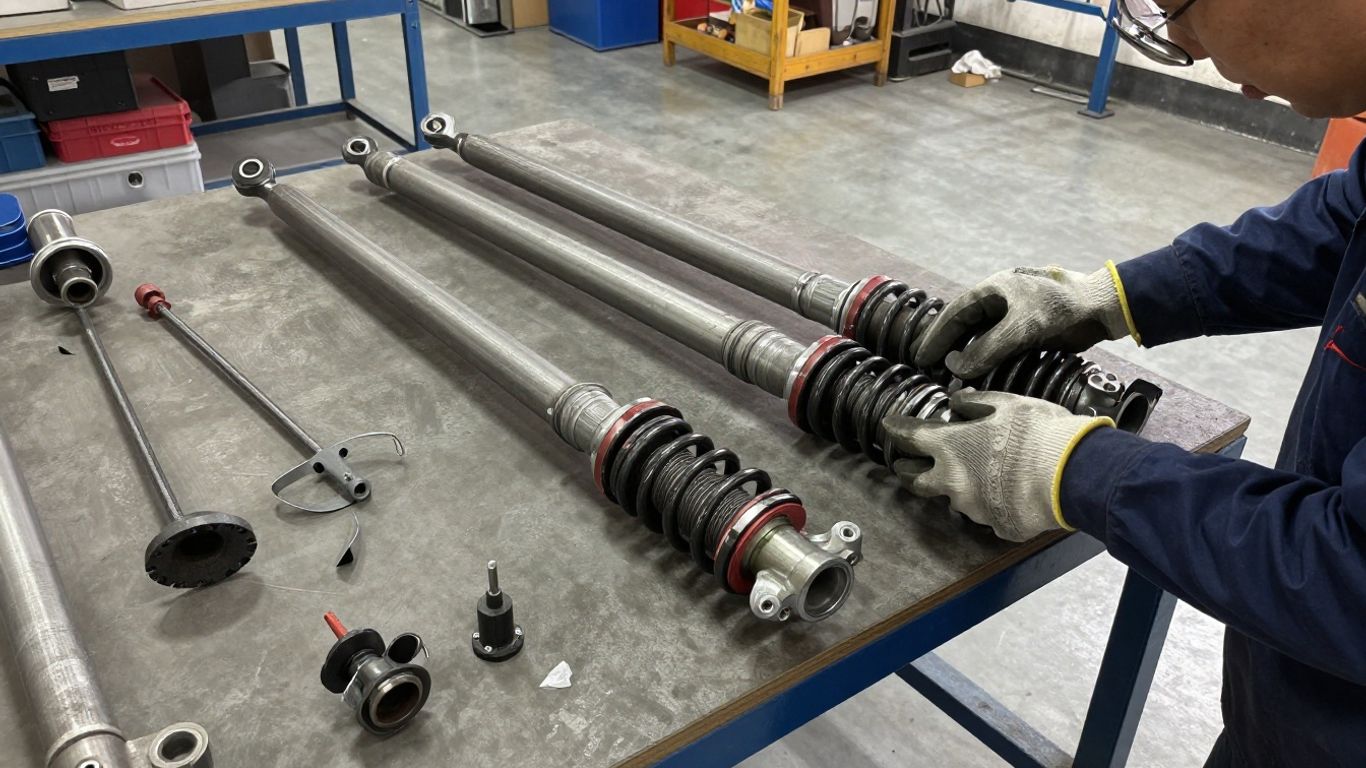
Salvage yards and vehicle recyclers may provide donor-vehicle details, while online sellers may offer broader geographic reach and easier price comparison. Ask how inventory is identified and whether the pictured component is the exact one that will ship. A search service that connects buyers with multiple suppliers can be convenient, but the final fitment checks still belong to the buyer and seller together.
For example, a used Chery parts search may help locate suppliers, while a listing for a particular front absorber should still be checked against the vehicle’s exact specification. Availability is not the same as confirmed compatibility.
Reviewing photos and detailed part descriptions
A useful listing should show the actual part from several angles, including mounting points, labels, seals, and any included hardware. The description should state the position, donor vehicle, condition, part number, and whether the item has been tested. Stock photos, cropped labels, and phrases such as “fits many models” are reasons to ask more questions.
Asking sellers for fitment and testing information
Before paying, ask the seller to confirm the model, year, axle position, part number, and included components in writing. Also ask whether the damper was checked for leaks, bent rods, abnormal resistance, or damaged mounts. Keep the answers with the order record. Clear communication is especially valuable when shipping a heavy or awkward part across the country.
A separate suspension parts listing may show a part number and construction details, but those details should be treated as a lead for comparison rather than automatic proof that it suits your vehicle.
Recognizing warning signs of unreliable listings
Be cautious when a seller will not identify the donor vehicle, avoids questions about returns, or uses photographs that do not show the actual component. A price dramatically below comparable listings can reflect missing hardware, severe wear, or a mistaken application. Also be wary of pressure to pay before fitment is confirmed.
Comparing cost and overall value
The purchase price is only one part of the decision. A low-cost damper that arrives damaged, does not fit, or requires extra mounting hardware can become more expensive than a better-documented option. Compare the complete job, including delivery, inspection, installation, and any related parts that should be replaced at the same time.
Estimating the price of used versus new parts
Collect several comparable prices for the same position and level of completeness. Separate bare dampers from complete assemblies, and compare the condition and warranty rather than just the headline amount. New, aftermarket, refurbished, and used parts each carry different trade-offs in expected service life, availability, and return protection.
Factoring in shipping, labor, and installation costs
Suspension assemblies can be heavy, and shipping charges may erase an apparent saving. Labor also varies depending on whether the part is a simple damper or a complete strut assembly, and seized fasteners can add time. Include a possible wheel alignment and the cost of replacement hardware in the estimate.
A clear cost worksheet is often more useful than an attractive sticker price. Even guidance about the cost of workplace prevention illustrates a broader budgeting lesson: consider the expense of avoiding a foreseeable problem, not only the first payment.
Deciding when refurbished parts are a better choice
Refurbished parts can make sense when the supplier explains what was replaced, tested, or reconditioned and offers meaningful warranty coverage. They may cost more than an untested used part but provide better information about expected performance. Check whether the refurbishment applies to the damper alone or to the complete assembly.
Avoiding the cheapest-part trap
The cheapest option is rarely the best value when its history is unknown or its return terms are weak. Compare documentation, condition, included hardware, and seller support alongside price. A part that costs slightly more but arrives correctly identified and ready for installation may reduce both downtime and repeat labor.
Installing and maintaining replacement suspension parts
Installation affects the result just as much as the part itself. Suspension components may be under spring tension, and incorrect assembly can create a safety risk or damage nearby parts. Plan the work around the vehicle’s service requirements rather than treating the replacement as a simple bolt-on exchange.
When professional installation is recommended
Professional installation is sensible when the job involves a compressed coil spring, seized fasteners, damaged mounting points, or uncertainty about assembly order. A technician can inspect adjacent steering and suspension components while the part is accessible. Do not attempt to dismantle a loaded spring without the correct equipment and procedure.
Replacing suspension components in pairs
Replacing both sides on the same axle is often advisable when the components have similar age and wear. Matching damping characteristics helps the vehicle behave more evenly in braking and cornering. The decision should still account for the condition of the existing side, the vehicle manufacturer’s guidance, and the condition of related springs and mounts.
Checking alignment after installation
Changing a strut or disturbing suspension mounting points can alter wheel alignment. Have alignment checked after installation, especially if the steering wheel is off-center, the vehicle pulls, or the tires begin wearing unevenly. Alignment does not repair a bent component, so any abnormal reading should be investigated rather than simply adjusted away.
Monitoring ride quality and handling over time
For the first several drives, listen for new knocks and pay attention to braking stability, steering response, and how the vehicle settles after bumps. Recheck visible fasteners and look for leaks once the vehicle has been driven safely. If symptoms remain, stop treating them as normal break-in behavior and arrange another inspection.
For video-based background, this article can be paired with a general YouTube suspension inspection while remembering that a video cannot replace vehicle-specific service instructions.
Conclusion
A successful used suspension purchase comes down to disciplined matching, honest condition assessment, and realistic whole-job costing. Confirm the exact application before paying, ask for evidence rather than assumptions, and use professional installation when spring or alignment work makes the job unsafe or uncertain.
Frequently Asked Questions
Are used Chery struts and shocks safe to buy?
They can be suitable when the part is correctly matched, visibly sound, honestly described, and covered by workable return terms. Unknown history and poor documentation increase the risk.
Should struts and shocks be replaced in pairs?
Replacing both components on the same axle is commonly recommended when they have similar age or wear. It helps maintain more consistent damping from side to side.
How can I tell whether a used shock absorber is worn?
Look for leaks, a damaged piston rod, corrosion, bent housings, worn bushings, and a credible test or service history. A technician can assess symptoms that photos cannot confirm.
Do front and rear suspension parts interchange?
Usually not. Front and rear parts often differ in dimensions, mounting style, and damping requirements, so the position must be confirmed before purchase.
Is a complete strut assembly better than a bare damper?
A complete assembly can reduce assembly work, but every included component still needs inspection. A bare damper may be appropriate when the existing spring and mount are known to be good.
Does suspension replacement require a wheel alignment?
It often does, particularly when a strut or mounting point has been removed. Alignment should be checked whenever handling, steering position, or tire wear changes after installation.
What should I ask a seller before buying?
Ask for the donor vehicle, exact position, part number, mileage, storage history, test details, included hardware, shipping terms, and return policy. Request confirmation that the pictured part is the one being shipped.