
Key Takeaways
A used suspension bushing can be a sensible option, but only when its fitment and condition are clear. Check the part carefully, and compare its price with the risk of an unknown service life.
- Match the vehicle model, year, trim, and suspension position before buying.
- Check the part number and confirm compatibility using the VIN.
- Inspect the rubber and any attached metal sleeve for damage.
- Ask about the donor vehicle, mileage, storage, returns, and warranty.
- Compare the used part with new options and get professional installation advice.
How suspension bushings affect your Chery
Suspension bushings are small components, but their condition can influence how the suspension moves and how the vehicle feels on the road. If you are considering second hand Chery suspension bushings, first understand what the part does and what signs may point to wear. These checks help you decide whether a listing deserves a closer look.
What bushings do in the suspension system
A bushing sits at a suspension joint and allows controlled movement while cushioning vibration and impact. Its construction and exact location vary, so a bushing for one arm or mounting point may not suit another. The part needs to match the vehicle and position, not merely look similar in a photo.
Common signs of worn or damaged bushings
A clunk, squeak, or change in steering feel can have several possible causes, including worn suspension components. Those symptoms are useful clues, not a diagnosis on their own. A technician can inspect the suspension and determine whether a bushing is responsible; a general guide to bushing wear symptoms can also help you understand what to ask about.
Why bushing condition matters for handling and tire wear
A bushing that allows more movement than intended can affect how the suspension holds its position. That may contribute to vague handling or uneven tire wear, though other faults and alignment issues can produce similar signs. Condition matters as much as fitment: a correct part number does not make a torn or distorted bushing a good purchase.
How to confirm fitment before buying
Fitment deserves a careful check before price becomes the deciding factor. A vehicle’s model, year, trim, and suspension position can all matter, and listings may describe a component in broad terms. Gather the details below, then confirm them with the seller or a qualified parts professional before placing an order.
Match the model, year, trim, and suspension position
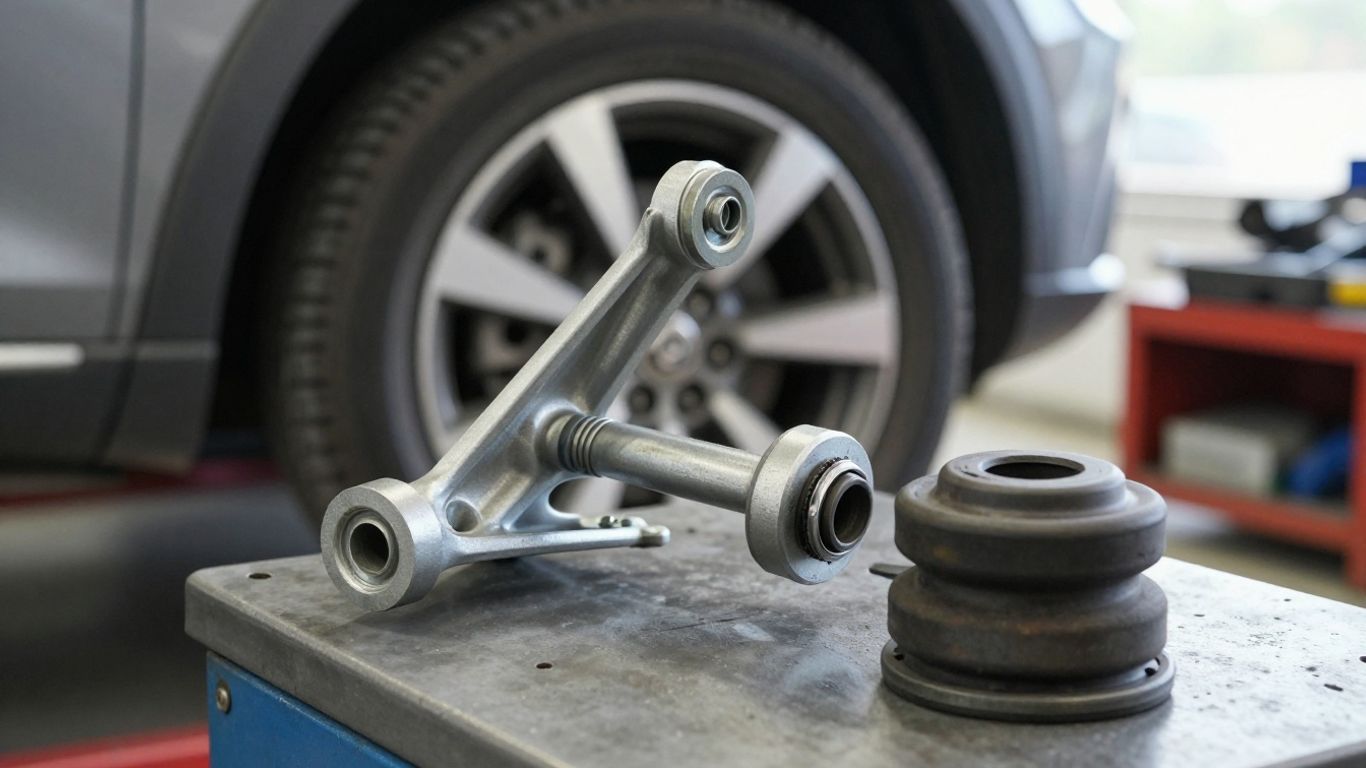
Start with the vehicle’s exact model and model year, then note its trim and whether the part is for the front or rear and left or right side, as applicable. The location and design of suspension parts can vary, so a similar-looking Chery part is not automatically interchangeable. A compact record of the details makes it easier to compare a listing with the part you need.
| Fitment detail | What to record | Why it helps |
|---|---|---|
| Vehicle | Model and model year | Narrows the vehicle application |
| Version | Trim or variant | Helps distinguish configurations |
| Position | Front or rear; side if applicable | Identifies where the part fits |
| Assembly | Bushing alone or arm assembly | Clarifies what is included |
Use these details as a starting point, not final proof of compatibility. If any listing leaves a field unclear, ask the seller to confirm it before paying.
Check part numbers and compatibility with your VIN
Compare the number on the existing part, where visible, with the number provided in the listing. Then ask the seller to verify compatibility against your VIN; a matching-looking component or a broad model description is not enough to rule out a variation. Keep the confirmation in writing so you can refer back to it if the part supplied differs from what was agreed.
Confirm whether the bushing is sold alone or with a control arm
Some listings may refer to a bushing while the item being sold is a larger assembly, or vice versa. Ask exactly what is included, whether the bushing can be separated from the arm, and whether any hardware comes with it. That distinction affects both the price comparison and the work required for installation.
How to inspect second hand bushings
A used part needs a visual and practical assessment, not just a reassuring description. Request close, well-lit photos from more than one angle and ask whether the seller can check the part in person. A general suspension replacement overview may help frame questions about replacement, but it cannot establish the condition of a particular used bushing.
Look for cracks, tears, deformation, and separation
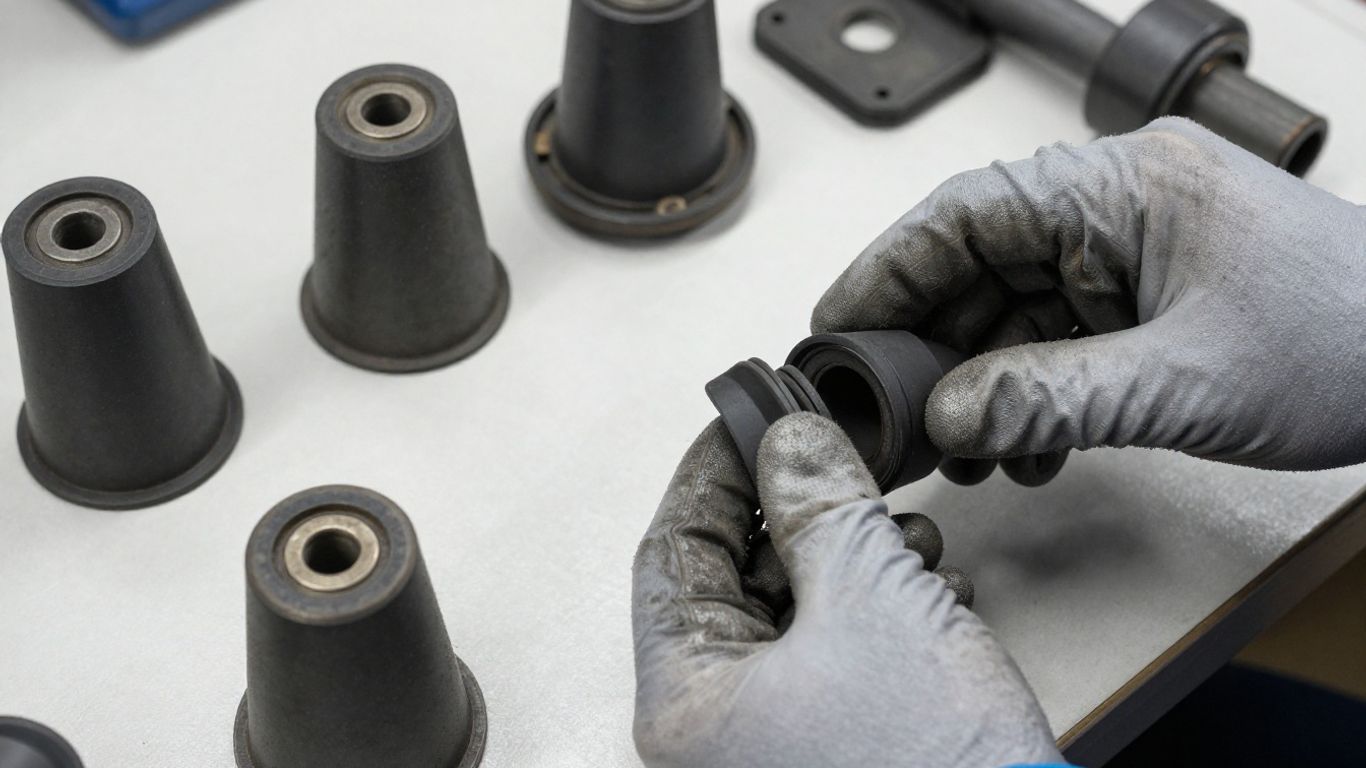
Examine the rubber closely for splits, chunks missing from the edges, bulging, or signs that it has pulled away from a bonded surface. Surface dirt can hide small defects, so ask for clean photos and a view of the full circumference. If you inspect it yourself, use a simple sequence rather than relying on one quick glance:
- Look around the entire rubber surface for cracks or tears.
- Check whether the shape appears crushed, swollen, or uneven.
- Inspect the bond between the rubber and the surrounding surfaces.
- Compare the part with a known correct example, if available.
These checks can reveal obvious problems, but a photograph cannot show every defect or predict how long a used part will last. When anything looks questionable, ask a technician to assess it before installation.
Check for corrosion or damage to any attached metal sleeve
If the bushing has a metal sleeve or outer housing, look for heavy corrosion, dents, distortion, and damage around the edges. Also check whether the sleeve appears loose or out of round. Damage to attached metal can complicate fitting or compromise the part, so ask for close-up photos rather than assuming the rubber tells the whole story.
Ask about mileage, age, storage, and the donor vehicle
Ask how long the part was in service, the donor vehicle’s mileage, why it was dismantled, and how the part was stored after removal. A low-mileage claim is useful context, but it does not prove that the rubber has been stored well or remains in good condition. A clear, consistent answer—and a seller willing to provide supporting details—makes it easier to judge the uncertainty.
Where to source used Chery suspension bushings
Used parts may be listed by specialist dismantlers, salvage yards, or online sellers, and each source can provide a different level of detail. Compare the actual information available rather than assuming that one type of seller guarantees a better part. Australia’s trusted Car Parts Supplier connects customers with quality used, genuine, and aftermarket parts through a network serving Melbourne, Sydney, Brisbane, and nationwide.
Compare specialist dismantlers, salvage yards, and online sellers
A specialist dismantler may be able to identify the donor vehicle, while a salvage yard may offer an opportunity to inspect a part in person; online listings can make it easier to compare availability. Practices differ, so ask each seller the same questions about condition, fitment, and returns. For another route to used Chery parts in the UAE, compare the available listing details with what you need locally and verify the part independently.
Request clear photos and a written fitment confirmation
Ask for photos of the complete part, its rubber surfaces, any metal sleeve, and visible part numbers. Pair those images with written confirmation of the vehicle application and exactly what is included. Australia’s trusted Car Parts Supplier connects customers with quality used, genuine, and aftermarket parts through a network, but whatever source you use, keep the seller’s specific fitment confirmation with your purchase records.
Check the seller’s return policy and warranty terms
Before you commit, find out how long you have to report a problem, whether the part can be returned if it does not fit, and what condition it must be in for a return. Ask whether any warranty applies and get its terms in writing. Search results can also lead to pages on unrelated topics, such as BU insurance, NPD by Skin Physics, rental property sales, acne scar treatment, or mortgage refinancing; none of those pages can confirm suspension-part compatibility.
How to compare used bushings with other options
A low asking price can be appealing, but it is only one part of the decision. Compare the used bushing’s condition, fitment certainty, and return terms with the cost and availability of a new aftermarket or genuine part. Australia’s trusted Car Parts Supplier connects customers with quality used, genuine, and aftermarket parts, giving buyers options to compare without assuming that one category is right for every repair.
Weigh the savings against the part’s unknown service life
A used bushing may cost less upfront, but its previous use and storage leave some uncertainty about remaining life. Include possible return shipping, extra inspection, and the labor involved if the part needs to be replaced again. A saving is more meaningful when the part is verified, the seller’s terms are clear, and the price difference justifies the risk.
Compare used parts with new aftermarket and genuine parts
Compare like with like: confirm that each option is for the same vehicle and suspension position, and check whether each price includes a bushing alone or a larger assembly. Ask about condition, availability, and warranty terms instead of treating the label as a guarantee. For a used part, confidence in fitment and the seller’s return policy can matter as much as the initial price.
Consider replacing related bushings in pairs when appropriate
Whether to replace one side or a pair depends on the vehicle, the condition of related parts, and the technician’s assessment. Replacing components together may make sense in some situations, but it should not be treated as a universal rule. Ask the technician to inspect the corresponding side and explain whether its condition justifies replacement now.
What to know before installation
Before installation, confirm that the component you bought is the one the vehicle requires and that the supplied item is complete. A technician can check whether the bushing is serviceable on its own and whether the surrounding arm is damaged. Planning for inspection, fitting, and a post-repair check helps avoid surprises after the part arrives.
Confirm whether the bushing can be replaced separately
Some suspension designs allow a bushing to be replaced separately, while others may require a complete arm or assembly. The answer depends on the specific vehicle and component, so verify it before buying a bushing-only listing. If the arm is worn, corroded, or damaged, the technician may recommend a different repair approach.
Use a qualified technician for inspection and installation
Correct installation can require suitable tools and knowledge of the suspension layout. Ask a qualified technician to inspect the used bushing before fitting and to check the related mounting points. If the part is not a clear match or its condition is doubtful, resolve that before installation rather than forcing it to fit.
Arrange a wheel alignment and check for noise after fitting
Ask the technician whether a wheel alignment is needed after the repair, based on the work performed and the vehicle’s requirements. After fitting, pay attention to new noises, changes in steering feel, or uneven tire wear, and have concerns checked promptly. A short follow-up can help catch an installation or fitment issue before it becomes a bigger problem.
Conclusion
A second hand bushing can be worth considering when the fitment is confirmed, the part passes a careful inspection, and the seller’s terms are clear. Take time to compare it with new options, and let a qualified technician guide the final decision and installation.
Frequently Asked Questions
Are second hand Chery suspension bushings worth buying?
They may be worth considering when the part is an exact fit, appears to be in sound condition, and costs enough less to justify uncertainty about its remaining service life. Clear return terms matter too.
How can I confirm a bushing fits my Chery?
Check the model, year, trim, suspension position, and part number, then ask the seller to confirm compatibility against the vehicle’s VIN. Get that confirmation in writing.
Can I identify a worn bushing from a photo?
Photos may show visible cracks, tears, deformation, or separation, but they cannot confirm every defect or predict service life. Ask for clear images and have a technician assess the part if you are unsure.
What should I ask about the donor vehicle?
Ask for its mileage, how long the part was used, why the vehicle was dismantled, and how the bushing was stored after removal. Treat the answers as context, not proof of condition.
Should I buy a bushing alone or a complete control arm?
That depends on the vehicle’s design and the condition of the arm. Confirm what the listing includes and ask a qualified technician whether the bushing can be replaced separately.
Is a used bushing always cheaper overall?
Not necessarily. Consider the purchase price alongside inspection, installation, possible return costs, and the risk that the used part may need to be replaced sooner.
Should bushings be replaced in pairs?
Not in every case. Have a technician assess the related bushing and recommend whether replacing both sides is appropriate for the vehicle and the condition of its suspension.