

Key Takeaways
A careful inspection and accurate parts matching can prevent avoidable costs and repeat repairs. Use the vehicle’s exact details to guide the decision, then confirm the work and results after installation.
- Look for bouncing, leaks, unusual tire wear, and changes in handling, but consider other possible causes too.
- Confirm fitment using the model, year, trim, VIN, and axle position before ordering parts.
- Replacing shocks in pairs on the same axle helps maintain balanced suspension behavior.
- Compare quotes by checking parts, labor, alignment, and warranty terms—not just the total.
- After installation, assess handling and check for leaks, noises, and tire wear.
Recognizing when your Chery shock absorbers need replacement
Worn shock absorbers can affect how a vehicle rides and responds, but a single symptom does not prove they are the cause. If you’re considering Chery shock absorbers replacement, start with the pattern of symptoms and when they occur. A technician can inspect the suspension and distinguish shock wear from problems elsewhere. Addressing a confirmed fault can help restore predictable handling.
Common signs of worn shocks, from bouncing to fluid leaks
A vehicle that continues to bounce after a bump, feels unsettled over uneven pavement, or dips noticeably when braking may have worn shocks. Look for oily residue or wetness on the shock body as well; a visible leak is a useful reason to arrange an inspection. These signs are clues, not a diagnosis, and should be considered alongside the vehicle’s age, mileage, and recent driving conditions.
A gradual change is easy to get used to, so compare how the vehicle behaves now with how it felt previously. If the ride has become less controlled or a leak is visible, note when you noticed it and share that detail with the repair shop.
How uneven tire wear and longer stopping distances can point to suspension problems
Uneven tire wear can occur when a wheel is not staying consistently settled against the road, but alignment, tire pressure, and worn suspension joints can also contribute. A longer stopping distance has many possible causes, including tire and brake condition, so it should not be attributed to shocks without an inspection. Look at the whole pattern rather than treating any one symptom as conclusive.
Take note of which tires show wear and whether the change is concentrated on an edge or appears uneven across the tread. If braking or control feels noticeably worse, have the vehicle checked promptly and avoid assuming that replacing shocks alone will resolve it.
When a noise or handling change may have another cause
Clunks, squeaks, or rattles can come from mounts, bushings, links, or other parts that move with the suspension. A pull to one side may point toward alignment, tire, or brake issues rather than a shock absorber. Sharing when the sound occurs—over bumps, while turning, or during braking—can help a technician reproduce it and inspect the right area.
Confirming the correct replacement parts for your Chery
A part that looks similar may still differ in its mounting points, dimensions, or intended position. Check the vehicle’s exact details before buying, and verify the part against a reliable catalog or supplier rather than relying on a broad model name alone. This is especially useful when a model has multiple trims or changes between model years. The goal is a confirmed match for the specific vehicle and axle position.

Why model, year, trim, and VIN matter for fitment
Model and year provide a starting point, but trim and production details can affect which part fits. Give the supplier the VIN when possible and ask them to confirm the exact application before an order is finalized. A catalog listing should be treated as a match to verify, not as a substitute for checking the vehicle details.
Keep the old part number or a clear photo of its markings if available. Those details can help resolve uncertainty, but confirm any cross-reference with the supplier rather than assuming every number refers to an interchangeable part.
Checking front and rear axle differences
Front and rear shocks may differ in length, mounting design, or function, and left and right components can also be distinct on some applications. Confirm the axle and side before ordering. A supplier listing for a front part does not establish that it fits the rear, even when the vehicle name appears in both searches.
A simple comparison of the details to confirm can make a parts conversation more precise:
| Check | What to confirm | Why it matters |
|---|---|---|
| Vehicle identity | Model, year, trim, and VIN | Narrows the application |
| Position | Front or rear, left or right | Prevents axle or side mix-ups |
| Part details | Number, dimensions, and mount style | Helps verify the physical match |
| Package contents | Shock alone or additional components | Clarifies what is included |
Use these details together, not in isolation. If a listing is unclear about position or included components, ask for confirmation before purchase.
Comparing OEM, aftermarket, and complete strut assemblies
An OEM replacement, an aftermarket shock, and a complete strut assembly are not necessarily equivalent packages. Compare the exact part and what comes in the box, then consider whether the repair plan calls for replacing only the shock or other assembly components as well. A complete assembly may include additional parts, but that does not make it the right choice for every vehicle or repair.
When comparing a listing, look for the part number and application details rather than relying on a broad label. You can also ask whether the component is supplied new or used and what condition or warranty terms apply. For a separate example of how product listings can vary, see the Mr Wet Wall renovation blog; the subject is different, but the same habit of checking the exact scope is useful.
Deciding whether to replace one shock or a pair
The decision depends on the condition of both shocks on the same axle, the cause of failure, and the repair guidance for the vehicle. Replacing only one can leave one side behaving differently from the other, particularly if the opposite shock has similar wear. A technician should inspect both sides and explain why a single-part repair or a pair replacement is appropriate. The recommendation should follow the observed condition, not just convenience.
Why shocks are generally replaced in axle pairs
Shocks on the same axle work under similar driving conditions, so they often age at a similar rate. Replacing both together can help keep damping more consistent from side to side. If one has failed and the other is substantially worn, fitting only one new unit may leave an imbalance in ride and handling.
A pair is not an automatic requirement in every case, though. Ask the shop to describe the condition of the opposite shock and any difference it observed. That explanation helps you understand whether the added part is preventive or necessary based on inspection.
When a single replacement may be appropriate
A single replacement may be reasonable when the other side has been replaced recently, remains in good condition, and the parts and repair guidance support that approach. Damage from a specific event can also affect one side more than the other. The technician should still inspect the matching shock and explain how the vehicle’s behavior may differ afterward.
If a part is being replaced under a warranty or other coverage, check what the coverage authorizes and whether it applies to one side or a pair. Make the decision based on the inspection and the terms that actually apply, rather than assuming coverage or a particular repair outcome.
Inspecting related suspension components during the repair
A shock replacement is a useful time to inspect nearby parts that may be worn, damaged, or contributing to the same symptoms. Ask the shop to report what it finds and to separate necessary repairs from items that simply merit monitoring. Depending on the vehicle’s design, an inspection may include:
- Mounts and bushings for cracking, looseness, or wear.
- Springs for damage or an uneven ride height.
- Links and joints for play or impact damage.
- Tires for uneven tread wear or signs of alignment issues.
Those checks can reveal a related fault that would otherwise affect the result of the repair. They do not mean every listed component needs replacement; the condition of each part should guide the recommendation.
Understanding Chery shock absorber replacement costs
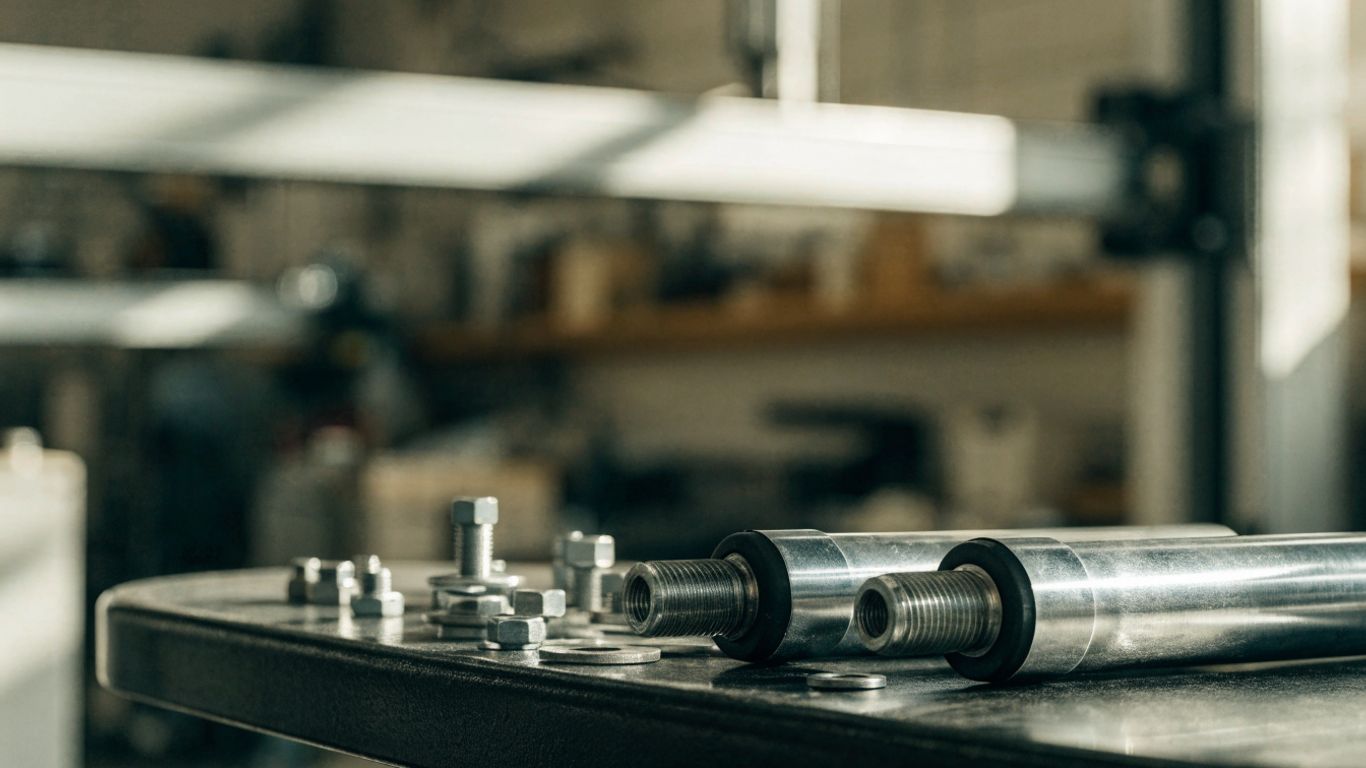
The total cost depends on the parts selected, the time required, and any related work identified during inspection. A reliable quote should explain what is included rather than giving only a single figure. Costs can also differ by location and vehicle configuration, so avoid treating an online estimate as a guaranteed price. For a general overview of the job and quote factors, see this guide to front shock replacement costs.
Parts, labor, and alignment costs to budget for
Ask for the quote to separate the parts, labor, and any alignment check or adjustment. That makes it easier to see whether two shocks are included and whether additional components are priced separately. The following categories are useful when reviewing an estimate; they are not set prices.
| Cost item | What to ask about | Possible reason it changes |
|---|---|---|
| Shock absorbers | Quantity, brand, and exact application | Part type and availability |
| Labor | Work included and estimated time | Access and vehicle configuration |
| Alignment | Check, adjustment, or not included | Whether suspension geometry may change |
| Related parts | Separate itemization and reason | Condition found during inspection |
If an alignment is not included, ask whether the work requires one and what the additional charge would be. Clear itemization helps you compare estimates on the same basis.
What can make the price vary by model and location
Parts availability, local labor rates, and the repair’s scope all influence the final bill. Different trims or suspension layouts may use different components, and a complete assembly can cost more than a shock alone while including more parts. The shop should confirm the fitment before pricing the parts, especially if the catalog entry is ambiguous.
Location can affect both labor charges and access to parts. Comparing unrelated purchases also depends on knowing what is included: for example, a tuning file service has a different scope from suspension repair, but the general question of what a quoted price covers is worth asking in either case.
How to compare quotes and check warranty coverage
Compare written estimates that describe the same repair, including the number of parts, labor, and alignment. Check whether the warranty applies to the part, installation, or both, and ask about any conditions that could affect coverage. A low headline total may exclude work that another quote includes, so read the breakdown before deciding.
It can help to ask these questions before approving the job: Is the quote for one shock or a pair? Are related parts and alignment included? What are the warranty terms? The same practice of checking inclusions appears in many service purchases, from ExpressVPN subscription renewals to cornhole rental event bookings, though those services have no connection to vehicle repair.
What to expect during the replacement process
A proper repair begins with confirming the fault and the correct replacement part. The technician should inspect the suspension, explain the work, and let you know if anything beyond the original estimate is needed. The exact sequence depends on the suspension design and whether the vehicle uses a separate shock or a strut assembly. Ask what the shop plans to replace before authorizing additional work.
How a technician inspects and confirms the fault
The inspection may include looking for leaks, checking mounts and nearby components, and comparing the condition of both sides. The technician can also consider the reported noise, ride change, or tire wear alongside the vehicle’s overall condition. This helps avoid replacing a shock when another fault is responsible for the symptom.
If the diagnosis is not clear, ask what evidence supports the recommendation and whether the shop can show you the affected part. For general context, a non-invasive arthritis treatment involves a different kind of assessment altogether; the useful distinction here is simply to ask a service provider what it has actually evaluated.
Key steps in removing and installing shock absorbers
The usual process involves safely raising and supporting the vehicle, removing components needed for access, and taking out the old shock or assembly. The replacement is then installed and fasteners are tightened according to the vehicle’s service requirements before the parts and wheel are refitted. Some designs require additional steps, so the job can vary from one vehicle to another.
Once the work is complete, the technician should check that the components are seated correctly and that nothing is loose or interfering with nearby parts. Ask whether an alignment check is recommended and whether it is included in the invoice.
Why correct torque and safe spring handling matter
Suspension fasteners need to be tightened to the appropriate specifications; guessing can leave components either loose or over-tightened. If a strut assembly contains a loaded spring, handling it requires suitable tools and care because stored spring force can cause serious injury. This is one reason the repair should be done by someone equipped and trained for the vehicle’s design.
The same caution applies during removal and reassembly: follow service procedures rather than improvising. A shop should be able to explain how it handles spring compression and how it confirms the fasteners are secure.
Checking the results and caring for the new shocks
After the repair, pay attention to how the vehicle behaves on familiar roads and whether the original symptoms have changed. A brief check does not replace a technician’s inspection, but it can help identify a concern early. Keep the invoice and part details for future service, and ask the shop what follow-up it recommends. If a new noise or handling issue appears, report it promptly.
When a wheel alignment should be checked
Replacing a shock does not always change alignment, but some suspension work can affect geometry depending on the design and what was removed. Ask whether an alignment check is appropriate for the specific repair. If the steering wheel is off-center or the vehicle pulls after service, return to the shop for an assessment rather than assuming the change will settle on its own.
An alignment check can also be useful when uneven tire wear was part of the original concern. Confirm whether the estimate includes a measurement, an adjustment, or neither, since those are not necessarily the same service.
How to assess ride quality and handling after replacement
On a familiar route, notice whether the vehicle feels settled over bumps and whether it remains composed through ordinary turns and stops. Compare its behavior with what you experienced before the repair, while allowing for road surface and load differences. If the original symptoms remain, share specific examples with the shop instead of describing the ride only as “better” or “worse.”
Avoid testing the vehicle with sudden maneuvers or hard braking. The aim is to check normal driving behavior and flag any concern safely, not to stress the suspension.
Follow-up checks for leaks, noises, and tire wear
In the days and weeks after the repair, keep an ear out for clunks or rattles and look for any obvious signs of leakage during routine checks. Watch the tire tread over time, especially if uneven wear was present before the work. If something seems wrong, arrange an inspection; do not assume that a new part rules out a fitting issue or a separate fault.
Conclusion
A careful diagnosis, accurate parts matching, and a clear quote make suspension repairs easier to plan and evaluate. Have both sides inspected, confirm what the job includes, and follow up on alignment and handling concerns after the work. Those practical checks help you make a more informed decision from the first symptom through the final road check.
Frequently Asked Questions
How long do shock absorbers usually last?
There is no single replacement interval that suits every vehicle. Driving conditions, mileage, load, and component condition all affect wear, so follow the vehicle’s service guidance and have symptoms inspected.
Can I drive with a leaking shock absorber?
A visible leak warrants an inspection, since the shock may not be controlling suspension movement as intended. If the vehicle feels unstable or difficult to control, avoid driving it until a qualified technician has assessed the problem.
Should shock absorbers be replaced in pairs?
Replacing both shocks on the same axle is common because it can help maintain more consistent behavior from side to side. A technician can inspect the opposite shock and explain whether a single replacement is suitable in a particular case.
Do new shock absorbers require a wheel alignment?
Not every shock replacement changes alignment, but some suspension designs or related repairs can affect it. Ask the shop whether an alignment check is appropriate for the specific work performed.
What is the difference between a shock and a strut assembly?
A shock absorber controls suspension movement, while a strut is a structural suspension component that may also support other parts. The exact arrangement varies by vehicle, so confirm what the replacement part includes.
Can uneven tire wear be caused by worn shocks?
It can be associated with suspension problems, but tire pressure, alignment, and other worn components can also cause uneven wear. An inspection is needed to identify the source.
What should a replacement quote include?
A useful quote identifies the parts and quantity, labor, any related components, alignment services, and warranty terms. Ask the shop to clarify anything listed as an extra or left unspecified.