

Key Takeaways
A used oil pump can be a sensible repair part, but only when its fit, condition, and history are clear. Careful identification and a realistic installation budget matter more than the lowest advertised price.
- Match the pump to the exact Chery model, year, engine code, and part number.
- Inspect gears, rotors, housing, pickup parts, and the pressure relief valve.
- Ask for identification photos, operating history, and written return terms.
- Replace related seals and confirm oil pressure after installation.
- Compare the complete repair cost with a new or rebuilt alternative.
Understand whether a second hand Chery oil pump is suitable
Buying second hand Chery oil pumps is not simply a matter of finding a part that looks similar. The pump is central to engine lubrication, so an incorrect or worn unit can create expensive damage very quickly. Begin with the symptoms, the engine’s service history, and the quality of the replacement being offered. A low price is useful only if the part is genuinely compatible and serviceable.
What the oil pump does in the engine
The oil pump draws oil from the sump and sends it through the engine’s lubrication passages. Oil must reach bearings, moving surfaces, and other components at the pressure specified for that engine. The pump does not make a poor oil supply healthy, however; blocked passages, the wrong oil, or a damaged pickup can produce similar symptoms.
That is why diagnosis should come before shopping. If the engine has low oil pressure, confirm the reading with a suitable gauge and inspect the wider lubrication system rather than assuming the pump is the only fault.
Symptoms of a failing or damaged oil pump
A warning light, noisy bearings, tapping from the upper engine, or a pressure reading below specification may point to a lubrication problem. These signs can also come from low oil level, a blocked filter, worn bearings, a faulty pressure sender, or sludge in the sump. Continuing to drive while the pressure warning remains on can turn a replaceable part into an engine rebuild.
Record when the symptom appears and whether it changes with engine speed or temperature. That information gives the mechanic a better starting point than a vague report that the engine sounds rough.
When a used pump may be a practical choice
A used pump may make sense for an older vehicle, a hard-to-source engine variant, or a repair where a verified original part is available quickly. It can also be reasonable when the supplier can identify the donor vehicle and offer a meaningful return period. Verified fitment matters more than age alone, because an older pump with clear history may be safer than an unknown unit described as “good.”
Look for a pump that has been stored cleanly, photographed in detail, and matched by part number. A used Chery part should be treated as a component requiring inspection, not as a guaranteed solution simply because it came from a running vehicle.
Situations where a new or rebuilt pump is safer
Choose a new or professionally rebuilt pump when the engine has suffered oil starvation, the original pump shows severe scoring, or the seller cannot explain the part’s history. The same caution applies when labor is expensive or access to the pump requires major disassembly. In those cases, saving on the part may not justify repeating the repair.
A documented replacement can also simplify warranty discussions. If the used unit has no test information and the engine’s condition is uncertain, ask a mechanic to compare the risk before ordering.
Match the oil pump to your Chery vehicle
Correct identification is the foundation of the purchase. Model names can cover several engines and revisions, while production-year changes may affect mounting points, drive arrangements, or oil passages. Write down every identifying detail before contacting sellers, and use the old pump as a reference without assuming it is already correct.
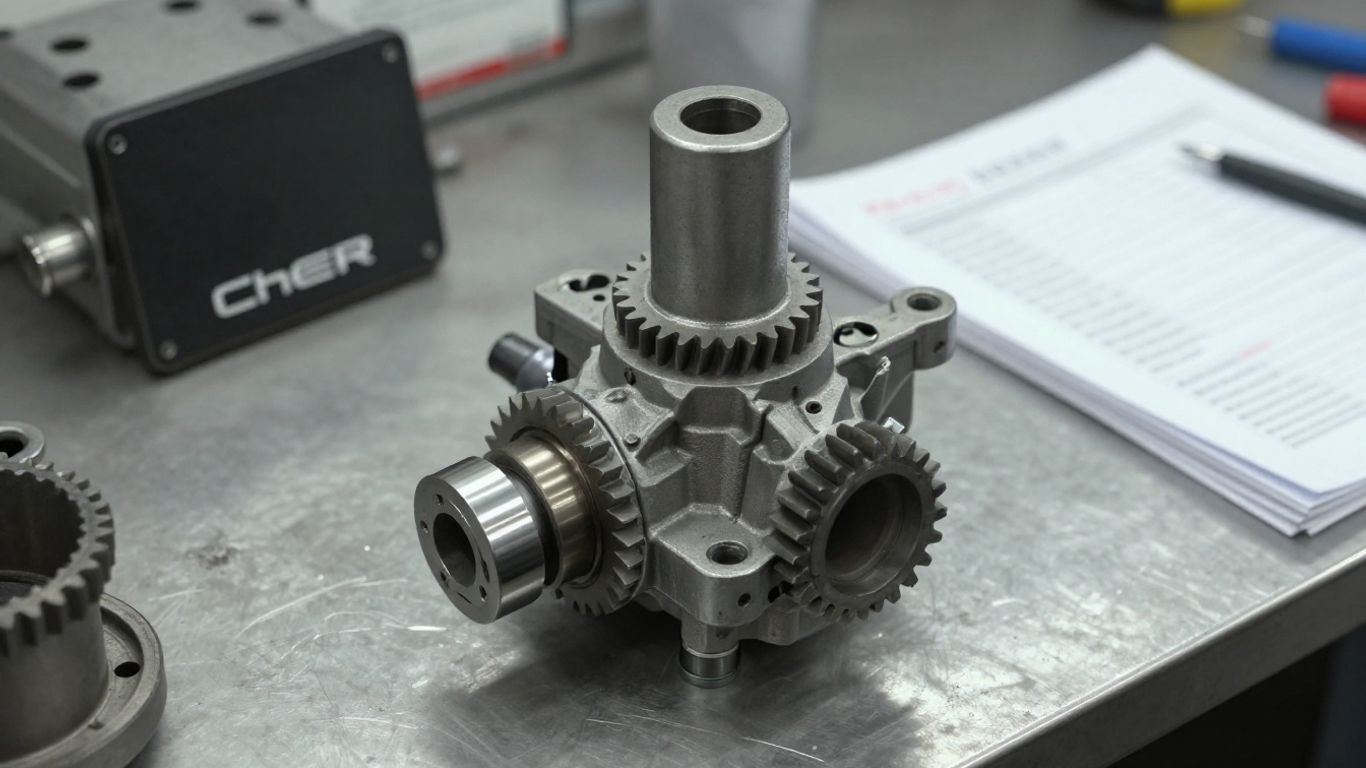
Confirming the Chery model and production year
Start with the model, body style, market, and production year shown in the vehicle records. A Chery Tiggo, for example, may have different engine applications across markets and model revisions. Registration information is useful, but the vehicle identification number and service documentation are stronger references.
Ask the seller to confirm the application in writing. If a listing uses only a broad phrase such as “Chery oil pump,” treat that as a starting point, not proof of fit.
Checking the engine code and displacement
The engine code and displacement narrow the search much more reliably than the model name alone. Check the engine plate, workshop records, or a trusted parts catalogue, then compare that information with the seller’s description. Do not rely on photographs of an engine that merely resembles yours.
Fuel type, valve-train layout, and production revision can affect the pump design. If the code is difficult to read, a mechanic or parts specialist can help decode it before money changes hands.
Comparing OEM and aftermarket part numbers
Compare the original equipment number with the number stamped or labelled on the used pump. An aftermarket number may cross-reference correctly, but the cross-reference should come from a credible catalogue rather than a casual marketplace comment. Also check superseded numbers, since a newer number may replace an older one without looking identical.
For a specific application, one available reference is the WDPShop Engine Oil Pump, described for a Chery Cowin Amulet 480. That listing still does not establish fitment for another Chery model, so the engine code and part reference must be checked independently.
Avoiding confusion between oil pumps and fuel pumps
Oil pumps lubricate the engine; fuel pumps move fuel through the fuel system. They are unrelated components, and search results often mix them because both use the word “pump.” Before ordering, confirm the component’s location, mounting shape, and function.
A Chery Tiggo fuel pump listing can be useful only as a reminder of this distinction. It should not be used as evidence that a fuel pump is interchangeable with an oil pump. The product name, part number, and engine application should all say oil pump.
Evaluate the condition of a used oil pump
A photograph can reveal obvious damage, but it cannot prove internal clearances or oil pressure performance. Ask what was inspected and whether the pump was removed from a running engine, dismantled vehicle, or damaged vehicle. If the answer is unclear, price the part as a higher-risk purchase.
Inspecting the housing, gears, and rotor
The housing should be clean enough to inspect, with no distortion around the mounting faces. Look at the gears or rotor for chipped teeth, uneven contact marks, and rough edges. The drive arrangement must also match the original, including any shaft, sprocket, or gear interface.
If possible, compare the used part directly with the old one before installation. Similar outer dimensions do not guarantee matching internal geometry or drive direction.
Checking for scoring, cracks, and excessive wear
Fine marks may be normal, but deep grooves in the housing or rotor chamber can allow oil to bypass the pumping surfaces. Reject a part with cracks, impact damage, corrosion in critical areas, or a visibly warped sealing face. A seller should be willing to provide close photographs rather than only one distant image.
Do not polish away evidence of wear and assume the problem is solved. Clearances need to be assessed against the applicable service information, especially when the engine has experienced low oil pressure.
Assessing the pickup tube and pressure relief valve
The pickup tube should be straight, secure, and free from dents that could restrict flow. Inspect the screen for sludge or debris, and check that the pressure relief valve is present and not visibly damaged. The valve’s spring and seat are small parts, but faults there can affect pressure control.
A replacement pump may not include the pickup tube, gasket, drive gear, or valve components. Confirm exactly what is included, then compare it with the parts removed from the engine.
Understanding mileage, storage, and previous use
Mileage gives context but not a complete condition report. A low-mileage vehicle may have suffered contaminated oil or long storage, while a higher-mileage donor may have had regular maintenance. Ask how long the pump was stored and whether it was protected from moisture.
The most useful history includes the donor vehicle, reason for dismantling, engine symptoms, and any inspection performed. Treat “tested” as incomplete unless the seller explains what was tested and what result was observed.
Verify the seller and part history
The seller is part of the risk calculation. A clear listing, consistent answers, and traceable part information make a used purchase easier to evaluate. A vague description, pressure to pay immediately, or reluctance to discuss returns deserves caution.
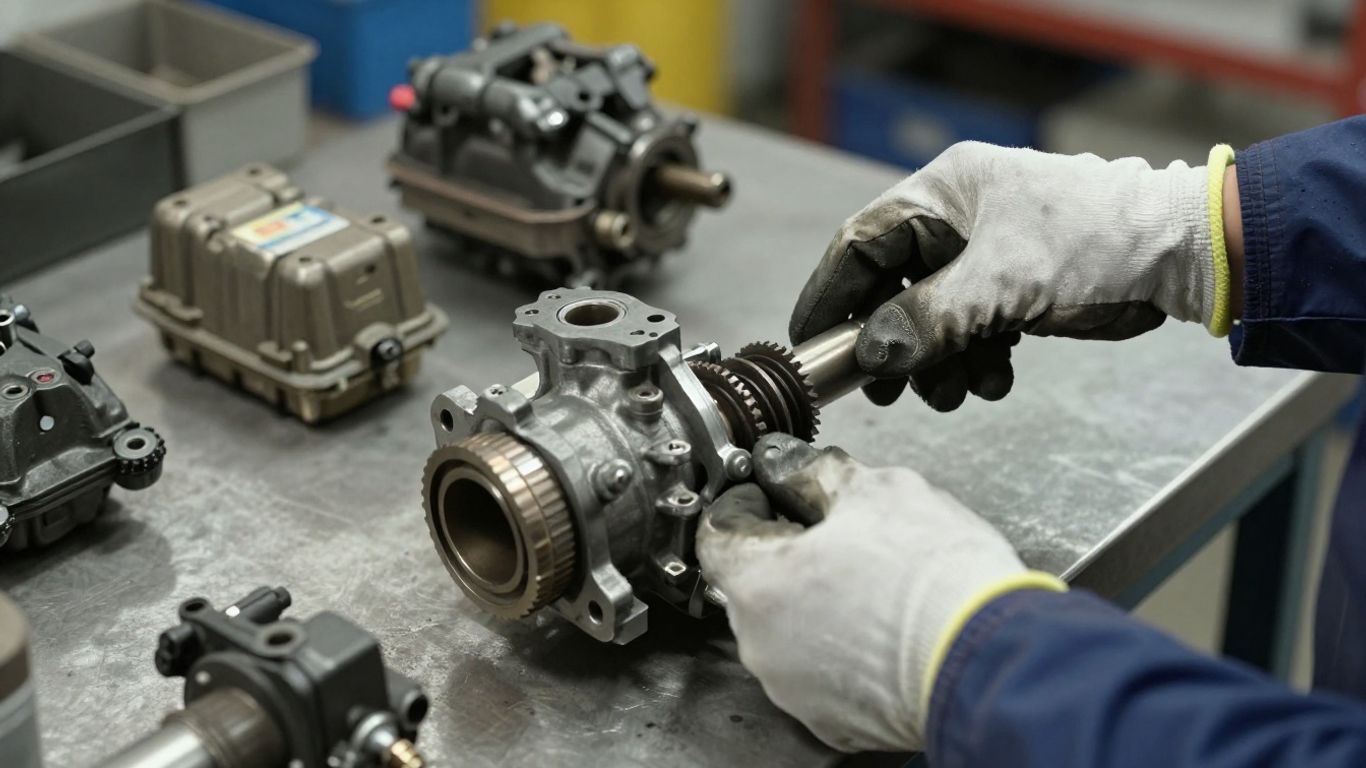
Questions to ask a used-parts supplier
Ask whether the pump came from the same model and engine code, whether the donor engine ran, and whether the part was opened or measured. Confirm the stock number, included hardware, dispatch location, and expected delivery condition. Written answers are helpful if a return later becomes necessary.
You may also encounter broad listings for Chery engines and engine parts. Such catalogues can widen the search, but filters and supplier descriptions still need to be checked against your exact vehicle details.
Requesting clear photos and identification details
Request photos of the mounting face, pump cavity, drive side, pickup connection, and any stamped number. Ask for a fresh photograph if the images appear generic or reused. The part should be identifiable from the images, not merely shown as a dark shape in a box.
Compare the photos with the removed pump before installation. Keep the messages and images with your order records; they may help establish whether the supplied item matches the advertised one.
Reviewing return policies and warranty coverage
Read the return period, exclusions, testing requirements, and shipping responsibility before buying. Some suppliers require the part to remain uninstalled, while others accept returns only when a mechanic confirms incompatibility. A warranty may cover the component but not labor, fluids, towing, or consequential engine damage.
A return policy is useful only when its conditions are practical. If inspection is impossible without removing protective packaging, ask how the seller expects compatibility to be verified.
Comparing dismantler, marketplace, and specialist sellers
Dismantlers may offer donor information and inventory records; marketplaces may provide more choice but uneven descriptions; specialist suppliers may offer better application support. None should be trusted automatically. Compare documentation, inspection standards, communication, and returns along with the price.
For broader sourcing, a used Chery parts marketplace may help compare quotes and delivery options. It remains your responsibility to confirm that the quoted item is an oil pump for the correct engine rather than another Chery component.
Check compatibility before installation
Ordering the right-looking pump is not the same as proving compatibility. Before removing the old unit, compare both parts on a clean bench and gather the installation information for the engine. This pause can prevent a vehicle from remaining disabled while a mismatch is sent back.
Comparing mounting points and oil passages
Set the two pumps side by side and compare bolt-hole positions, flange shape, drive engagement, and oil inlet and outlet locations. The passages must align with the engine block, and the pump must sit squarely without forcing bolts into place. Never modify a mounting hole or passage to make an uncertain part fit.
Also check clearance around the sump, crankshaft, and timing or drive components. A small dimensional difference can create interference after the engine is assembled.
Verifying gasket and seal requirements
Confirm whether the pump uses a paper gasket, formed seal, O-ring, sealant, or a combination specified by the service information. A missing or incorrect seal can allow air to enter the inlet or oil to leak externally. The crankshaft seal and related seals should be considered at the same time if access overlaps.
Do not apply excess sealant near oil passages. Detached sealant can circulate through the lubrication system and create another restriction.
Inspecting related components in the lubrication system
Inspect the sump, pickup screen, oil filter, pressure sender, and accessible passages for sludge or metal debris. If the old pump failed, debris may remain in the system and damage the replacement. The oil should be drained, and the filter should be replaced according to the mechanic’s diagnosis and service requirements.
A pump replacement without investigating the original failure can produce a short-lived repair. Look for the cause, not only the visible component.
Confirming fitment with a qualified mechanic
A qualified mechanic can compare the parts, identify an engine-code mismatch, and check the installation information before the vehicle is opened up. This is especially valuable when the listing uses an unfamiliar aftermarket number or when the engine has already been modified.
Bring the old part, vehicle identification details, and seller photographs to the discussion. A few minutes of verification is usually cheaper than installing and removing the wrong pump.
Install and test a second hand Chery oil pump
Installation should follow the engine’s service information rather than a generic online sequence. Clean work matters because oil pumps operate in a contamination-sensitive system. Plan the job so the engine is not started until the pump, pickup, seals, oil, and filter are ready.
Preparing the engine and installation surfaces
Drain the oil and remove surrounding components carefully, keeping dirt out of the open engine. Clean the mounting faces without gouging them, and inspect the old gasket or seal for evidence of leakage. Check that no fragments, sludge, or metal particles remain near the pickup opening.
Before fitting the used pump, rotate its moving parts by hand if the design allows and compare its movement with the original. Resistance, binding, or roughness is a reason to stop and investigate.
Priming the pump before startup
Prime the pump using the method specified for the engine and pump design. This may involve applying clean engine oil to internal surfaces or filling the pump and pickup circuit where appropriate. The aim is to avoid a dry start, not to improvise a procedure that could damage a seal or introduce debris.
After installation, turn the engine in the approved manner if the service procedure calls for it. Do not assume that several seconds of cranking without confirmed pressure is harmless.
Using the correct torque and sealing procedures
Tighten the pump and pickup fasteners to the specified torque and in the specified sequence. Use the correct sealant only where required, allowing its cure time before adding oil or starting the engine. Over-tightening can distort a housing or strip a thread, while under-tightening can cause movement or leakage.
Replace single-use fasteners and seals when the service information requires it. Record what was replaced so future diagnosis is easier.
Checking oil pressure after installation
Fill with the correct oil and fit a new filter where appropriate, then check for leaks during the initial start procedure. Confirm oil pressure with the vehicle’s specified method, preferably using a mechanical gauge when a diagnosis requires a direct reading. Compare the result with the engine’s service limits rather than relying only on the warning light.
Stop the engine immediately if pressure does not build, abnormal noise appears, or oil leaks from the pump area. Recheck the pickup seal, drive engagement, filter, sender, and passages before assuming the replacement pump is sound.
Calculate the true cost of a used oil pump
The advertised price is only one line in the repair budget. Installation labor, gaskets, oil, shipping, and the possibility of a second repair can change the decision. Write down the full cost before ordering so the saving is measured against a realistic alternative.
Comparing purchase price with rebuilt alternatives
Compare the used pump with a new or professionally rebuilt unit that carries clear specifications and warranty terms. A rebuilt option may cost more but can reduce uncertainty about wear and internal clearances. The relevant comparison is not “used versus new”; it is total expected cost and risk for this particular engine.
If an available engine listing, such as a Chery Tiggo engine for sale, points toward replacing a larger assembly, do not compare that headline price directly with a pump. An engine replacement involves different labor, transport, testing, and warranty questions.
Budgeting for seals, labor, and replacement oil
Add every consumable and service item that the repair may require. A practical budget often includes:
- Pump gaskets, O-rings, and related seals
- Engine oil and an appropriate filter
- Cleaning materials and approved sealant
- Diagnostic time and installation labor
These items are easy to overlook when browsing parts listings. Including them early gives a more honest comparison between a used pump and a rebuilt or new alternative.
Factoring in shipping and possible return costs
Shipping may be significant because oil pumps are dense metal parts, and international returns can be slow or expensive. Check whether the seller pays return freight for an incorrect listing, and ask how the part must be packaged. Include taxes, brokerage charges, and downtime if the vehicle cannot be driven while the dispute is resolved.
Keep the original packaging until fitment has been confirmed. That small habit can make a legitimate return much simpler.
Deciding when the savings justify the risk
A used pump is most attractive when the part number is confirmed, condition evidence is strong, the seller is accountable, and the repair cost remains comfortably below dependable alternatives. If several of those conditions are missing, the apparent saving is fragile. A qualified mechanic can help put a value on the risk before installation.
The best purchase is the one that restores reliable oil pressure without exposing the engine to avoidable uncertainty. Sometimes that is a carefully checked used part; sometimes the safer decision is a new or rebuilt pump.
Conclusion
Buying second hand Chery oil pumps with confidence means treating the transaction as a technical repair decision, not a bargain hunt. Confirm the vehicle and engine details, inspect the pump, verify the seller’s terms, and calculate the complete installation cost. When the evidence is incomplete, paying more for a dependable alternative may be the more economical choice.
Frequently Asked Questions
Can a used oil pump be reliable?
Yes, provided it is the correct part, has no unacceptable wear, and comes from a seller who can explain its history and support a return if needed. Condition and fitment matter more than the word “used.”
How do I identify the correct oil pump?
Use the vehicle identification number, model year, engine code, displacement, and the original pump’s part number. Compare mounting points, drive features, and oil passages rather than relying on appearance alone.
What damage makes a used oil pump unsafe?
Deep scoring, cracks, chipped gears, a distorted housing, blocked pickup parts, or a damaged pressure relief valve are warning signs. Unknown internal clearances are also a concern when the engine has already suffered low oil pressure.
Should I replace the oil filter with the pump?
In many repairs, fitting a new filter and fresh oil is sensible, particularly when the old pump failed or contamination is present. Follow the engine’s service information and the mechanic’s diagnosis.
Is a marketplace seller acceptable for this part?
A marketplace can be acceptable when the listing is specific, the seller answers technical questions, and return terms are clear. Avoid purchases where the part identity, condition, or application cannot be documented.
How can I avoid confusing an oil pump with a fuel pump?
Check the component description, location, mounting design, and part number. An oil pump serves the engine lubrication system, while a fuel pump belongs to the fuel-delivery system; they are not interchangeable.
What should oil pressure be after installation?
The correct pressure depends on the engine, oil temperature, speed, and service specifications. Measure it using the approved procedure and compare the result with the manufacturer’s limits rather than using a universal figure.