

Key Takeaways
A sound inspection matters more than a low sticker price when choosing used Chery water pumps. Match the part carefully, check its condition, and plan the installation around the entire cooling system.
- Confirm the model, year, engine code, and OEM number before ordering.
- Inspect the housing, impeller, shaft, bearing, and seal for damage.
- Compare the used pump’s total cost with a new replacement.
- Ask for clear photos, test details, mileage, and return terms.
- Bleed the cooling system carefully and monitor temperature afterward.
Understanding Chery water pumps and their role
The water pump keeps coolant moving between the engine, radiator, and other parts of the cooling circuit. Without steady circulation, heat can build quickly around the cylinder head and other high-temperature areas. A replacement pump therefore needs to fit mechanically and perform reliably, not merely resemble the old part.
How the engine cooling system uses the water pump
A belt, chain, or electric motor drives the pump, depending on the engine design. Its impeller pushes coolant through passages in the engine and toward the radiator, where heat can leave the fluid before it returns. The thermostat helps control when that circulation reaches the radiator, while the pump supplies the movement the system depends on.
A useful way to think about the component is as part of a chain rather than an isolated repair. A restricted radiator, damaged hose, weak drive belt, or trapped air pocket can create overheating even when the pump itself is serviceable. That is why temperature readings and leak checks should be considered alongside the pump inspection.
Mechanical and electric water pump designs
Most automotive water pumps are mechanical and are driven by the engine. Their condition is tied to bearing wear, seal condition, pulley alignment, and the integrity of the impeller. An electric pump uses a motor and wiring instead, so its diagnosis also includes the connector, fuse, control signal, and electrical supply.
Do not assume that an electric pump can replace a mechanical one simply because both circulate coolant. Mounting points, control requirements, hose routing, and flow behavior may all differ. The correct design is the one specified for the particular engine and cooling system.
Common Chery models and engine applications
Chery parts listings can cover several model families and engine applications, so a model name alone is rarely enough. For example, the Engine Water Pump listing is associated with Chery QQ and QQ6 M1 applications and describes a direct bolt-on replacement for specified vehicles. That kind of application detail is more useful than a generic title such as “Chery pump.”
Other listings identify pumps for particular engines or model families. The SMD326915 auto spare parts water pump is presented for the Chery Tiggo 2, while the Car Water Pump listing identifies OEM number 477F1307010 and several Chery applications. Treat these references as leads to verify, not as permission to substitute parts across every Chery vehicle.
Symptoms of a failing water pump
A failing pump may show coolant leakage near the shaft seal, a rough or noisy bearing, pulley wobble, or an impeller that turns poorly. The engine may also run hotter than usual, especially in traffic or under load. A temperature warning is a reason to stop and investigate rather than continue driving until the pump fails completely.
Some symptoms come from other cooling-system faults, so diagnosis should be measured. Check the coolant level only when the engine is cold, look for dried coolant residue, and compare the temperature behavior with the vehicle’s service information. A visible symptom is a clue, not proof that the pump is the only defective part.
Confirming compatibility before you buy
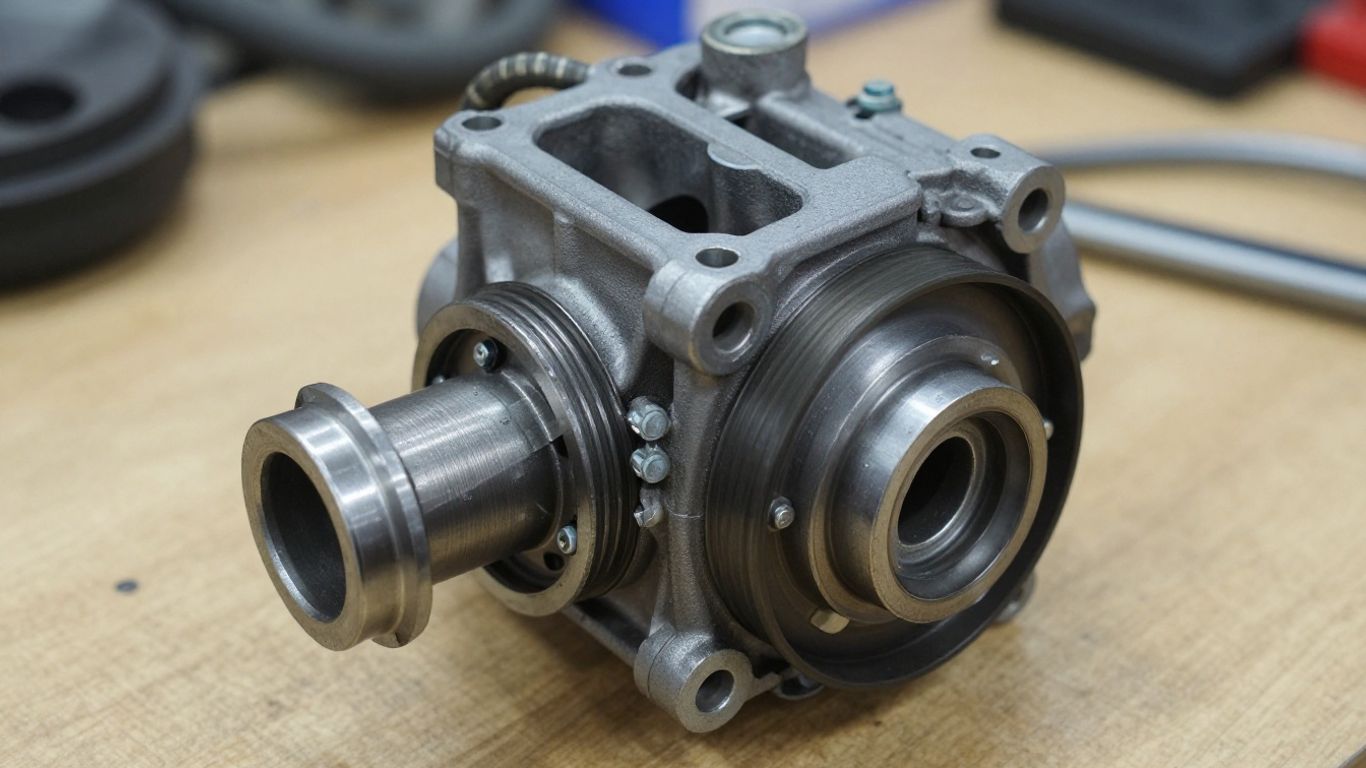
Compatibility is the first filter for used Chery water pumps. A clean-looking component is still the wrong purchase if its bolt pattern, impeller depth, pulley, or seal arrangement differs from the original. Gather the vehicle and part information before contacting a seller, then compare the physical details rather than relying on a broad catalog description.
Matching the pump to the Chery model and year
Start with the exact model, production year, engine size, transmission where relevant, and vehicle identification number. Mid-year changes can affect housings and drive arrangements, even when the exterior model badge stays the same. Ask the seller to confirm the application in writing before payment.
A listing that says a pump fits “Chery vehicles” is incomplete on its own. The seller should be able to identify the application or explain what evidence supports the fitment. If the answer is only a stock photograph and a universal claim, keep searching.
Checking engine codes and OEM part numbers
Engine codes and OEM numbers narrow the search much more effectively than vehicle names. Read the number from the old pump, packaging, service records, or a trusted parts catalog, and compare every character. A single altered digit can indicate a different casting, impeller, or mounting arrangement.
Numbers should still be verified against the vehicle. A part may have superseded an earlier number, or a supplier may use a cross-reference that is not valid for every market. Ask whether the number is original, superseded, aftermarket, or simply a seller’s internal stock code.
Comparing pulley, mounting, and hose connections
Request photographs from several angles, including the pulley or drive face, bolt holes, gasket surface, inlet and outlet openings, and any sensor or connector. Compare their positions with the removed pump. Measurements are especially useful when a photograph makes two similar housings look interchangeable.
Pay attention to small differences that can stop installation: a pulley with the wrong number of grooves, a mounting ear at a different angle, a hose neck with another diameter, or an impeller that sits at a different depth. These are fitment problems, not cosmetic details.
Avoiding differences between aftermarket and original parts
An original part and an aftermarket replacement may share a reference number but differ in materials, casting details, supplied gasket, or included hardware. Used parts add another variable because the visible component may have been rebuilt, modified, or separated from its original packaging. Ask exactly what is included in the sale.
A seller should distinguish a used original pump from a new aftermarket unit and should not describe one as the other. The Generac 0G02070206 1.6L Chery Water Pump, for instance, is described for specific liquid-cooled Generac units using 1.6L Chery engines; that does not automatically establish passenger-car fitment.
Inspecting used Chery water pumps
Inspection is easier when the pump is clean enough to see and dry enough to reveal residue. Do not mistake a polished exterior for evidence of good internal condition. Examine the casting, rotating parts, seal area, and history together, because one weak area can erase the apparent value of the rest.
Checking the housing for cracks and corrosion
Look closely around bolt holes, hose necks, seams, threaded openings, and the gasket face. Hairline cracks can open when the engine warms, while heavy corrosion may prevent a gasket from sealing evenly. Flaking metal or deep pitting around a coolant passage is a warning that surface cleaning will not solve the problem.
The housing should also sit flat against a known straight surface, where appropriate. Avoid grinding away material from the gasket face to make a damaged pump look usable. A distorted mounting surface can cause a leak immediately after installation.
Testing the impeller, shaft, and bearing
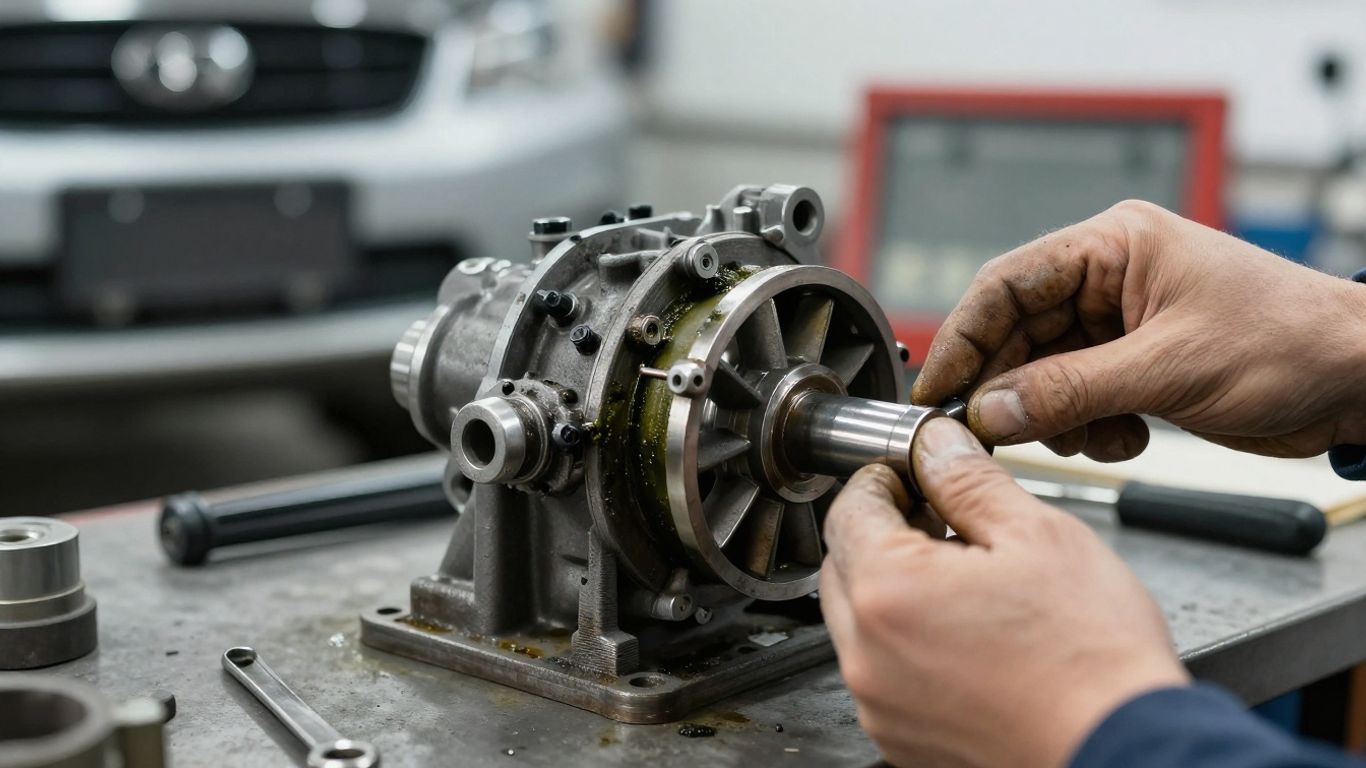
Turn the shaft by hand and feel for roughness, tight spots, or scraping. A small amount of resistance may be normal depending on the design, but grinding or uneven movement is not. Check for radial and axial play by gently moving the shaft side to side and in and out; noticeable looseness points toward bearing wear.
Inspect the impeller for broken blades, severe erosion, looseness on the shaft, or contact marks inside the housing. The impeller must be secure and should not wobble as it turns. If access is limited, ask the seller for a short video of the shaft rotating rather than accepting a still image alone.
Evaluating the seal and signs of coolant leakage
Coolant stains, crusty residue, or a damp track near the shaft seal suggest previous leakage. A dry pump is not guaranteed to be healthy, because it may simply have been cleaned or stored for a long time. Look for a drainage opening and inspect the surrounding area for old deposits.
Do not apply sealant to a shaft or pressurize an unknown pump beyond safe workshop procedures. The goal is to identify evidence of failure without creating a new hazard. If the seal has leaked and the pump is not intended to be rebuilt, replacement is usually more sensible than attempting a temporary repair.
Reviewing mileage, storage conditions, and seller documentation
Mileage gives context but not a complete service history. A low-mileage pump removed from an overheated engine may be a worse choice than a higher-mileage part that was removed during routine work. Ask when it was removed, why it was removed, how it was stored, and whether the engine had cooling-system damage.
Useful documentation includes the donor vehicle details, removal date, part number, inspection notes, and photographs of the actual pump. A clear record does not guarantee remaining life, but it makes the seller accountable for what was represented. Vague answers should be reflected in a lower price or a decision not to buy.
Assessing performance and remaining service life
A used pump is a risk calculation, not just a mechanical object. Its likely service life depends on wear, storage, installation quality, and the condition of the surrounding cooling system. When possible, compare its measured behavior with a known-good pump or the manufacturer’s specifications instead of relying on a seller’s phrase such as “tested good.”
How to interpret low-temperature and operating-flow performance
A pump may look fine on a bench yet perform poorly once the engine reaches operating temperature. Testing should account for flow, temperature, drive speed, and any pressure or electrical conditions specified for that design. For an electric unit, low-voltage behavior and protection features matter; the Chery Water Pump Series material describes continued operation at reduced flow during low-voltage situations and built-in protection mechanisms, but that information should not be transferred to a different pump design without verification.
For a vehicle pump, avoid inventing a flow target from a generic online listing. Use the repair manual or a qualified technician’s test method. If the pump cannot be tested under meaningful conditions, treat the uncertainty as part of its cost.
Comparing a used pump with a new replacement
Compare more than the purchase prices. Include the gasket, coolant, labor, shipping, tax, possible core charge, and the cost of repeating the job if the used pump fails. A new part may offer clearer warranty coverage, while a used original part may be attractive when the application is unusual or new availability is limited.
The following quick comparison helps keep the decision grounded:
| Consideration | Used pump | New replacement |
|---|---|---|
| Known operating history | Often incomplete | Usually clearer product history |
| Physical wear | Must be inspected | Normally not previously worn |
| Warranty | Varies by seller | Usually defined by supplier |
| Total repair risk | Can be higher | Often easier to budget |
The table is not a rule that new is always better. It is a reminder to price uncertainty honestly and to value return protection when the pump is difficult to access.
Identifying noise, wobble, and restricted movement
Spin the shaft slowly, then listen and feel for changes through a full rotation. A dry bearing may sound acceptable at first but become rough at one point, and a bent shaft can reveal itself as pulley wobble. On an electric pump, unusual motor noise, delayed starting, or inconsistent speed deserves the same caution.
Do not force a seized shaft or use impact tools during a basic inspection. Forced movement can hide the original fault while damaging the housing or impeller. If the seller cannot demonstrate smooth movement, assume that the component needs further testing.
Deciding when a used pump is not worth the risk
Walk away when the housing is cracked, the shaft has clear play, the impeller is damaged, or the seal area shows active leakage. Also reconsider a pump with no identifiable number, no return option, or a history involving severe overheating. A cheap part is not cheap if it requires dismantling the same area twice.
The decision should also account for the engine’s condition and the repair’s urgency. When overheating has already caused head-gasket or cylinder-head concerns, fitting an unverified pump can complicate diagnosis. A qualified technician can help separate pump risk from broader engine risk.
Buying used Chery water pumps from a reliable source
A reliable seller makes the part’s identity and condition easy to check. That means the photographs show the actual component, the description states what was tested, and the terms explain what happens if it does not fit or work. A professional tone is useful, but specific evidence matters more than polished wording.
Questions to ask salvage yards and parts sellers
Ask for the donor model, year, engine code, mileage, removal reason, and exact part number. Also ask whether the pump was removed from a running engine, whether it was pressure-tested or only visually inspected, and whether the gasket or pulley is included. The answers should be consistent with the photos.
For unusual applications, ask whether the seller has sold the same part before and what fitment information they used. A good seller will not be offended by careful questions. They may not know every detail, but they should say so plainly.
Verifying photos, testing records, and return policies
Photographs should show the sealing face, shaft, impeller when accessible, mounting points, and identification marks. Testing records should state what was tested and under what conditions, rather than simply saying “works.” Confirm whether the return period begins on delivery and whether installation voids the return.
Keep screenshots of the listing and messages until the part has been installed and checked. This is especially useful when a seller uses stock images or cross-references several applications. A return policy is valuable only if its conditions are understood before purchase.
Comparing price with shipping, taxes, and core charges
The listed price is only one line in the budget. Add delivery, taxes, brokerage fees where applicable, and any refundable or nonrefundable core charge. A heavier metal pump can also cost more to ship than its initial price suggests.
A simple total-cost comparison prevents false bargains. If two options are close after all fees, the one with clearer testing and easier returns may be the more economical choice. If the used unit is barely cheaper than a new replacement, the remaining uncertainty deserves serious weight.
Recognizing counterfeit, mismatched, or incomplete parts
Warning signs include inconsistent casting marks, altered labels, a part number that does not match the housing, unusually generic packaging, and photographs that show different pumps in the same listing. Missing bolts, pulley hardware, seals, or backing plates can turn a seemingly complete purchase into another parts search.
Catalog discipline matters beyond automotive components, too. A mineral powder for water, Peru Nuevos Sol, B2B SaaS growth guide, 12v DC Power Supply, or phentermine guide belongs to a different product category entirely; a marketplace page that mixes unrelated descriptions deserves extra scrutiny before you trust its pump fitment claims.
Installing and maintaining a replacement water pump
Installation should begin only after the engine is fully cool and the correct replacement has been compared with the removed part. Prepare the work area, protect painted surfaces from coolant, and follow the vehicle’s repair instructions for access and timing components. If the pump is driven by a belt or chain, incorrect tension or timing can create a second, more serious fault.
Preparing the cooling system and installation area
Drain coolant into a suitable container and dispose of it according to local rules. Remove residue from the mounting surface without gouging it, and inspect nearby hoses, belts, pulleys, and fasteners while access is available. Cover open passages so dirt does not enter the cooling system.
Use the specified tools and tightening sequence. Do not pry against delicate housing edges or reuse damaged fasteners. Before fitting the new pump, compare bolt-hole positions, shaft height, pulley alignment, and hose openings one more time.
Replacing gaskets, seals, and related components
Use the correct new gasket or seal for the pump and engine. Old sealing material can compress unevenly, and applying extra sealant where it is not specified can contaminate coolant passages or cause a leak. Replace related drive components when the service procedure or their condition calls for it.
Make sure the gasket remains aligned while the pump is positioned. Tighten fasteners gradually and in the recommended sequence, using the specified torque. A pump that is mechanically correct can still leak if the sealing face is dirty or the fasteners are unevenly tightened.
Refilling, bleeding, and checking for coolant leaks
Refill with the coolant type and mixture specified for the vehicle. Air trapped in the cylinder head or heater circuit can create false overheating, poor cabin heat, or unstable temperature readings. Use the vehicle’s bleeding procedure, which may involve a bleed screw, a particular fill position, or a prescribed warm-up cycle.
After the first cycle, let the engine cool completely before checking the level again. Inspect the pump perimeter, hose connections, drain opening, and nearby fittings for wetness or fresh residue. Never remove a pressurized coolant cap from a hot engine.
A video can help illustrate general inspection or bleeding steps, but it should not replace the vehicle’s service manual. Procedures vary by engine, and a generic demonstration may omit a model-specific bleed point or tightening requirement.
Monitoring engine temperature after installation
Watch the temperature gauge and warning indicators during the first drive, beginning with a short idle and low-load test. Confirm that the heater produces consistent warm air when appropriate and that the coolant level remains stable after cooling. Stop immediately if the gauge rises abnormally, the warning light appears, or coolant begins to escape.
Recheck the installation after the first few heat cycles. Listen for bearing or belt noise, inspect for seepage, and confirm that the drive system remains aligned. Keeping a note of the installation date, part number, and coolant service makes later diagnosis much easier.
Conclusion
Choosing used Chery water pumps is mainly an exercise in verification: identify the exact application, inspect the mechanical parts, price the uncertainty, and install the replacement with care. A documented, returnable component from a seller who shows the actual pump can be worthwhile, but no bargain compensates for an unverified fit or a neglected cooling-system bleed.
Frequently Asked Questions
How long can a used water pump last?
There is no dependable universal figure. Remaining life depends on prior mileage, bearing and seal condition, storage, coolant history, and the quality of the inspection.
Can a water pump fit several Chery models?
Sometimes, but shared appearance or engine family does not prove compatibility. Confirm the engine code, OEM number, mounting pattern, pulley, and hose connections for the specific vehicle.
Should I replace the gasket with a used pump?
Yes, use a new correct gasket or seal unless the service procedure specifies another method. Reusing an old gasket increases the chance of an immediate leak.
What does a failing water pump sound like?
It may produce grinding, rumbling, squealing, or other unusual noise, especially as the bearing wears. Noise alone is not conclusive, so check for shaft play, leakage, and temperature problems as well.
Is coolant residue around the pump always a failure?
Residue is a warning sign, particularly near the shaft seal or drainage opening, but it may come from an adjacent hose or previous spill. Clean the area and identify the source before deciding.
Can I drive with an overheating engine after buying a replacement pump?
Do not continue driving while the engine is overheating. Stop safely, allow it to cool, and diagnose the cause; continued operation can turn a cooling-system fault into major engine damage.
What should a seller include with a used pump listing?
The listing should identify the actual part number and application, show clear photos, describe inspection or testing, state what hardware is included, and explain the return terms and any core charge.