

Key Takeaways
A used gasket kit can save money, but only when its identity, condition, and completeness are clear.
- Match the kit to the exact Chery model, engine code, and part numbers.
- Treat opened, warped, corroded, or previously installed gaskets as high-risk.
- Ask sellers for clear labels, complete photos, storage details, and return terms.
- Compare the full repair cost, not just the advertised kit price.
- Use the correct service procedures, torque settings, and leak checks during installation.
Understanding second hand Chery gasket kits
Second hand Chery gasket kits are not automatically a bargain or a bad idea. Their value depends on whether the kit is genuinely compatible, has been stored properly, and contains every seal needed for the repair. A careful buyer should think of the kit as one part of a larger engine job, rather than as a cheap box of interchangeable pieces.
The safest decisions begin with identification. Model names can cover several engines, production years, and regional specifications, so a photograph that looks right is not enough. Before paying, collect the vehicle and engine details, then ask the seller to confirm them against the kit label and part numbers.
What a gasket kit typically includes
A typical engine gasket set may contain a head gasket, valve-cover gasket, intake and exhaust manifold gaskets, oil-pan or timing-cover seals, and smaller O-rings. The exact contents vary by engine and by the level of kit, so “complete set” should never be taken literally without an itemized description.
Some kits include seals for cooling passages, crankshaft or camshaft areas, and accessory housings. Head bolts may be included in one package and excluded from another. Read the contents list carefully, because a missing inexpensive seal can still delay the repair or require a second order.
Why owners consider used gasket kits
The main attraction is price. A seller may have an unopened surplus kit, a returned item, or parts removed from a vehicle project that was never completed. In those cases, a used or second hand kit can be worth considering if the packaging and part identity remain verifiable.
Availability can matter as much as cost, particularly for an older vehicle or a market where local stock is limited. Still, a lower purchase price does not remove the need for inspection. The labor involved in dismantling an engine usually outweighs the value of a questionable gasket.
Which Chery engine and vehicle details matter
Record the model, model year, engine size, engine code, transmission where relevant, and the vehicle identification number. Build variations can affect gasket dimensions even when two vehicles share a familiar model name. Regional catalog numbers and production changes may also matter.
If the engine has already been replaced, use the code stamped or recorded on the installed engine rather than relying only on the vehicle registration details. A workshop, parts counter, or service manual can help confirm which identifiers should control the purchase.
When a second hand kit may be unsuitable
Reject the kit when the seller cannot identify its source, the package is incomplete, or the sealing surfaces show evidence of use. A compressed head gasket, torn elastomer seal, or surface contaminated with oil and sealant should not be treated as new stock.
The same caution applies when the kit is being sold as “universal” for several unrelated engines. Gaskets are precision components. A slight difference in a coolant opening, bolt hole, thickness, or bore shape can create serious problems after assembly.
Checking compatibility before buying
Compatibility is the point at which a cheap listing either becomes useful or falls apart. Compare more than the vehicle badge: engine code, production period, gasket type, and catalog reference should all tell the same story. If any one of those details conflicts, pause the purchase rather than guessing.
A clear image of the label and the actual gasket is more useful than a generic catalog photograph. Ask for those images before committing, especially when the listing uses broad language such as “fits Chery cars.”
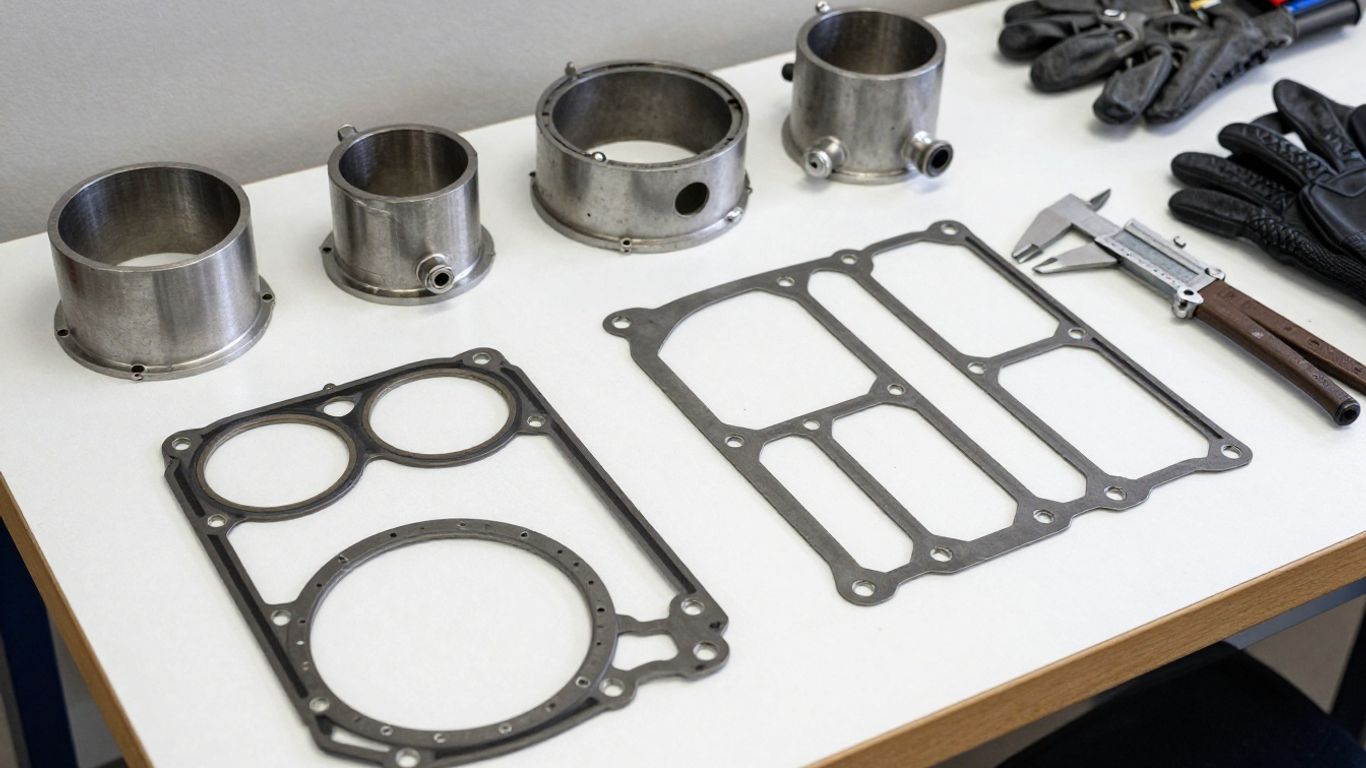
Matching the exact Chery model and engine code
Start with the engine code, then cross-check the model and year. The code is often the most reliable way to separate closely related engines, while the model name alone may cover multiple versions. If the seller provides only a model name, request the missing code before discussing fitment.
Write the identifiers down in one message so there is a record of what was confirmed. That record can help if the seller later changes the listing or if a return dispute arises.
Comparing original and replacement part numbers
Compare the number printed on the gasket package with the number in a trusted parts catalog or workshop reference. Original-equipment and aftermarket numbers may differ, but a reputable cross-reference should explain that relationship rather than leaving the buyer to infer it.
Be wary of blurred labels, partially visible digits, and numbers that differ by only one character. A zero and an “O,” or a missing suffix, can lead to a completely different component. Ask the seller to transcribe the full number as well as photograph it.
Checking gasket shapes, sizes, and materials
Lay the gasket flat and compare its bolt holes, fluid passages, cylinder openings, and outer profile with the old part. For a head gasket, thickness and bore alignment are especially important. Material also matters: a multi-layer steel gasket is not interchangeable with every composite design.
Do not cut, bend, or test-fit a used gasket simply to make it appear compatible. Even a small crease can compromise sealing. When the design differs visibly from the original, stop and obtain a technical confirmation.
Confirming included seals, bolts, and accessories
Ask for a complete inventory before ordering. A kit may include the primary gaskets but omit head bolts, valve-stem seals, injector seals, or small O-rings that the repair procedure calls for. Those omissions are not necessarily a problem, as long as they are known and priced into the job.
A compact pre-purchase check is useful when a listing is vague:
- Confirm the engine code and vehicle application.
- Request photographs of every package label.
- Count the major gaskets and small seals.
- Ask whether bolts or one-time-use hardware are included.
That short exchange often reveals whether the seller has actually handled the kit. It also gives you a practical list to compare with the workshop’s parts estimate.
Assessing the condition of used gasket kits
Gasket materials can deteriorate without ever being installed. Heat, humidity, dust, pressure from poor stacking, and exposure to solvents may all affect a kit in storage. Condition therefore needs its own assessment, separate from compatibility.
Ask when the kit was purchased, where it was kept, and whether the packaging was opened. A confident answer is not proof of quality, but evasive answers combined with weak photographs should lower the price you are willing to pay—or end the conversation.
Inspecting packaging and storage conditions
Original packaging should be dry, intact, and sufficiently protective. Crushed corners are not always serious, but a torn or damp box can indicate that the gaskets were exposed to contaminants. Look for oil marks, dirt embedded in the paper, or packaging that has fused to a rubber seal.
Flat gaskets should ideally be stored flat and supported. Do not assume a rolled or tightly folded package can be restored by laying it under weight. The material may have taken a permanent set.
Identifying warping, cracking, and corrosion
Inspect the edges and sealing beads under bright, even light. Warping, brittle rubber, cracks around bolt holes, flaking coatings, and rust on metal carrier layers are all reasons for caution. Surface discoloration may be cosmetic, but it should not be dismissed until its cause is understood.
Handle the parts gently and keep them clean during inspection. Scrubbing away a coating or scraping a surface can damage the very evidence needed to judge whether the gasket is usable.
Checking whether gaskets have been installed before
Signs of installation include compression marks, flattened sealing beads, traces of coolant or oil, gasket sealant, fingerprints in residue, and bolt-hole distortion. A package may look tidy while one or two pieces have already been used, so inspect the individual components rather than only the outer box.
If the seller says the kit was installed and removed, treat it as a collection of used parts, not as an unopened kit. For most head-gasket repairs, the sensible comparison is with a new, verified replacement.
Understanding shelf life and material degradation
Shelf life varies by material and storage conditions. Rubber and elastomer seals may harden, shrink, or lose elasticity, while coated metal gaskets can suffer from corrosion or coating damage. A seller’s age estimate is useful context but cannot replace a physical inspection.
When the kit is old, ask a technician whether the material remains appropriate for the intended repair. Condition matters as much as fit because a perfectly shaped gasket can still fail if its sealing material has degraded.
Evaluating sellers and listings
A reliable listing answers ordinary questions before the buyer has to ask them. It identifies the engine application, gives the part number, describes whether the package is sealed, and shows the actual item for sale. It should also state what happens if the part does not match the confirmed application.
For broader used-parts searches, All Good Parts describes a selection of used Chery auto parts and says its team helps customers find a fit; that is the kind of specific information a buyer should look for in any listing. The claim should still be checked against the individual item, since a general inventory statement does not prove that one particular gasket kit is suitable.
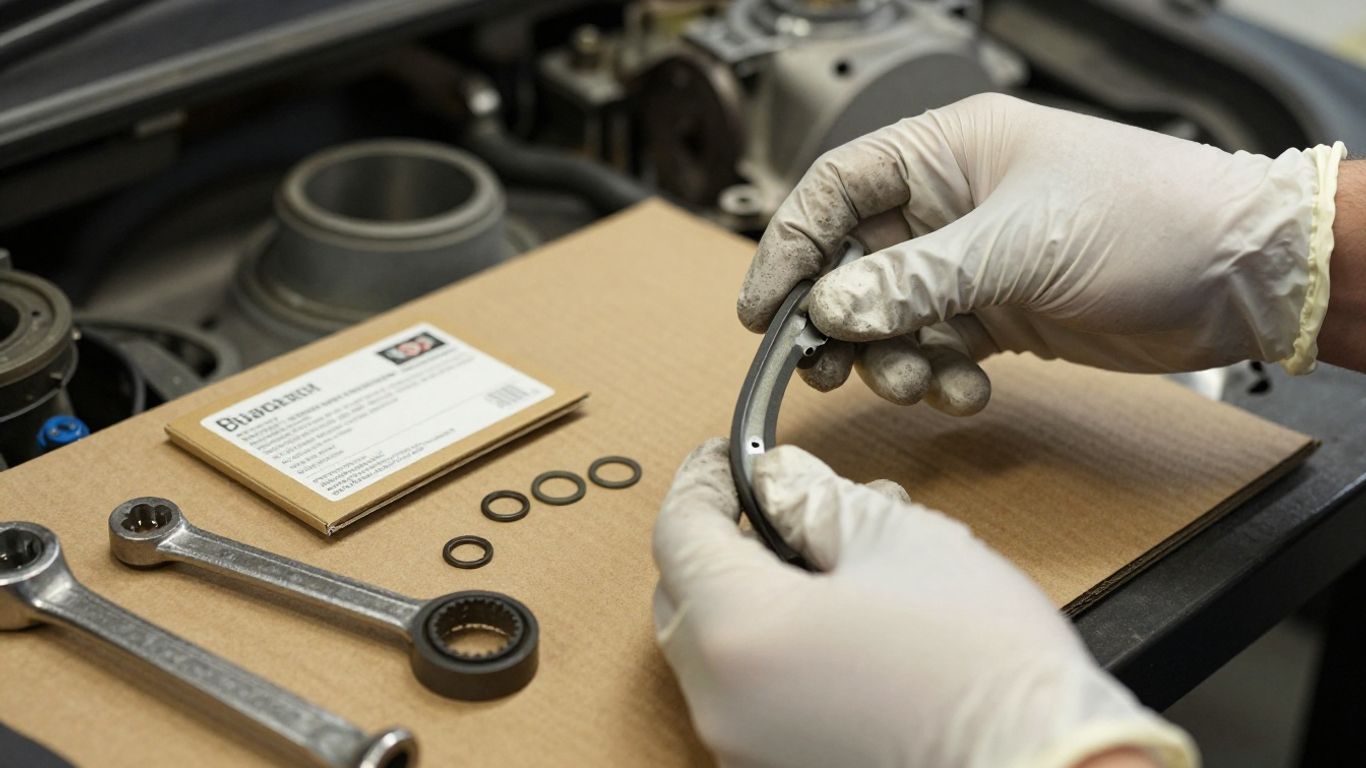
What information a trustworthy listing should provide
Look for the engine code, compatible model years, manufacturer or brand, full part number, kit contents, condition, storage history, and clear return terms. A listing that says “new old stock” should explain whether the inner packages have been opened and how the parts were stored.
A seller with access to a catalog may also be able to explain superseded numbers or aftermarket equivalents. That explanation is more reassuring than a bare promise that the gasket “should fit.”
How to verify photos, labels, and part numbers
Ask whether the photographs show the exact kit rather than a stock image. Request close-ups of the label, the gasket profile, and any printed markings. Compare the images with the written description and check that the number is consistent in every place it appears.
If you are buying across borders, delivery guidance matters too. A car shipping guide can help frame questions about transport preparation and costs, although a gasket kit still needs packaging suited to small, flat, damage-sensitive parts.
Questions to ask a salvage yard or parts dealer
Ask where the kit came from, whether it was ever installed, how long it was stored, and which vehicle or engine it was intended for. Confirm the exact contents, the return window, and whether the seller will accept a fitment claim when the supplied part number differs from the agreed one.
A dealer may also have access to related catalog information. For example, Peter Page Chery describes a catalogue for genuine Chery parts and accessories and service-booking support; that kind of catalog access can be useful for checking identifiers, even when the final purchase is made elsewhere.
Warning signs of inaccurate or misleading listings
Walk away from listings using only stock photos, refusing to show labels, or promising compatibility with every Chery model. Other warning signs include pressure to pay immediately, unexplained part-number changes, missing photos of small seals, and claims that a visibly compressed gasket is “as good as new.”
A seller who cannot answer basic questions may still possess a usable part, but the buyer would be accepting too much uncertainty. If you need a broader sourcing option, Partfinder China describes entering Chery vehicle details to search used parts and receive supplier price quotes; any quote should still be verified against the exact engine code.
Comparing costs and overall value
The kit price is only the first line of the repair budget. A used set can appear dramatically cheaper until shipping, missing seals, machining, new fluids, and labor are added. Compare like for like: a complete, warranted new kit against a used kit that has the same contents and a realistic return option.
A simple written estimate makes emotional buying less likely. It also shows when a small saving is being exchanged for a large risk of repeating the repair.
Calculating the price against a new gasket kit
Record the price of a verified new kit and subtract the used kit’s purchase price. Then consider the value of any missing components and the likelihood that an old seal will need replacement. A discount is meaningful only if the used kit provides comparable coverage and condition.
For genuine-part catalog checks, Heartland Chery describes online ordering for genuine Chery parts and accessories. That type of reference can provide a useful new-part benchmark, even if you ultimately compare several sources.
Including shipping, taxes, and installation costs
Add delivery, customs or sales taxes, transaction charges, and any special packaging costs. Then include labor for inspection, dismantling, cleaning, assembly, and retesting. If the kit arrives wrong, the return shipment and lost workshop time may become part of the real price.
The calculation should use the cost of a successful repair, not merely the cost of receiving a parcel. That distinction is often where a seemingly attractive deal loses its advantage.
Considering machine-shop and replacement-part expenses
A gasket replacement may expose a warped cylinder head, damaged fasteners, worn seals, or surfaces that need machining. Those expenses are not caused by the kit alone, but they belong in the repair decision. A used kit should not be allowed to dictate a lower-quality repair around parts that require attention.
Ask the technician for a likely range before buying. If the engine is already apart, replacing uncertain small seals may be sensible even when the main gaskets look acceptable.
Knowing when a used kit is a false economy
A used kit is usually poor value when it has unclear fitment, no return path, visible deterioration, or a small discount compared with new stock. It is also a weak choice when the repair is labor-intensive and access will be difficult after reassembly.
The more expensive the consequences of a leak, the less attractive uncertainty becomes. Saving on the gasket is not worthwhile if it creates another teardown, overheating, contamination, or transport problem.
Buying and installing the kit safely
Safe installation starts before the package arrives. Confirm the seller’s terms, protect the parts during transport, and make sure the workshop has the service information for the exact engine. Gaskets do not compensate for dirty surfaces, incorrect fasteners, or improvised torque procedures.
If a technician is doing the work, share the listing photographs and the written fitment confirmation. That gives the technician a chance to reject a doubtful kit before the engine is opened.
Confirming return and warranty policies
Read the return policy for opened packaging, incorrect fitment, and parts that have been installed. Some sellers accept returns only when the gasket remains unused, while others offer a limited warranty with specific evidence requirements. Keep the listing, messages, invoice, and photographs.
Do not install a questionable part merely to test whether it works. Installation can remove the very return rights you needed, and a failed seal may damage other components.
Transporting and storing gaskets correctly
Keep gaskets flat, dry, clean, and away from direct sunlight, fuel, oil, and solvents. Use a rigid container with enough padding to prevent bending, but avoid placing heavy objects on top. Leave individual protective sleeves in place until inspection and installation.
On arrival, photograph the package before opening it. If it is wet, crushed, or contaminated, document that condition immediately and contact the seller before handling the parts further.
Preparing mating surfaces before installation
Remove old gasket material carefully without gouging aluminum or leaving debris in fluid passages. Clean and inspect both mating surfaces, then check flatness according to the applicable service procedure. A new gasket cannot correct a badly distorted head or block.
Keep lint, sealant fragments, coolant, and oil away from the sealing areas. Use sealant only where the service instructions specifically call for it; adding it indiscriminately can obstruct passages or alter the intended clamping condition.
Following torque specifications and service procedures
Use the correct tightening sequence, torque values, angle stages, fastener requirements, and reassembly order for the engine. Head bolts may be torque-to-yield and require replacement, even when a used kit includes hardware. Never substitute a generic tightening pattern because the parts look familiar.
A service manual or qualified technician should control the procedure. When the kit instructions conflict with the engine manufacturer’s specifications, stop and resolve the discrepancy before assembly.
Testing for leaks after the repair
Before starting the engine, verify fluid levels, hose connections, electrical plugs, and accessible fasteners. After startup, watch for coolant, oil, fuel, and combustion-gas symptoms, then allow the engine to reach operating temperature under controlled conditions.
Recheck the repair according to the service procedure rather than assuming that a quiet first start proves success. Unusual pressure, contamination, overheating, or a persistent drip deserves immediate investigation.
Conclusion
Choosing second hand Chery gasket kits carefully means verifying identity first, judging condition honestly, and comparing the complete repair cost with a new alternative. A well-documented, unused kit from a responsive seller can be worth considering, but uncertainty is rarely a good place to save money when the repair requires major labor.
Frequently Asked Questions
Are second hand Chery gasket kits safe to use?
They can be suitable when they are unused, correctly identified, properly stored, and inspected before installation. A kit with unknown history or visible damage should be treated as high risk.
How do I confirm that a gasket kit fits my vehicle?
Match the exact model, year, engine code, and part number. Compare the gasket shapes and openings, then confirm the contents with the seller or a qualified parts professional.
Should I buy a used head gasket?
A used head gasket is generally a poor choice if it has been installed, compressed, bent, contaminated, or stored in uncertain conditions. The labor involved in a head-gasket repair makes new, verified parts more attractive.
What photographs should a seller provide?
Request images of the actual package labels, full gasket profiles, printed part numbers, seals, bolts, and any damaged areas. Close, well-lit photographs are more useful than generic catalog images.
Do gasket kits include head bolts?
Not always. Check the itemized contents because head bolts, O-rings, valve-stem seals, and other small parts may be sold separately or excluded from the kit.
How should unused gaskets be stored?
Store them flat in a dry, clean place away from sunlight, heat, oil, fuel, solvents, and heavy objects. Keep protective packaging intact until the parts are inspected and needed.
What should I do if the engine still leaks after installation?
Stop and identify the source before continuing to drive. Check the installation procedure, surface condition, torque sequence, fasteners, and fluid paths, then have a qualified technician inspect the repair if the cause is not obvious.