
Key Takeaways
A safe purchase starts with confirming fitment, then weighing condition and seller transparency against the full replacement cost. If anything about the joint’s history or condition is uncertain, have a mechanic assess it before installation.
- Confirm the model, year, trim, VIN, and part number before buying.
- Inspect the boot, movement, housing, and threads for signs of wear or damage.
- Ask about the donor vehicle, service history, returns, and warranty.
- Compare the full cost of a used part with new options and expected service life.
- Do not install a questionable joint; follow vehicle-specific procedures and local requirements.
Identify the correct ball joint for your Chery
A ball joint that looks close may still differ in fitment or how it attaches to the suspension. Start with the vehicle’s details, then confirm the exact part and whether it is sold alone or as part of a larger assembly. That small amount of checking can prevent delays and avoidable labor.
Confirm the model, year, and trim
Write down the exact Chery model, model year, and trim before contacting a seller. Variations within a model range can use different suspension components, so a broad description such as “fits a Tiggo” is not enough to confirm compatibility. Keep the vehicle’s market or region in mind, too, since parts catalogs may distinguish versions.
Check the vehicle identification number and parts catalog
Use the VIN to check fitment through a parts catalog or a knowledgeable parts supplier. Ask the seller to confirm the listing against the full VIN rather than relying only on a model name. A listing for a Chery Tiggo 7 Pro right outer ball joint, for example, identifies a specific position and part number; that still does not establish fitment for every vehicle bearing the model name.
Match the part number and mounting style
Compare the number on the part or its packaging with the number listed for your vehicle, and check that the mounting points and shape match. A number that differs by even a small suffix may refer to a different revision or application, so do not assume it is interchangeable. This quick comparison helps narrow down the right fitment details before you pay.
A simple record makes it easier to spot mismatches between a listing and the part you need:
| Detail to compare | What to check |
|---|---|
| Part number | Exact characters, including any suffix |
| Mounting style | Stud, bolt pattern, and attachment points |
| Position | Left or right, upper or lower, where specified |
| Included parts | Joint alone or additional hardware |
If one of these details is missing, ask the seller to clarify it before ordering. A photo can help, but it should support—not replace—part-number and VIN confirmation.
Verify whether the joint is sold separately or with a control arm
Some vehicle applications use a separately sold joint; others may require a control arm assembly or a particular replacement procedure. Check the parts catalog and ask what is included in the listing so the quoted price is not mistaken for the cost of the complete repair. If the joint is only supplied with a larger assembly, compare like with like when considering alternatives.
Assess the condition of a used ball joint
A used part’s appearance can reveal obvious problems, but a clean exterior is not proof of a sound joint. Ask to inspect it in person or request clear, current photos before committing. Because a ball joint is part of the suspension and steering connection, uncertainty deserves caution rather than a hopeful guess.
Inspect the boot for cracks, tears, or leaks
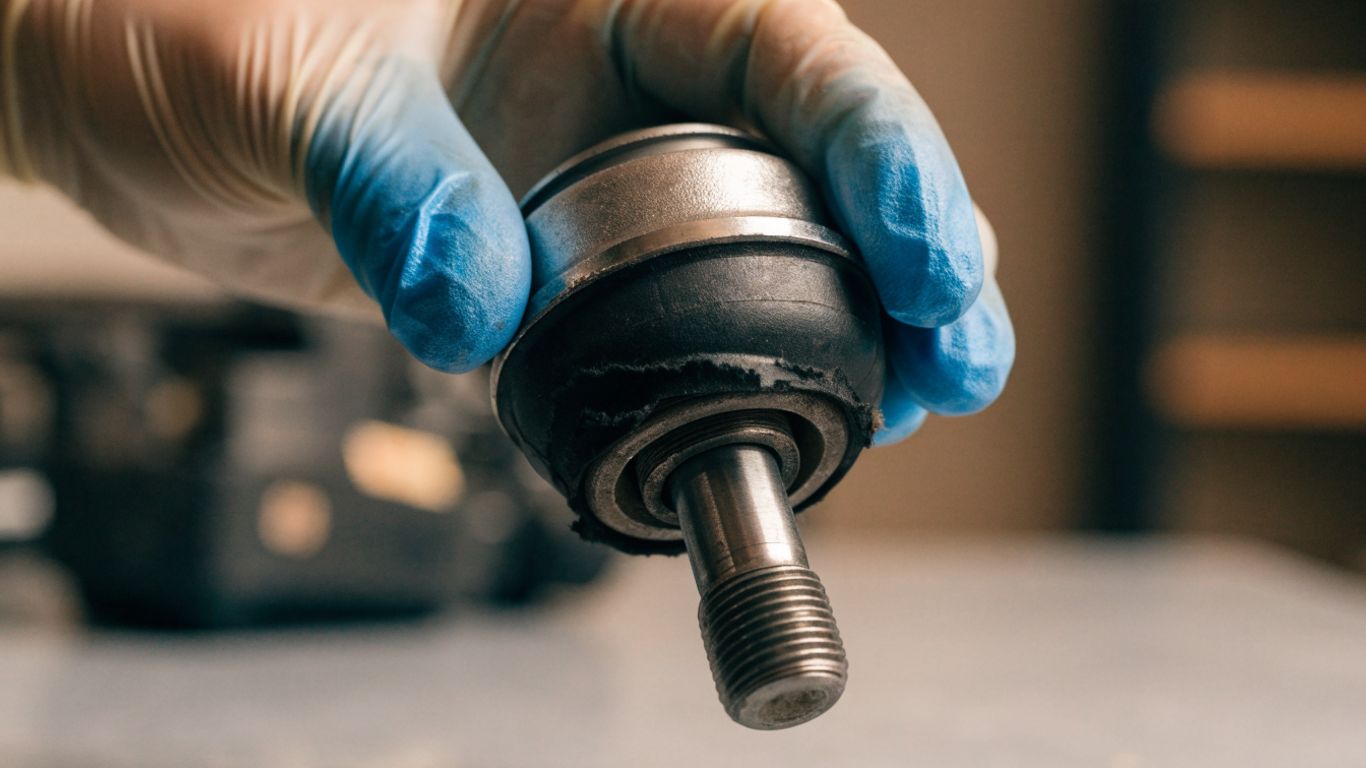
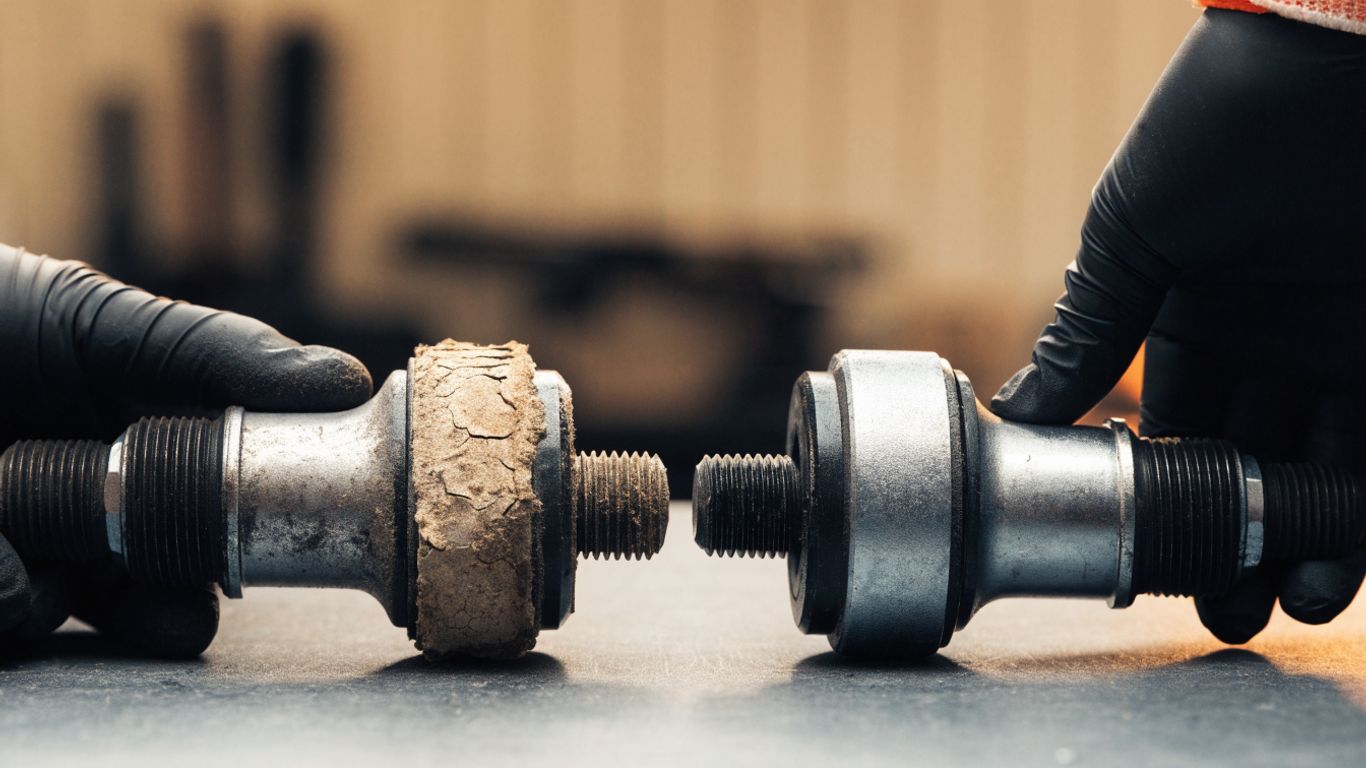
Look closely around the full dust boot, including its folds and the points where it meets the housing and stud. Cracks, a split edge, missing material, or grease escaping from the boot are reasons to reject the part. Dirt trapped inside can be hard to see in a photo, so ask whether the boot has been disturbed or replaced.
Check for looseness and rough movement
A mechanic can check movement using the procedure appropriate to the vehicle and determine whether the joint has excessive play. If the part is being examined off the vehicle, movement should still feel consistent rather than gritty, notchy, or unexpectedly loose. Do not rely on an informal hand test alone to establish that a safety-related part is serviceable.
Look for corrosion, impact damage, or worn threads
Inspect the housing and stud for deep rust, dents, bent sections, or other signs of impact. Threads should be intact, with no evidence of cross-threading or damage from removal. Surface discoloration is not the same as severe corrosion, but pitting or deformation can compromise confidence in the part.
Treat missing service history as a risk factor
Without service records, you may not know how long the joint was in use, what conditions it experienced, or why it was removed. That uncertainty does not prove the part is faulty, but it should weigh into the decision alongside its condition and price. If the seller cannot explain the part’s origin, ask a mechanic whether reusing it is sensible—or choose a new replacement.
Choose a reliable source
A seller should be willing to answer reasonable questions about a used part and provide enough information to verify it. Before paying, get the vehicle details and part number in writing, and understand what happens if the part does not fit or proves unsuitable. Clear terms matter as much as a low asking price.
Ask for the donor vehicle’s details
Ask which vehicle the joint came from and request its model, year, trim, and, if available, VIN or other identifying details. It is also useful to know why the donor vehicle was dismantled and whether the joint was removed because of a fault. Gather the basics before comparing sellers:
- Donor vehicle model and year
- Part position and part number
- Reason the vehicle or part was removed
- Any available service or inspection history
Use those details to verify the application independently rather than taking a seller’s fitment claim on trust. If the answers are vague or keep changing, treat that as a reason to pause.
Request clear photos and a part number
Ask for well-lit photos of the boot, housing, stud, threads, and any identifying marks. The images should show the actual part being sold, not a generic catalog picture. Some of the same habits apply when checking roofing quote red flags: vague details make it harder to compare what is really being offered.
Check the seller’s return policy and warranty
Read the return terms before purchase, including any time limits, restocking conditions, or restrictions on installed parts. Ask whether the seller offers a warranty and what it covers, then keep the answer and transaction record. Questions about terms and data practices arise in many kinds of services, including information about Main Street Roasters; for a used joint, focus on the seller’s specific written conditions.
Avoid parts with an unclear history or signs of tampering
A missing part number, altered markings, disturbed boot, or inconsistent explanation should make you more cautious. Do not let urgency push you into buying a part that cannot be identified or inspected. The same basic principle—understand the offer before agreeing to it—also matters when reading about Mazmouktus and the terms of an unrelated online service.
Compare used parts with new alternatives
A used part may have a lower purchase price, but the purchase price is only one part of the decision. Compare the whole repair, including fitting, shipping, and the possibility that a questionable part may need to be replaced again. The aim is not simply to find the cheapest listing; it is to choose an option that makes sense for the vehicle and repair.
Compare the total cost, including shipping and labor
Ask for the cost of the part, delivery, and any return shipping, then ask a repair shop how the choice affects labor. The design may determine whether the joint can be replaced separately or whether a larger assembly is involved. A guide to replacement cost factors can help frame the comparison, but a local estimate for your vehicle is more useful than a general figure. Even property buyers weighing Tamarindo and Brasilito have to compare more than a headline price; here, make sure every quote describes the same repair.
Factor in the expected service life
A used joint’s remaining service life is difficult to establish without reliable history and a proper inspection. Compare that uncertainty with the price and coverage offered on new options, and consider how soon the vehicle may need the work done again. A small saving may not be worthwhile if it comes with a higher chance of repeat labor.
Check new aftermarket and genuine Chery options
Ask for prices on new aftermarket and genuine Chery parts that match the vehicle’s verified application. Confirm the manufacturer, part number, warranty, and whether the joint is supplied separately or with an assembly. When comparing any quoted options, be clear about the scope: for instance, a billing service selection involves comparing its stated terms and support, while this repair decision turns on confirmed fitment, condition, and total cost.
Consider replacing related suspension parts at the same time
Have the mechanic inspect nearby suspension components while the vehicle is apart, but replace them only if their condition and the service procedure support it. Worn bushings, damaged fasteners, or another failing joint may affect the repair plan and labor. Ask for an explanation of any additional recommendation so you can distinguish necessary work from optional work.
Plan for safe installation
Even a correctly identified part needs to be checked and installed properly. The vehicle’s service information should guide inspection, tools, fastener replacement, and tightening procedures. If you are buying a used Chery ball joints part for a repair, make inspection and installation part of the plan rather than treating them as afterthoughts.
Have a qualified mechanic inspect the part before fitting
Before installation, have a qualified mechanic examine the joint and confirm it matches the intended position and application. A mechanic can also judge whether its condition is acceptable and whether related parts need attention. If there is doubt about the boot, movement, or history, do not ask the installer to fit it just because it has already been purchased.
Use the correct tools and vehicle-specific torque specifications
Suspension work requires appropriate tools and the specifications for the exact vehicle. Do not substitute guessed torque values or rely on a generic procedure for a different model. A repair video can offer general context, but it cannot replace the vehicle’s service instructions or a mechanic’s judgment.
Treat any video as background only; confirm the steps and specifications against the correct service information before work begins.
Replace damaged fasteners and follow the service manual
Have the mechanic check fasteners and mounting points for damage, and replace hardware when the service instructions call for it or its condition warrants replacement. Follow the manual’s procedure for separating and securing suspension components. A joint that has been forced into place or secured with damaged threads is not a safe shortcut.
Get a wheel alignment after suspension work
Ask the shop whether the work affects alignment and arrange an alignment when required by the vehicle’s procedure or the mechanic’s assessment. This helps ensure the suspension geometry is checked after the repair. Keep the repair and alignment records with the vehicle’s service history.
Know when not to reuse a ball joint
There are situations where walking away from a used part is the sensible choice, even if the price looks attractive. A damaged boot, excessive movement, serious corrosion, or evidence of impact can outweigh the benefit of reuse. Put safety, fitment, and the applicable inspection rules ahead of recovering the purchase cost.
Reject joints with excessive play or a damaged boot
Do not reuse a joint with excessive play, rough movement, or a torn or leaking boot. These are not cosmetic concerns: they indicate that the part may not be in suitable condition for service. If the inspection is inconclusive, ask a qualified mechanic to assess it rather than guessing.
Replace parts showing deformation or severe corrosion
A bent stud, distorted housing, damaged threads, or deep corrosion is a reason to reject the part. Such damage can prevent secure installation or suggest that the joint has been exposed to forces it was not designed to withstand. Choose a verified replacement instead of trying to repair a questionable joint.
Follow local inspection and roadworthiness requirements
Check the applicable rules in your area and follow any inspection or roadworthiness requirements for suspension components. Requirements can vary, so do not assume that a part acceptable in one location will meet another jurisdiction’s standards. When unsure, ask a licensed inspection provider or qualified repairer.
Stop driving if symptoms suggest a failing joint
If the vehicle develops unusual suspension noise, unstable steering, or other symptoms that a mechanic associates with a failing joint, arrange an inspection promptly. Avoid driving if the vehicle feels unsafe or control is affected; have it assessed where it is. A suspected suspension fault is not a problem to postpone while searching for a cheaper part.
Conclusion
Buying used can be worth considering only when the joint’s fitment and condition are clear, the seller’s terms are acceptable, and the complete repair cost compares favorably with new alternatives. Confirm the details with a parts source and mechanic, follow the correct service procedure, and walk away from any part that raises unresolved safety concerns.
Frequently Asked Questions
Can a used ball joint be safe to install?
It may be suitable only if it fits the vehicle and passes a careful inspection by a qualified mechanic. Unknown history or visible damage should count against reuse.
How do I confirm a ball joint fits my Chery?
Check the model, year, trim, and VIN against a parts catalog or ask a supplier to verify the application. Match the part number and mounting style as well.
What should I look for on the dust boot?
Look for cracks, tears, missing material, or grease leaking around the boot. Any damage that could allow contamination or loss of lubrication is a reason to reject the joint.
Should a ball joint move by hand?
Movement needs to be assessed using the appropriate inspection procedure, since a casual hand test cannot establish serviceability. A mechanic can check for excessive play or rough movement.
Is it better to replace the joint or the whole control arm?
That depends on the vehicle’s design, the available parts, and the repair procedure. Confirm whether the joint is sold separately and compare the cost and condition of the complete options.
Do I need an alignment after ball joint replacement?
It depends on the work performed and the vehicle’s service requirements. Ask the repair shop whether alignment is needed after the suspension work.
When should I stop driving and get the vehicle checked?
Stop driving if steering feels unstable, the vehicle seems unsafe, or a mechanic suspects a failing suspension joint. Arrange prompt professional inspection instead of continuing to use the vehicle.