

Key Takeaways
A recycled Chery CVT gearbox can be a practical repair, but only when the replacement is correctly identified and properly checked.
- Match the gearbox to the exact vehicle, engine, trim, and electronics.
- Ask for donor-vehicle information, inspection evidence, and a written warranty.
- Check pulley, belt, bearing, valve-body, and connector condition before purchase.
- Budget for fluid, installation, calibration, and possible cooling-system work.
- Use the correct fluid and respond quickly to noise, slipping, heat, or warning lights.
What a recycled Chery CVT gearbox is
A recycled Chery CVT gearbox is a used continuously variable transmission removed from another vehicle and prepared for reuse. It may be sold as a complete assembly, with some components inspected or replaced before resale. The condition can vary widely, so the word “recycled” should prompt questions rather than create confidence by itself.
Recycled, remanufactured, and rebuilt gearbox differences
These descriptions are not interchangeable. A recycled unit is generally a used transmission that has been recovered, inspected to some degree, and offered again. A remanufactured unit is usually restored against a defined process and specification, while a rebuilt unit has selected worn parts replaced during disassembly. Because sellers use these terms differently, request a written description of the work actually completed.
The most useful question is not what label appears in the advertisement, but what evidence supports it. Ask whether the casing was opened, which wear parts were measured, whether the valve body was tested, and whether the unit was run under load. A clear answer is more valuable than a polished listing.
Chery models commonly equipped with CVT transmissions
CVT availability depends on market, production year, engine, and trim. For example, published information identifies the CHERY Tiggo 4 Pro 1.5 Elite CVT as a specific CVT-equipped variant, while the Tiggo 7 Pro has also been reported with a 1.5-liter turbocharged engine and CVT automatic transmission in selected markets. Those examples are useful starting points, not a substitute for checking the vehicle identification number.
Model names can conceal meaningful mechanical differences. A gearbox from a similar-looking SUV may have different ratios, mounts, software, or connectors. Confirm the original transmission before assuming another Chery unit will fit.
Why owners choose a recycled replacement
The main attraction is usually price and availability. A suitable used assembly may return the vehicle to service sooner than a full rebuild, particularly when the original transmission has extensive internal damage. It can also make sense for an older vehicle whose market value does not justify a high-cost repair.
That value depends on the whole job, not just the advertised gearbox. Freight, seals, fluid, labor, programming, and a returnable core can change the final figure considerably. A cheaper unit is not a saving if it has to be removed twice.
When recycling is not the best repair option
Recycling may be a poor choice when the replacement has no traceable history, when the original unit only needs a known external repair, or when the vehicle has electrical faults that could damage another transmission. It may also be unwise if the seller cannot confirm compatibility or provide meaningful warranty terms.
Get a proper diagnosis first. A failed speed sensor, damaged wiring, low fluid, or cooling problem can imitate internal CVT failure. If the original casing and hard parts are sound, rebuilding it may provide better control over the work performed.
How to identify the correct replacement gearbox
Correct identification is the foundation of the purchase. Start with the vehicle identification number, the original gearbox label, and the service information for that exact market. Do not rely on photographs, a broad model description, or a seller’s claim that the part fits “most” versions.
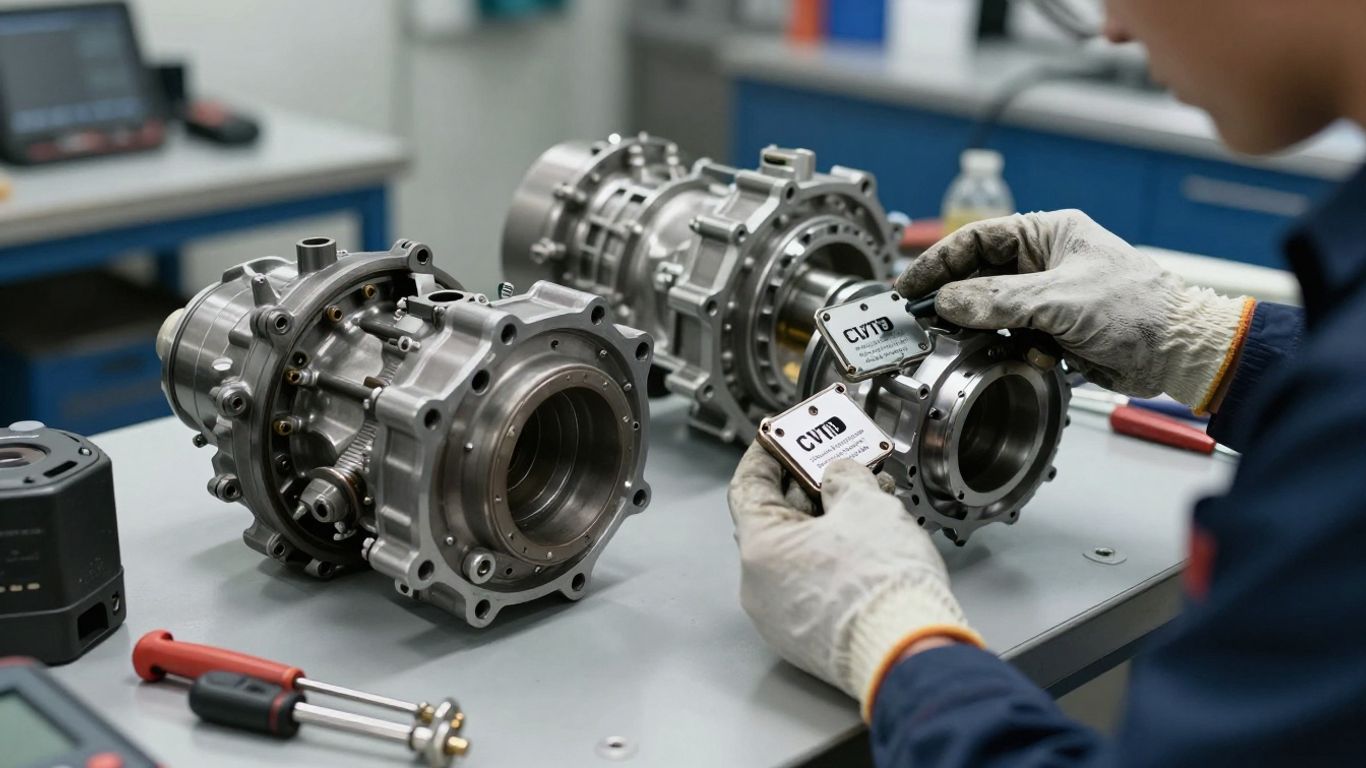
A careful comparison should cover both physical fit and electronic operation. The Chery model range varies by market, and published vehicle information should be treated as a guide for narrowing the search rather than proof of interchangeability.
Matching the Chery model, year, and engine
Record the model, production year, engine displacement, fuel system, drive layout, and trim. Also note whether the vehicle was sold in a different region, since apparently identical models can use different calibration files or hardware. The donor vehicle should match as many of these details as possible.
Ask the seller for the donor vehicle’s VIN or at least its model-year and engine information. Compare mounting points, driveshaft or axle arrangements, cooler connections, and bellhousing details before arranging delivery.
Reading gearbox codes and identification numbers
Locate the identification plate, stamped code, or casting number on the original transmission and ask for a clear photograph of the replacement’s equivalent marking. A part number can identify a family of units, but suffixes and revision codes may matter. Keep photographs of both labels with the purchase records.
If a code is difficult to read, have a transmission specialist verify it through the manufacturer’s service data or a trusted parts catalogue. Guessing from a marketplace photograph is risky, especially when two units share a similar casing.
Comparing CVT specifications across trim levels
Trim levels can change more than interior equipment. Differences may include final-drive gearing, cooler arrangements, torque capacity, sensors, and control software. Compare the original and replacement specifications line by line, including the torque converter or input arrangement where applicable.
The CHERY Tiggo 7 Pro example illustrates why market and trim details matter: a vehicle described as having a CVT in one market does not automatically establish that every related version uses the same assembly. Treat each listing as a lead to verify.
Confirming compatibility with the vehicle electronics
The transmission control system, engine controller, body modules, and sensors must communicate correctly after installation. Check connector shape and pin arrangement, but do not stop there; identical-looking plugs can carry different signals. Confirm whether the replacement requires coding, adaptation, or a relearn procedure.
A specialist scan before removal can preserve useful fault data from the original vehicle. After installation, the technician should compare live data and complete the manufacturer’s specified calibration process rather than simply clearing warning lights.
How to assess a recycled CVT gearbox before buying
Inspection should be proportional to the cost and difficulty of replacing the unit. A few external photographs are not enough for a gearbox hidden beneath the vehicle, where removal may require substantial labor. Ask for records, measurable test results, and clear return terms before sending payment.
A seller who cannot answer basic questions may still have a usable part, but the risk should be reflected in the price and warranty. For a useful reputation check, a guide to Google reviews offers general advice on interpreting feedback; apply the same caution here by looking for detailed, relevant experiences rather than star ratings alone.
Checking mileage, service history, and donor vehicle details
Mileage is helpful but rarely conclusive. A high-mileage unit with regular fluid changes may be a safer purchase than a low-mileage gearbox from a neglected or overheated vehicle. Request the donor VIN, removal date, operating history, and any record of previous transmission work.
Ask why the donor vehicle was dismantled. Collision damage may leave the gearbox unaffected, while a vehicle scrapped for drivetrain problems deserves much closer scrutiny. If the history is unknown, price the unit as an unknown-condition component, not as a verified low-mileage part.
Inspecting the casing, mounts, and transmission connectors
Look for cracks, impact marks, stripped threads, distorted mounts, corrosion, and oil staining around the casing. Inspect the electrical connectors for bent pins, moisture intrusion, broken locks, or repairs that could compromise the harness. The input and output areas should also be checked for damage from removal or storage.
A clean exterior does not prove good internals, but obvious damage is a reason to stop. Ask for photographs from multiple angles, including the mounting faces and connector side, before the part is shipped.
Evaluating pulley, belt, and bearing condition
A proper internal inspection can reveal scoring, discoloration, pitting, belt-edge damage, and unusual wear patterns on the pulleys. Bearings should turn smoothly without roughness or growling. Metal debris in the pan or fluid is a warning that the unit may have suffered internal damage.
The seller should explain what was measured and against which specification. General statements such as “tested good” are less useful than documented clearance checks, pressure tests, or a controlled run test.
Requesting test results and internal inspection evidence
Before buying, request a written report showing the checks performed, the fluid condition, stored fault codes if available, and any replaced parts. If the gearbox was opened, ask for photographs of the belt, pulleys, valve body, and pan. These details help distinguish an inspected assembly from one that was merely washed and photographed.
Use the evidence to compare several units rather than choosing the first available listing. A modest price difference can be justified when the better-documented gearbox includes a meaningful warranty and a realistic return process.
Common problems found in used Chery CVT gearboxes
Used CVTs commonly show wear related to mileage, heat, contaminated fluid, or incorrect previous repairs. Symptoms can overlap, so a road test and scan should support any diagnosis. The goal is to identify the likely source before replacing expensive hardware.
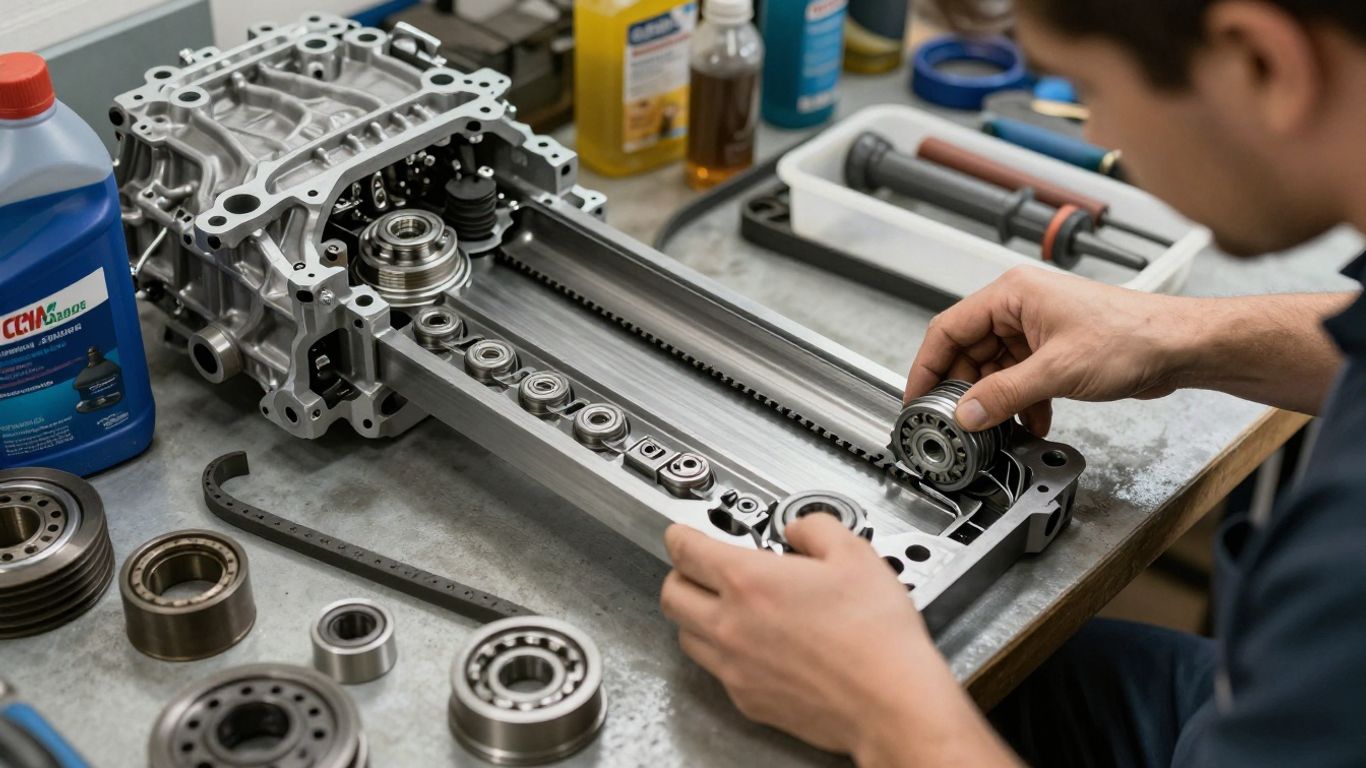
Some faults are repairable without replacing the complete gearbox. Others indicate damage that makes a questionable recycled unit a false economy. A disciplined inspection separates normal used-part uncertainty from evidence of imminent failure.
Belt and pulley wear symptoms
Worn belt and pulley surfaces may produce shuddering, delayed drive, slipping under acceleration, or a ratio that feels unstable. Whining can also occur, although noise alone does not identify the damaged part. Check for metal particles and abnormal pressure readings before drawing a conclusion.
A harsh launch after a replacement may be caused by calibration or fluid level rather than belt damage. That is why diagnosis should include the complete system and not just the most familiar CVT symptom.
Valve body and solenoid faults
The valve body regulates hydraulic pressure, while solenoids respond to electronic commands. Sticking valves, blocked passages, or weak solenoids can cause judder, poor ratio control, delayed engagement, or fault codes. Contaminated fluid may contribute to these problems.
Testing should include command response and pressure behavior where the service procedure allows it. Replacing the whole gearbox without checking the valve body can leave the original fault unresolved.
Bearing noise, overheating, and fluid contamination
A bearing that becomes noisy with vehicle speed may point to internal wear, while rising temperature can indicate restricted cooling, low fluid, excessive load, or mechanical friction. Dark, burnt-smelling fluid or visible metallic debris should be treated seriously.
Do not mask these symptoms with an additive or a fluid change alone. Find the source of the heat or debris, inspect the cooler circuit, and determine whether the unit is suitable for reuse.
Electronic calibration and sensor issues
Speed sensors, temperature sensors, wiring, and control modules can all affect CVT behavior. A replacement may operate poorly if its calibration does not match the vehicle or if a connector has been damaged. Intermittent faults are especially difficult to diagnose from a short drive.
Scan the vehicle for active and stored codes, examine live data, and complete the required adaptation procedure. If the problem remains, verify wiring and sensor signals before condemning the mechanical assembly.
How much a recycled Chery CVT gearbox costs
There is no single fair price for every recycled Chery CVT gearbox. Cost depends on condition, documentation, location, shipping, warranty, and the labor needed to install it. A responsible estimate separates the part from everything required to make the vehicle roadworthy again.
Comparing gearbox, labor, and fluid expenses
Request an itemized quotation. It should identify the gearbox, removal and installation labor, seals, the specified CVT fluid, filter or pan service, programming, diagnostic time, freight, and any refundable core charge. Ask whether follow-up calibration is included.
The cheapest quote may omit the fluid, cooler cleaning, or adaptation procedure. Comparing complete installed costs gives a much clearer picture than comparing advertisements for bare transmissions.
Factors that affect recycled unit pricing
Pricing rises when the unit has verified mileage, documented testing, recent internal work, and a longer warranty. Rare codes, limited supply, difficult freight routes, and strong demand for a particular model can also raise the price. Conversely, an unknown donor history should reduce the price.
Shipping deserves special attention. General offshore logistics guidance discusses inventory control, routing, and communication; those same practical concerns apply when a heavy gearbox crosses borders. Confirm packaging, transit insurance, delivery timing, and responsibility for damage.
Warranty coverage and return conditions
Read the warranty before installation. Check its duration, covered parts, labor exclusions, fluid requirements, approval process, and whether the seller requires installation by a qualified shop. Some warranties become void if the cooler is not flushed or the specified fluid is not used.
Clarify the inspection period and return freight as well. Photograph the package on arrival, record any damage, and avoid fitting a visibly damaged unit before notifying the seller.
Calculating value against rebuilding the original unit
Compare the recycled option with a rebuild using the same assumptions. A rebuild may cost more initially but offer clearer knowledge of replaced parts and a warranty matched to the work. A recycled assembly may win when the original casing is damaged, parts are unavailable, or the turnaround time matters.
For context, even decisions in unrelated product categories benefit from comparing durability, evidence, and total ownership cost; the principles behind Fair Trade clothing are not transmission guidance, but they are a useful reminder to ask how a product was sourced and what the price includes. Keep the automotive decision grounded in inspection and repair data.
How to install and set up the replacement gearbox
Installation is more than removing one assembly and bolting in another. The vehicle should be diagnosed first, the replacement checked against the order, and the surrounding system prepared before the gearbox is fitted. Good preparation reduces the chance of blaming the replacement for a pre-existing fault.
Preparing the vehicle and replacement transmission
Record fault codes and adaptation data before removal where possible. Compare the replacement casing, mounts, connectors, cooler ports, and identification marks with the original. Replace accessible seals and damaged fasteners, and inspect axles, mounts, wiring, and the cooling lines while the transmission is out.
Support the vehicle securely and use suitable lifting equipment. CVT assemblies are heavy and awkward, so rushed removal can damage connectors, housings, or the technician.
Flushing the cooling system and fitting the correct fluid
Clean the transmission cooler and lines according to the service procedure. Debris from the failed unit can circulate into the replacement and shorten its life. Fit the specified fluid, use the correct quantity, and set the level at the required temperature and operating condition.
Do not substitute a generic automatic-transmission fluid merely because it is easier to obtain. CVT friction behavior and pressure control depend on the fluid specification, and an incorrect product can create drivability problems.
Completing electronic relearning and calibration
After installation, connect a suitable scan tool and perform the required initialization, clutch or pulley learning, and control-module procedures. Some vehicles need a particular sequence, fluid temperature, or road-speed range. Follow the service information for the exact model and gearbox code.
Clearing codes without completing relearning is not a complete setup. The technician should confirm that sensor signals, commanded ratios, and pressure behavior are plausible before returning the vehicle to normal use.
Road-testing and checking for leaks or fault codes
Begin with a controlled drive that includes gentle starts, steady cruising, deceleration, and a few moderate accelerations. Listen for new noises and monitor engagement, shudder, temperature, and warning lights. Recheck the fluid level and inspect every seal and cooler connection afterward.
A second scan should confirm that no new codes have appeared. If the vehicle behaves differently when hot, extend the test only after the initial inspection is satisfactory.
How to extend the life of a recycled Chery CVT gearbox
A used replacement benefits from the same care as a new transmission, perhaps more so because its prior service history may be incomplete. Maintenance should address fluid condition, operating temperature, and early symptoms. Small issues are easier to manage before they become belt, pulley, or bearing damage.
Following the correct CVT fluid service interval
Use the interval and inspection method specified for the vehicle. Service timing may depend on mileage, time, traffic conditions, climate, and towing. Use the approved fluid and keep records of the date, mileage, product, and work completed.
A fluid change cannot repair worn pulleys, but it can prevent old fluid and debris from adding stress to a usable unit. Ask the technician to inspect the drained fluid and pan for unusual material.
Using proper driving habits in traffic and on hills
Avoid repeated hard launches, abrupt throttle changes, and holding the vehicle on a hill with the accelerator. Use the brake, allow the transmission to engage fully, and give it a moment when shifting between reverse and drive. Smooth inputs reduce unnecessary heat and belt loading.
In slow traffic, leave enough space to move steadily instead of alternating between creeping and sudden acceleration. These habits are simple, but they matter when a recycled unit’s previous use is unknown.
Managing heat and towing-related transmission stress
Heat is a major concern for any CVT. Keep the cooling system clean, investigate temperature warnings, and follow the vehicle’s towing limits. Heavy loads, steep grades, hot weather, and low-speed maneuvering can combine to raise transmission temperature quickly.
If towing is permitted, use the recommended equipment and driving mode. Stop safely if the vehicle begins to slip, smell burnt, or display a transmission warning rather than continuing until it loses drive.
Recognizing early warning signs of failure
Pay attention to new whining, shuddering, delayed engagement, surging, ratio instability, fluid leaks, or warning lights. A change that appears only when the gearbox is hot is still meaningful. Record when the symptom occurs, what the vehicle was doing, and whether it disappears after cooling.
Have symptoms scanned and inspected promptly. Early diagnosis may identify a connector, mount, cooler, fluid-level, or calibration issue before internal damage becomes extensive.
Conclusion
A recycled Chery CVT gearbox can be a sensible way to restore a vehicle when its identity, condition, installation requirements, and warranty are all clear. Compare complete costs, insist on evidence, and have the replacement calibrated and road-tested properly; those steps do more to protect the repair than choosing a gearbox by price alone.
Frequently Asked Questions
Is a recycled CVT gearbox reliable?
It can be reliable when it comes from a known donor, has been properly inspected, matches the vehicle, and is installed with the correct fluid and calibration. Unknown history and weak warranty terms increase the risk.
How do I know which CVT gearbox fits my vehicle?
Match the vehicle identification number, model year, engine, trim, gearbox code, connectors, mounts, and control-system requirements. A specialist should verify the part number before purchase.
Should a used CVT gearbox be flushed before installation?
The vehicle’s cooler and lines should be cleaned according to the service procedure, particularly if the original gearbox failed internally. Use only the specified CVT fluid in the replacement.
What symptoms suggest CVT pulley or belt wear?
Shuddering, slipping, delayed drive, unstable acceleration, unusual whining, and metal debris in the fluid can point to internal wear. These symptoms need testing because electronic and hydraulic faults can feel similar.
How long does installation take?
Time varies with the vehicle, access, workshop equipment, seized fasteners, cooler cleaning, and programming requirements. Ask for an estimate that includes calibration and post-installation checks.
Is rebuilding the original gearbox better than buying a recycled one?
Not always. Rebuilding can provide clearer control over replaced parts, while recycling may be faster or less expensive. Compare the complete installed cost, warranty, condition of the original casing, and availability of parts.
What should a gearbox warranty cover?
Review the duration, covered components, labor terms, fluid requirements, installation conditions, return process, and exclusions. Get every promise in writing before the gearbox is fitted.