

Key Takeaways
A used clutch can be a sensible repair option, but only when its fitment and condition are verified carefully.
- Match the kit to the exact Chery model, year, engine, transmission, and drivetrain.
- Confirm whether the listing includes the disc, pressure plate, release bearing, flywheel, and hardware.
- Inspect used components for wear, contamination, cracks, heat damage, and poor storage.
- Compare the part price with labor, delivery charges, taxes, and the risk of later replacement.
- Have the clutch and related components checked before installation, then test engagement and shifting.
Identify the correct clutch kit for your Chery
A clutch kit that looks right in a photograph may still be wrong for the vehicle. Chery models can use different clutch dimensions and parts depending on the engine, gearbox, production period, and market. Begin with the vehicle identification number and the original part number whenever possible. That small amount of preparation can prevent an expensive installation mistake.
Match the kit to the Chery model and production year
Start with the exact model designation rather than a broad search for a Chery clutch. An A3, Tiggo, or QQ3 listing may refer to several production years and engine combinations, and a similar-looking part is not automatically interchangeable. Check the registration documents, VIN, build date, and the label on the existing clutch if it can be accessed safely.
The production year is especially useful when a model received a drivetrain update. Ask the seller to confirm the year range in writing, and compare it with the vehicle’s actual build information rather than relying only on the registration year.
Confirm engine size, transmission type, and drivetrain
Engine displacement is only one part of the fitment check. Record whether the Chery has a manual transmission, the gearbox code if available, and whether the vehicle is front-wheel drive or uses another drivetrain arrangement. The clutch diameter, spline count, and release mechanism must correspond to the transmission and engine combination.
A seller should be able to explain the basis for compatibility. If the listing only says “fits Chery” without a model, engine, or transmission reference, treat it as an incomplete lead rather than a confirmed match.
Compare clutch kit components and part numbers
Compare the number stamped or printed on the old component with the number in the listing. Also check the disc diameter, spline count, pressure-plate pattern, and release-bearing design. A complete kit can still be unsuitable if one component belongs to a different application.
The following quick comparison can help organize the information before you order:
| Item to compare | What to record | Why it matters | Warning sign |
|---|---|---|---|
| Clutch disc | Diameter and spline count | Confirms transmission fit | Measurements are missing |
| Pressure plate | Bolt pattern and diameter | Confirms mounting compatibility | Only a generic photo is shown |
| Release bearing | Shape and actuation type | Must work with the release system | Bearing is not included |
| Part number | Original and replacement references | Helps verify catalog fitment | Numbers are unreadable or absent |
Use the table as a checklist, not as a substitute for VIN confirmation. If two sources disagree, pause the purchase and ask a technician or parts specialist to resolve the difference.
Check compatibility with regional specifications
Regional versions may differ in engine codes, emissions equipment, gearbox configuration, and supplier part numbering. A kit removed from a vehicle in another country might fit, but the assumption should be tested against the VIN and technical references. Shipping a part back across borders is rarely convenient.
When a listing is described for a specific market, keep that detail with your records. It gives the seller a clearer starting point and helps explain why two apparently similar Chery kits carry different reference numbers.
Understand what a used clutch kit includes
“Clutch kit” does not always mean the same thing from one seller to another. Some listings include the three main clutch components, while others show a single part removed from a vehicle. Read the description closely and ask for an itemized confirmation before paying. Knowing exactly what is in the box matters as much as the price.
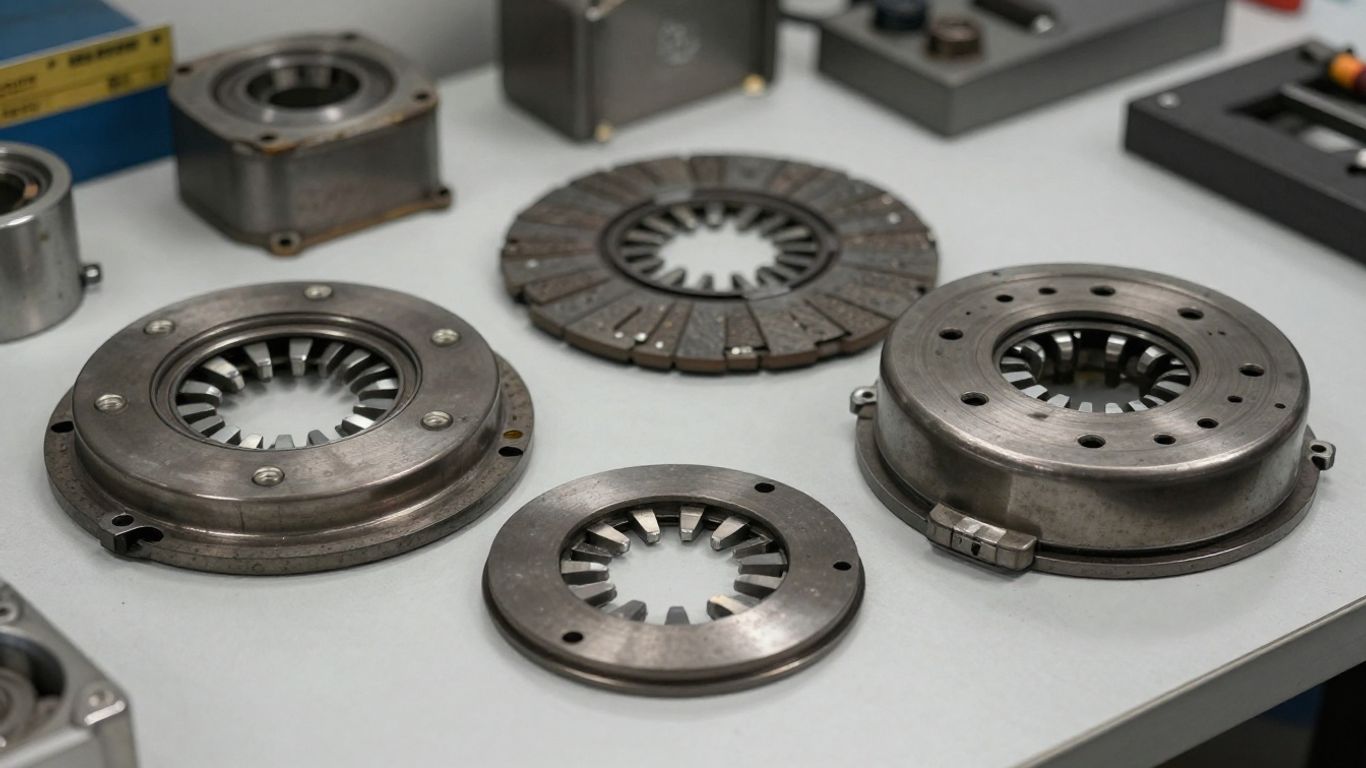
Inspect the clutch disc, pressure plate, and release bearing
The usual core components are the clutch disc, pressure plate, and release bearing. Ask for separate photographs of each one, including the friction surfaces, springs, fingers, bearing face, and identification marks. A photograph of an assembled or dusty unit may hide damage that would be visible in close-up images.
A used disc should not be accepted simply because its friction material remains visible. Its hub springs, rivets, splines, and overall thickness also deserve attention. The pressure plate and bearing need the same level of scrutiny.
Determine whether the flywheel is included
The flywheel is often sold separately, even when the listing title uses the words “complete clutch.” Confirm whether it is included, and if so, ask whether it has been inspected, resurfaced, or removed from the donor vehicle with visible scoring. A worn flywheel can undermine a replacement clutch and add labor later.
If the flywheel is not included, price an inspection or machining service before comparing the listing with a package that includes one. This produces a more realistic total rather than an artificially low headline price.
Distinguish complete kits from individual replacement parts
A complete kit should have a clearly stated component list. “Clutch assembly,” “clutch set,” and “clutch plate” may describe different quantities, so do not interpret those terms generously. Ask the seller to write down every included part and its condition.
This is also where the distinction between used, rebuilt, and new matters. A used part has a history in another vehicle; a rebuilt part may have had specific components replaced; and a new aftermarket kit is a separate comparison altogether.
Watch for missing hardware and installation accessories
Check whether the package includes alignment tools, pilot bearings, bolts, clips, shims, or hydraulic fittings. These items are not always supplied, and some fasteners should not be reused if the manufacturer specifies replacement. Confirming the small parts early prevents a stalled repair after the transmission is already removed.
Keep a written copy of the seller’s component list. If the parcel arrives incomplete, the record makes it easier to request the missing item or use the return process.
Evaluate the condition of a used Chery clutch kit
Condition is the central risk in buying used clutch parts. Mileage, driving style, storage, oil leaks, and removal methods can all affect the remaining service life. A low price is not meaningful if the kit requires immediate replacement or causes a second transmission removal. Look for evidence, not reassuring adjectives.
Look for disc wear, contamination, and heat damage
Inspect the friction lining for uneven wear, oil or coolant contamination, missing material, loose rivets, and a burnt or glazed appearance. Heat spots can indicate slipping or repeated overheating. Contamination may also point to a leaking rear main seal or gearbox input seal, which needs attention before installation.
The disc should sit flat when viewed on a suitable surface, and the hub should not show obvious looseness. If the seller cannot provide clear images of both friction faces and the hub, the condition is difficult to judge with confidence.
Check the pressure plate for cracks and uneven contact
Look across the pressure plate for cracks, deep scoring, corrosion, and discolored patches. The diaphragm fingers should appear reasonably even, without a visibly bent or damaged section. Uneven contact can produce vibration or incomplete release after fitting.
Surface appearance alone is not a complete test. A workshop can check the pressure plate more reliably, particularly when the part has been stored for a long time or its mileage is unknown.
Examine the release bearing for noise or rough movement
Rotate the release bearing by hand and feel for grinding, tight spots, looseness, or a dry, noisy motion. Compare its movement with a known-good bearing if possible. A bearing that feels rough is a poor candidate for installation, because access usually requires removing the transmission again.
Ask how the bearing was stored and whether it was removed with the rest of the kit. A clean photograph cannot confirm smooth operation, so a seller’s handling description and a return option are useful safeguards.
Assess storage conditions and previous mileage
Ask whether the components were kept indoors, exposed to humidity, or stored near oil and solvents. Surface rust on non-friction areas may be manageable, but corrosion on the disc, pressure plate, splines, or bearing can be more serious. Previous mileage is helpful context, though it should not replace a physical inspection.
A donor vehicle’s service history can reveal whether the clutch was replaced shortly before dismantling or had already shown symptoms. Treat missing history as uncertainty and reflect it in the price you are willing to pay.
Find reliable sellers and suitable listings
The seller affects the quality of the buying decision as much as the part itself. A useful listing identifies the donor vehicle, gives a part number, shows several sharp photographs, and explains the return terms. Search platforms can save time by bringing multiple suppliers together, but the buyer still needs to verify each proposed match.
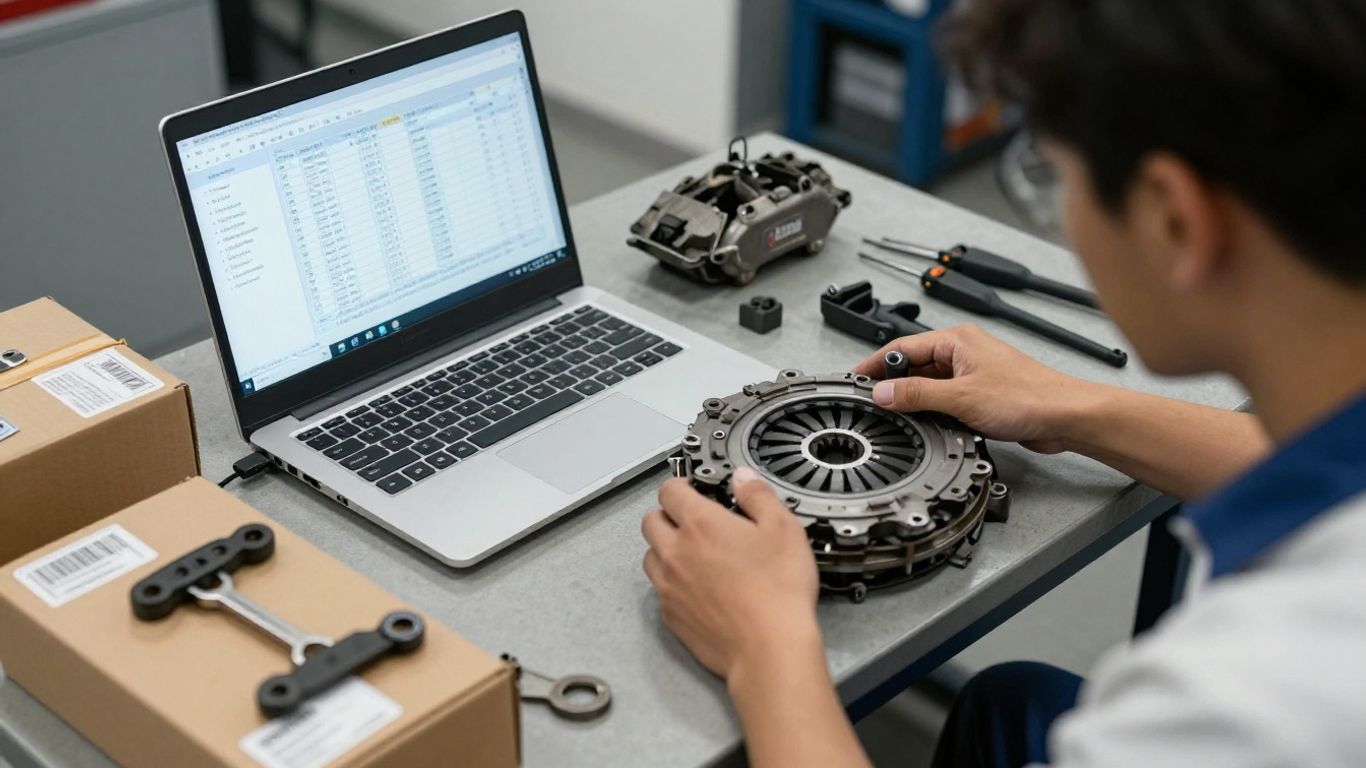
Compare used parts dealers, salvage yards, and marketplaces
Used parts dealers may provide catalog references and delivery options, while salvage yards can sometimes identify the donor vehicle directly. Marketplaces offer a broad selection, but descriptions and inspection standards vary. Compare the evidence supplied, not only the advertised price.
For a Saudi search, Partfinder Saudi Arabia describes a service that connects buyers with suppliers of genuine used Chery spare parts, supports stock searches and price quotes, and offers delivery options. For an A3 in the UAE, Partfinder UAE describes comparisons from specialists offering new and used parts. These are useful starting points for gathering listings, but fitment and condition should still be confirmed with the individual seller.
Review listing photos, descriptions, and part numbers
A strong listing should show the actual part rather than a catalog image. Look for the friction surfaces, pressure-plate fingers, release bearing, splines, casting marks, and any labels. The description should state whether the part is tested, used, rebuilt, or unverified.
Use this compact review before sending an inquiry:
- Match the photograph to the stated model, year, and engine.
- Check that the visible part number agrees with the written description.
- Look for close-ups of wear surfaces, mounting holes, and splines.
- Confirm every component included in the quoted price.
After this review, ask about anything hidden by packaging or a low-resolution image. A seller who responds with specific measurements and additional photographs is easier to assess than one who repeats a generic fitment claim.
Ask sellers for vehicle history and removal details
Ask for the donor vehicle’s model year, engine, transmission, mileage, and reason for dismantling. Find out whether the clutch was removed from a running vehicle, whether the vehicle had a known slipping or shuddering problem, and how the components were handled during removal.
For South African buyers, Partfinder South Africa describes a database that brings used and new Chery Tiggo suppliers together and provides price comparisons. That kind of search can broaden the options, but the final questions still belong with the supplier holding the actual part.
Verify return policies and buyer protection
Read the return policy before ordering, particularly for a part whose condition cannot be fully tested at home. Check the time limit, restocking charge, return shipping responsibility, and whether installation voids the return. Confirm what happens if the part arrives damaged or does not match the listed number.
Keep screenshots of the listing, messages, photographs, and invoice. Do not modify or install a questionable component before documenting a mismatch, since installation can complicate a dispute.
Compare the cost of used and new clutch kits
The cheapest listing is not necessarily the least expensive repair. Clutch replacement is labor-intensive, and much of the cost comes from accessing and reinstalling the transmission. A used kit with uncertain wear may create a second labor bill if it fails soon after installation. Compare the complete repair cost, not just the component price.
Calculate the purchase price against installation costs
Ask the workshop for a labor estimate before purchasing. Include inspection of the flywheel, possible machining, fluid replacement, and any seized or damaged fasteners. If the mechanic charges for transmission removal regardless of clutch condition, a questionable used kit carries more financial risk.
A new kit may cost more at checkout but offer clearer specifications and a predictable starting condition. A used kit makes more sense when its price reflects its history and the seller offers credible evidence and a workable return policy.
Account for shipping, taxes, and import fees
Add delivery, insurance, customs duties, local taxes, and brokerage charges to the advertised price. Heavy metal components can also be expensive to ship, especially across borders. Ask whether the quoted delivery charge includes residential or garage delivery and whether the package will require special handling.
Write down the final landed cost before comparing sellers. This avoids choosing a distant listing that appears cheaper but becomes more expensive after fees.
Compare used kits with aftermarket and OEM alternatives
Compare the used kit with a new aftermarket set and an original-equipment option available for the same vehicle. Check what each package includes, how the warranty differs, and whether the part numbers or dimensions are documented. The comparison is meaningful only when all three options are matched to the same application.
Do not assume that “OEM” in a listing proves factory origin, and do not assume that aftermarket means poor quality. Ask for manufacturer information, packaging details, and warranty terms rather than relying on labels alone.
Consider the cost of replacing worn components later
Budget for the possibility of replacing the release bearing, flywheel, seals, bolts, or hydraulic parts even if the used listing includes some of them. Replacing one marginal component while the transmission is accessible can be cheaper than repeating the entire job. The right choice depends on the part’s evidence, the labor rate, and how long you plan to keep the vehicle.
A modest contingency fund makes the repair less stressful. It also helps you reject a used kit whose apparent savings disappear as soon as several related parts need attention.
Install and maintain a used Chery clutch kit
Installation should begin with inspection, not unboxing and fitting. A clutch works as a system with the flywheel, release mechanism, hydraulics, seals, and gearbox input shaft. Even a correctly matched used kit can perform badly if one adjoining component is worn or contaminated. Use the workshop manual and the vehicle-specific torque data throughout the job.
Have the transmission and flywheel inspected before installation
With the transmission removed, inspect the flywheel for cracks, scoring, heat marks, and excessive runout. Check the input shaft splines and the release fork or hydraulic release mechanism as well. Any oil leak should be diagnosed and repaired before the friction surfaces are assembled.
The flywheel may need resurfacing or replacement, but the correct decision depends on its measurements and condition. A clean-looking surface is not enough evidence that it is flat and suitable.
Replace related seals, bolts, or hydraulic components when needed
Replace leaking seals and damaged fasteners rather than placing a clean clutch beside a known source of contamination. Inspect the clutch master and slave cylinders, hydraulic lines, and release mechanism for leaks or restricted movement. The aim is to avoid transferring an old fault to the replacement assembly.
Use new parts where the manufacturer or technician specifies them. Reusing a questionable bolt or fitting can compromise an otherwise careful installation.
Follow correct clutch alignment and torque procedures
Use the correct alignment tool so the disc is centered before the pressure plate is tightened. Tighten fasteners gradually and in the specified sequence, using the vehicle’s torque values rather than a general estimate. Keep grease away from the friction surfaces and use only the amount recommended for the splines or bearing contact points.
Correct alignment and torque are small details with a large effect on release quality and vibration. If the transmission will not slide into place, stop and find the cause instead of pulling it in with the bolts.
Test clutch engagement and shifting after installation
Before road testing, check pedal travel, hydraulic response, and visible leaks. Start the engine in a safe area and confirm that the clutch disengages fully, gears select without abnormal resistance, and engagement is progressive. A short, gentle drive can reveal shuddering, slipping, unusual noise, or a pedal that does not return normally.
Some initial bedding-in may be appropriate depending on the component condition, but avoid aggressive launches or heavy loads until the system has been checked. Record any symptoms while they are still easy to reproduce.
Recognize early signs of premature clutch failure
Watch for engine revs rising without matching acceleration, difficulty selecting gears, a high or inconsistent bite point, burning odors, vibration, and new bearing noise. These symptoms can come from the clutch, hydraulics, flywheel, or an oil leak, so diagnosis matters more than immediately blaming the disc.
Stop driving if engagement becomes unsafe or the clutch will not release. Early inspection may limit damage and can also preserve evidence for a seller claim if the used component was misrepresented.
Conclusion
Used Chery clutch kits can reduce parts spending when the application, contents, condition, and seller terms are all clear. Verify the vehicle details first, inspect the complete assembly, calculate the full repair cost, and let a qualified technician check the surrounding components before installation. A careful purchase is less about finding the lowest price than avoiding a second removal and repair.
Frequently Asked Questions
Is a used clutch kit worth buying?
It can be worthwhile when the kit is correctly matched, visibly inspected, fairly priced, and covered by a practical return policy. Unknown wear and additional labor risk should be included in the decision.
What information should I provide when searching for a clutch kit?
Provide the vehicle identification number, model, production year, engine size or code, transmission type, drivetrain, and any number found on the original clutch. Photos of the old components can also help.
Does a clutch kit usually include the flywheel?
Not necessarily. Many kits contain the disc, pressure plate, and release bearing only, while the flywheel is sold separately. Confirm the complete component list before ordering.
How can I tell whether a used clutch disc is worn out?
Look for thin or uneven friction material, exposed or loose rivets, contamination, glazing, heat spots, damaged hub springs, and excessive looseness. A workshop measurement is more reliable than appearance alone.
Should the release bearing be replaced with the clutch?
If the bearing is noisy, rough, contaminated, or of unknown condition, replacing it while the transmission is removed is often prudent. Confirm the correct bearing type for the vehicle.
Can a used clutch kit be shipped internationally?
Yes, but the total cost may include freight, insurance, customs duties, taxes, and brokerage fees. Confirm the return process and who pays for return shipping before buying across borders.
What should I do if the clutch slips after installation?
Stop demanding heavy acceleration and have the system inspected. Possible causes include a contaminated disc, incorrect adjustment, hydraulic trouble, a worn flywheel, or a defective component, so the diagnosis should cover the whole clutch system.