
Key Takeaways
A used drive shaft can be a sensible repair option, but only when fitment and condition are verified carefully.
- Match the shaft to the exact Chery model, year, drivetrain, and position.
- Inspect splines, joints, boots, mounting points, and signs of impact.
- Compare the complete cost, including shipping, fitting, and possible returns.
- Buy from a seller willing to provide clear photos and part information.
- Have the replacement installed and tested using the correct specifications.
Understand the role of a Chery drive shaft
A drive shaft, sometimes called a driveshaft or axle shaft depending on the vehicle layout, carries rotational force through the drivetrain. Its job is to help transfer power from the transmission or differential toward the driven wheels while allowing suspension and steering movement. Because it spins at speed, even a small defect can become noticeable through vibration or noise.
How the drive shaft transfers power to the wheels
The shaft connects rotating drivetrain components through splined ends, joints, flanges, or other mounting arrangements. These connections allow torque to pass through while accommodating changes in angle as the vehicle moves. The exact design varies by model, drivetrain, and axle position, so a shaft that looks similar may still be unsuitable.
A worn shaft can affect smooth acceleration and may place extra stress on related drivetrain parts. That is why diagnosis should identify the source of the problem rather than assuming every vibration comes from the shaft.
Common Chery models that use drive shafts
The correct replacement depends on the particular Chery model and its drivetrain configuration. A Tiggo, sedan, or other Chery vehicle may use different shaft lengths, joints, splines, and mounting points across model years or trim levels. Even two vehicles with the same badge can require different components.
When searching stock, provide the model, year, engine, transmission, and drivetrain details. Partfinder China describes a search process that uses Chery vehicle details to identify available used parts and gather quotes from suppliers, which is a useful approach when several visually similar shafts are listed.
Symptoms of a worn or damaged drive shaft
Common warning signs include vibration under acceleration, clunking when selecting drive or reverse, clicking during turns, and a humming or grinding sound that changes with road speed. Grease around a torn boot can point to a failing constant-velocity joint, while looseness at a flange or mounting point may create a knock.
These symptoms can also come from tires, wheel bearings, engine mounts, differentials, or suspension components. A proper inspection on a lift is safer than relying on a short road test alone, especially if the vibration is worsening.
When replacement is safer than repair
Repair may be reasonable when a specialist can replace a serviceable joint, boot, or bearing and confirm that the shaft itself is straight. Replacement is generally the safer choice when the tube is bent, a mounting point is cracked, splines are badly worn, or a joint has suffered severe heat or impact damage.
The decision should consider the part’s age, the availability of quality components, and the cost of balancing or rebuilding. Safety comes before savings when a rotating drivetrain component has uncertain structural condition.
Match the replacement to your Chery vehicle
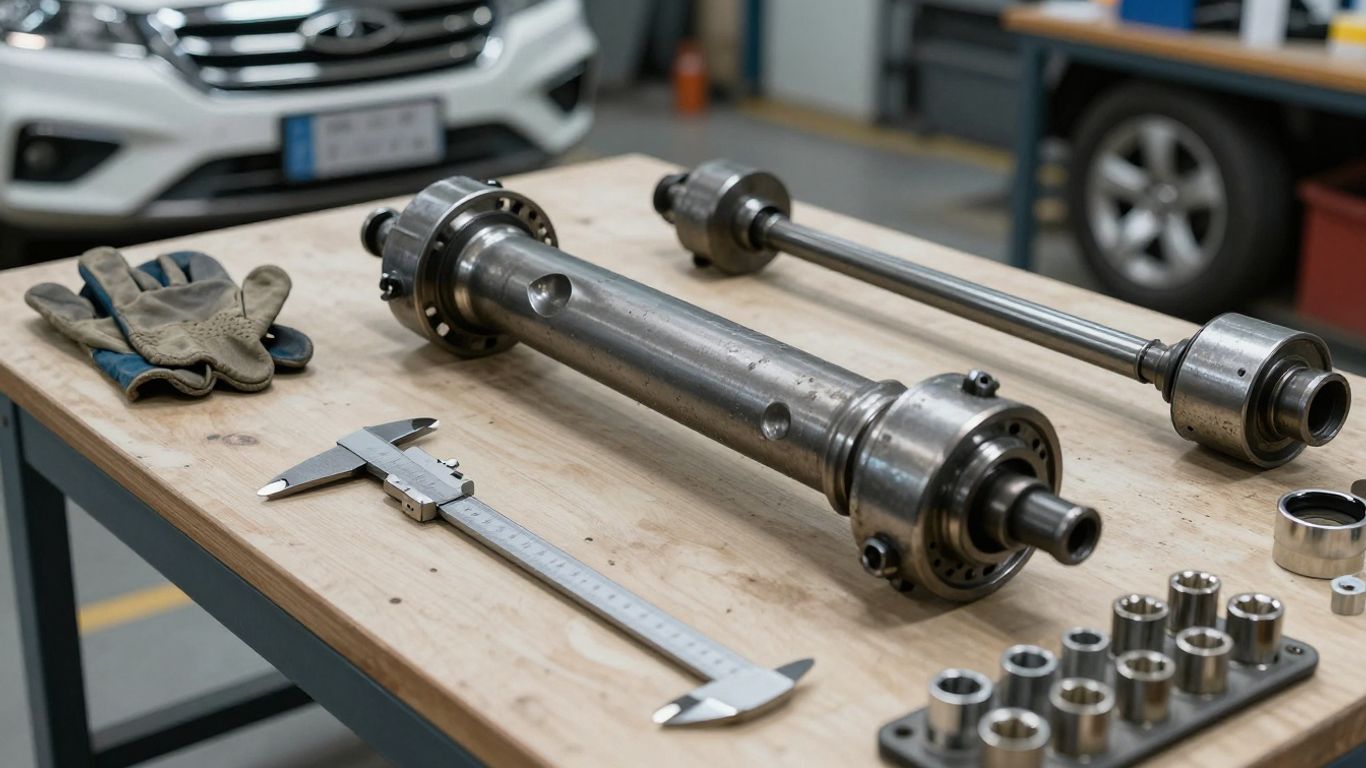
Fitment is the first filter when shopping for second hand Chery drive shafts. Condition and price matter only after the part is confirmed to belong to the same application. Photograph the original shaft and record its measurements before contacting sellers.
Confirm the exact model, year, and drivetrain
Write down the full vehicle description rather than saying only “Chery SUV” or “Chery Tiggo.” Include the production year, engine, transmission type, wheel-drive layout, and any facelift or trim information shown on the registration or service documents.
Ask the seller to confirm the same details against the donor vehicle. A shaft from a front-wheel-drive version may not match one from an all-wheel-drive configuration, even when the body and engine appear similar.
Compare OEM and aftermarket part numbers
Original equipment numbers provide a useful reference, but they should not be treated as the only proof of fitment. Used parts can carry superseded numbers, while aftermarket catalogues may use their own identifiers or list compatible replacements.
Compare the number with dimensions, joint style, spline count, flange pattern, and photographs. If the number is missing or unreadable, request measurements rather than accepting a guess based on appearance.
Check left, right, front, and rear fitment
Position is often decisive. Left and right shafts can have different lengths, and front and rear assemblies may use entirely different joints or mounting arrangements. Confirm which side and axle the seller is describing before discussing payment.
A simple measurement can prevent an expensive mistake. Compare overall length, compressed length where relevant, spline diameter, bolt spacing, and the number of splines at each end.
Use the vehicle identification number for verification
The vehicle identification number can help a parts supplier narrow the search to the correct build specification. Send it through a secure seller channel and ask what information it was used to verify; do not assume a VIN automatically guarantees a match.
Keep the seller’s written confirmation with the order. If the part arrives and differs from the agreed specification, that record can make a return or exchange much easier.
Inspect second hand Chery drive shafts before buying
A used shaft deserves the same attention as any other safety-related mechanical part. Clean surfaces can make an old component look better than it is, so inspect functional areas rather than judging only its overall appearance. Request close-up images before committing to a purchase.
Examine splines, joints, and mounting points
Look for sharp, uneven, or missing spline teeth, excessive play in the joints, and damaged flange faces. Mounting holes should be round and clean, not elongated from movement or impact. The shaft should also rotate smoothly without a rough spot or a sudden change in resistance.
Ask whether the seller can demonstrate joint movement on video. A small amount of designed articulation is normal, but looseness, binding, or clicking deserves an explanation or should be treated as a reason to decline.
Check for bends, cracks, corrosion, and impact damage
A shaft tube should be straight, with no visible dents, weld fractures, deep rust pitting, or signs that it has been dropped. Impact marks near a flange or joint can affect balance even when the component still turns by hand.
Surface dirt is not automatically a problem, but layered corrosion around seams and mounting areas can conceal weakening. If the seller cannot show the entire shaft from several angles, price the part as uncertain or keep looking.
Assess boots, grease, and universal joints
CV boots should be flexible and intact, with clamps seated properly and no grease sprayed around the surrounding components. A dry, split, or collapsed boot suggests that contamination may already have reached the joint. Universal joints should move smoothly without excessive side play.
Replacement boots are sometimes inexpensive, but a damaged boot does not reveal how long the joint operated without lubrication. Ask whether the shaft was inspected after removal and whether the seller will stand behind the joint condition.
Ask for mileage, vehicle history, and removal details
Mileage is useful context, not a guarantee. A low-mileage donor vehicle may still have suffered collision damage, long-term outdoor storage, or drivetrain problems. Ask why the vehicle was dismantled, whether it was running, and which symptoms were present before removal.
Also ask when the part was removed, how it was stored, and whether it was labelled by position. A clear history makes it easier to judge risk and compare two otherwise similar listings.
Evaluate condition, price, and warranty
The cheapest listing is not necessarily the lowest-cost choice. A shaft that needs a boot, balancing, or a second round of shipping can quickly lose its advantage over a tested alternative. Compare the part as a complete purchase, not just the headline price.
Compare used, refurbished, and new replacement costs
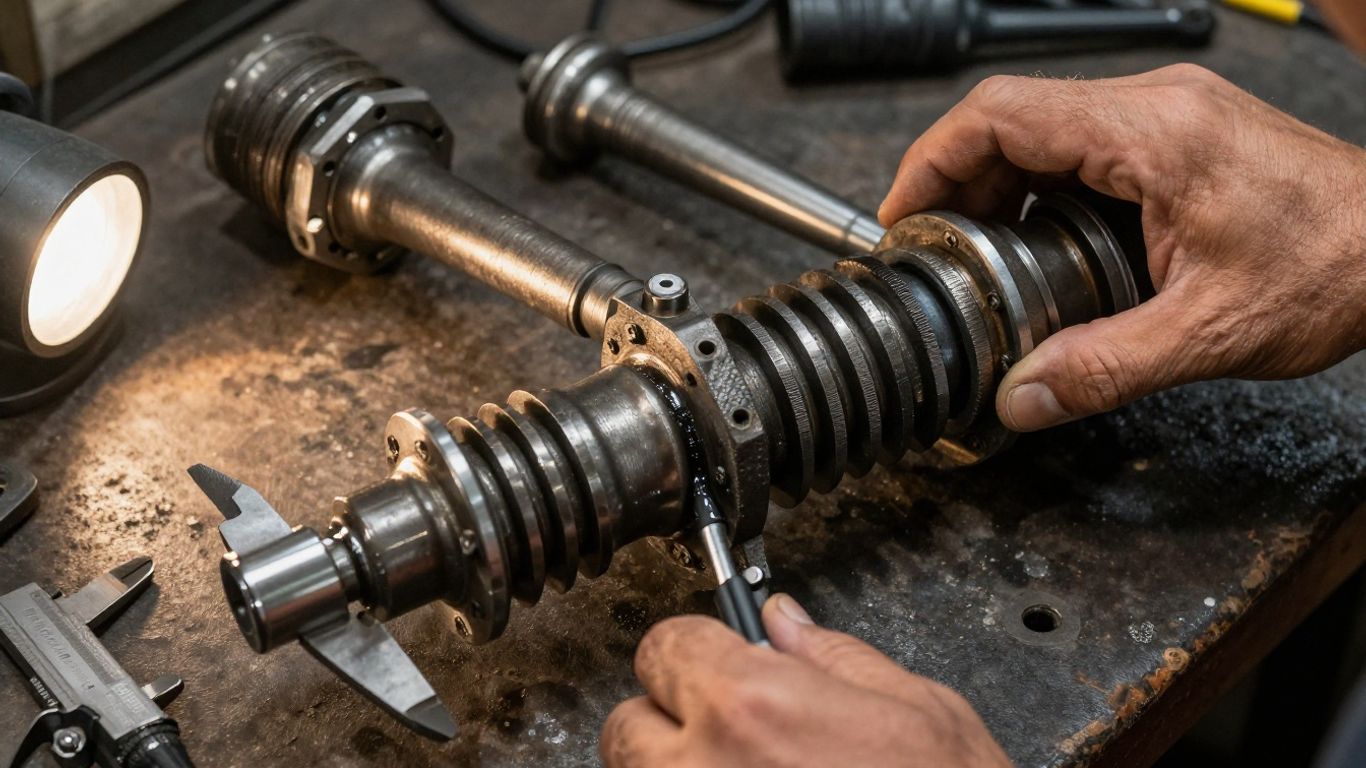
Used parts usually offer the lowest initial price, while refurbished components may include replaced wear items or inspection work. New parts can cost more but may offer clearer specifications and stronger warranty coverage. Availability and quality vary, so gather comparable quotes before choosing.
For a useful comparison, record what each seller includes. The following table keeps the decision focused on practical differences rather than price alone.
| Option | Main advantage | Main question to ask | Typical risk |
|---|---|---|---|
| Used | Lower purchase cost | Was it tested after removal? | Unknown remaining wear |
| Refurbished | Wear items may be renewed | What work was completed? | Inconsistent rebuild standards |
| New | Clearer specification | What warranty applies? | Higher upfront cost |
The table is only a starting point. A well-documented used shaft can be a better choice than a poorly described refurbished one, while a new part may make more sense when labor access is expensive.
Identify signs of excessive wear or poor storage
Be cautious around parts with heavy rust, dried boots, missing caps, or grease contamination. Long storage in damp conditions can damage joints and mounting surfaces even if the donor vehicle had modest mileage. Fresh paint can also conceal repairs or corrosion.
Ask for dated photographs and close-ups of every joint. Consistent, detailed images are more reassuring than one polished photo taken from a distance.
Review return policies and limited warranties
Read the return period, restocking terms, testing conditions, and exclusions before paying. Some sellers require the part to remain uninstalled for a return, while others may cover replacement but not labor or shipping. Confirm whether the warranty applies to the entire shaft or only selected components.
Get these terms in writing. A warranty cannot make an incorrect part fit, but it can reduce the financial risk of an unseen internal defect.
Calculate shipping, installation, and core-related costs
Add delivery, taxes, inspection, seals, boots, balancing, and professional labor to the part price. Oversized packaging may make shipping surprisingly expensive, especially across borders. Also check whether the seller expects an exchange core and whether returning it is your responsibility.
A supplier network such as Partfinder China can help a buyer compare quoted prices and supplier proximity, but the final calculation still needs to include your local fitting and transport costs. Partfinder China is a starting point for locating stock, not a substitute for checking the individual listing.
Buy second hand Chery drive shafts from a reliable seller
A dependable transaction begins with useful information flowing both ways. The buyer should provide exact vehicle details, and the seller should answer specific questions about the donor vehicle and part condition. If responses stay vague, do not let an attractive price create pressure.
Questions to ask dismantlers and parts suppliers
Ask whether the shaft was removed from a running vehicle, which position it occupied, and whether it was checked for play or damage. Confirm the mileage, storage conditions, included hardware, and dispatch time. You should also ask what happens if the part does not match the supplied vehicle information.
A seller who regularly handles used components should be able to describe the item clearly. Partfinder China presents supplier search and quote comparison as part of its used Chery parts service; when using any marketplace, assess the specific supplier and listing rather than relying on the portal alone.
How product photos and measurements support authenticity
Good photographs show the complete shaft, both ends, boots, flanges, splines, labels, and any visible damage. Measurements should be taken consistently, with the seller explaining whether the shaft is compressed, extended, or measured flange to flange.
Compare those details with your original part. Photos cannot prove internal condition, but they can expose a wrong side, missing joint, incompatible flange, or suspiciously generic listing before money changes hands.
Checking seller reviews and business credentials
Look for reviews that discuss actual used-part transactions, accurate descriptions, packaging, and how problems were resolved. A long operating history is useful, but it should be paired with a clear returns process and reachable contact details.
Check the invoice, business name, physical address, and payment protections where available. Avoid sending money through methods that provide no practical recourse for a non-delivery or materially misdescribed part.
Avoiding mismatched, incomplete, or counterfeit components
Do not accept a listing that says “fits all Chery models” without supporting details. Confirm that the shaft includes every required joint, flange, circlip, boot, and mounting feature, and compare markings with known photographs of the original component.
If the seller refuses to show a requested detail or changes the part number after you ask questions, walk away. A reliable seller would rather clarify fitment than ship an uncertain component.
Install and maintain the replacement drive shaft
Installation is the final opportunity to catch a mismatch before it becomes a road problem. Compare the replacement with the original while both are off the vehicle, and inspect related seals, mounts, and fasteners at the same time. Never work beneath a vehicle supported only by a jack.
Prepare the vehicle and verify the part before installation
Park on a level surface, secure the vehicle, and use suitable lifting equipment. Check that the replacement has the correct length, spline profile, flange pattern, joint arrangement, and position before removing the original if possible.
Clean mating surfaces and replace damaged hardware or seals as recommended for the vehicle. If the shaft arrives with shipping damage, photograph it immediately and contact the seller before attempting installation.
Why professional fitting and torque specifications matter
Drive shaft fasteners affect alignment, clamping force, and balance. A technician can identify worn supporting components and use the manufacturer’s torque sequence and specifications instead of relying on feel. This matters particularly where a flange or center support is involved.
Professional fitting also creates a clearer record if a warranty claim becomes necessary. The installer should document the part number, observed condition, and any related repairs.
Test for vibration, noise, and drivetrain movement
After installation, begin with a cautious low-speed check in a safe area. Listen for clicking, clunking, scraping, or humming, and notice whether vibration changes with acceleration, turning, or speed. Stop if anything feels abnormal rather than continuing to “see if it settles.”
A short inspection after the test can reveal loose hardware, displaced boots, or grease leakage. For a visual explanation of common symptoms and inspection points, this drive shaft inspection video can supplement, but not replace, hands-on diagnosis.
Maintenance practices that extend service life
Inspect boots and clamps during routine servicing, especially after driving over rough roads or debris. Keep an eye on new vibration, grease around a joint, or changes in drivetrain noise. Addressing a damaged boot early may prevent contamination from destroying an otherwise serviceable joint.
Use the correct lubricants and replacement hardware, and avoid pressure-washing directly at vulnerable seals. Good maintenance cannot correct a bent shaft, but it can help protect a properly fitted replacement.
Conclusion
Choosing second hand Chery drive shafts is mainly an exercise in verification: identify the exact application, inspect the component honestly, calculate the complete cost, and buy from a seller with clear information and fair terms. With careful fitting and a sensible post-installation test, a used replacement can be a practical way to restore dependable drivetrain operation.
Frequently Asked Questions
What does a drive shaft do?
It transfers rotational power through the drivetrain toward the driven wheels while accommodating changes in angle and movement.
Can a used drive shaft be reliable?
Yes, if it matches the vehicle precisely, has been inspected for structural and joint damage, and comes with reasonable return protection.
How do I know which drive shaft fits my vehicle?
Confirm the model, year, engine, transmission, drivetrain, axle position, part number, dimensions, and VIN-based details with the seller.
What are the main signs of drive shaft failure?
Vibration, clunking, clicking, grinding, grease leakage, joint looseness, and unusual drivetrain movement are common warning signs.
Should I repair or replace a damaged shaft?
Repair can suit a serviceable shaft with a replaceable wear item, but replacement is safer when the tube, splines, joints, or mounting points are structurally damaged.
What should I ask a used-parts seller?
Ask about donor-vehicle mileage and history, removal conditions, testing, storage, included components, fitment confirmation, shipping, and returns.
Is professional installation necessary?
Professional installation is strongly advisable because correct support, alignment, fastener torque, and post-installation testing are important for safe drivetrain operation.