

Key Takeaways
A recycled differential can be a sensible repair when its specification, condition, and history are properly checked. The safest purchase is not always the cheapest one; it is the unit that matches the vehicle and comes with clear inspection information.
- Confirm the Chery model, drivetrain, differential position, code, and ratio before ordering.
- Ask about donor mileage, vehicle history, testing, lubricant condition, and warranty terms.
- Inspect the housing, gears, bearings, seals, backlash, and mounting points for damage or wear.
- Compare the complete cost, including shipping, core charges, labor, and possible follow-up repairs.
- Use the correct lubricant and have the replacement installed and checked by someone experienced.
Understanding recycled Chery differentials
A differential is a precision mechanical assembly, so a used replacement deserves more thought than a simple visual match. Recycled Chery differentials may offer a practical route to repair when a new assembly is costly or unavailable. The key is to treat the purchase as a fitment and condition decision, not merely a price comparison.
What a differential does in a Chery vehicle
The differential sends engine torque to the drive wheels while allowing those wheels to rotate at different speeds during a turn. Its gears, bearings, housing, and seals work together under considerable load. Depending on the vehicle layout, the relevant assembly may be at the front, rear, or within a related driveline component.
A problem in one part can affect the rest of the assembly. Whining, clunking, vibration, or lubricant leakage should therefore be investigated alongside tires, axles, mounts, and the transmission rather than blamed on the differential automatically.
Why owners choose recycled differentials
Owners often consider recycled parts because a sound donor assembly can cost less than a new replacement and may be available sooner. A used unit can also preserve the original design and mounting arrangement, which is useful for an older or less commonly stocked vehicle.
That benefit depends on proper sourcing. A unit with unknown storage conditions, impact damage, or severe wear can turn an apparent saving into another repair bill. Condition matters more than age alone, so the seller’s inspection process and warranty should be part of the decision.
Recycled, rebuilt, and remanufactured units compared
These terms describe different levels of preparation, although sellers do not always use them consistently. A recycled differential is generally removed from a donor vehicle and assessed for resale. A rebuilt unit is opened and repaired with selected replacement parts, while a remanufactured unit is typically restored to a defined specification using a more comprehensive process.
Ask what the label means in the specific listing. A recycled assembly may be the right value when it has a good history and an appropriate warranty, while a rebuilt or remanufactured option may make more sense when internal wear is already known or long-term use justifies the extra cost.
Common signs that a differential needs replacement
Noise that rises with road speed, a growl while cornering, driveline vibration, or a clunk when taking up drive can all point to differential trouble. Leaking oil around a pinion or axle seal is another warning, though a seal alone may be repairable without replacing the entire assembly.
A technician should confirm the diagnosis before ordering. Similar symptoms can come from wheel bearings, tires, CV joints, propshaft components, mounts, or incorrect lubricant, and replacing the wrong part will not solve the underlying fault.
Matching a differential to your Chery
Correct fitment starts with the vehicle, not the photograph in an online listing. Model names can span several engines, body styles, production years, and drivetrain configurations. Record the details from the vehicle and compare them with the donor information before discussing price.
A useful visual reference is below, but it should support—not replace—the identification process.
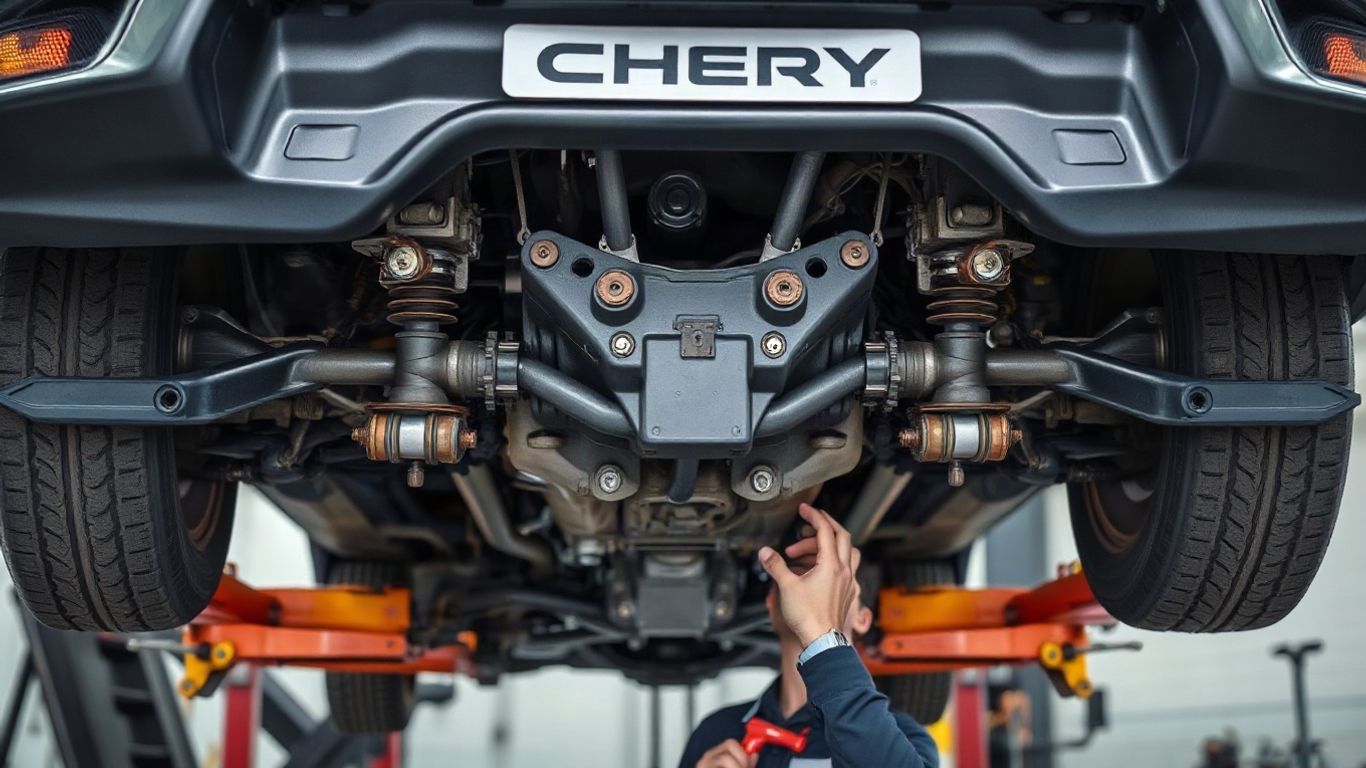
Identifying the exact Chery model and drivetrain
Write down the model, build year, engine, transmission, body style, and whether the vehicle is front-wheel drive, rear-wheel drive, or all-wheel drive. A model badge alone may not distinguish different final drives or axle arrangements.
Photographs of the existing unit can help with mounting points and connectors, but they are secondary evidence. The most reliable match combines vehicle records with the assembly code and the supplier’s donor-vehicle details.
Checking the differential code and gear ratio
The differential code may appear on a plate, stamped area, label, or service documentation. The gear ratio is equally important because a physically similar unit with a different ratio can create driveline problems, especially in vehicles with more than one driven axle.
Do not assume that the same model name guarantees the same ratio. Ask the seller to confirm the code and ratio in writing, and compare that information with the manufacturer’s service data or a qualified repairer’s records.
Confirming front, rear, or transfer-case compatibility
A front differential, rear differential, and transfer-case assembly are not interchangeable simply because they came from the same model family. Their housings, gears, shafts, mounting points, and control arrangements may differ.
State the required position clearly when requesting a quote. If the listing uses a vague term such as “drivetrain assembly,” ask for the exact component, its location in the vehicle, and the parts included with the sale.
Using the vehicle identification number to avoid fitment errors
The VIN can narrow the vehicle’s production details and help a supplier locate a compatible donor record. Provide the complete VIN, not just the model and year, when the seller accepts it for parts research.
VIN information still needs to be checked against the actual differential code and ratio. It reduces guesswork, but it does not remove the need to compare the assembly itself and clarify any factory options or drivetrain changes.
Finding a reliable recycled Chery differential
A reliable purchase begins with a seller that can explain where the unit came from and what was checked. Salvage yards and parts networks may list the donor vehicle, mileage, stock number, photographs, and warranty terms. The more specific the listing, the easier it is to identify gaps before payment.
Availability can vary across Melbourne, Sydney, Brisbane, and other locations, so nationwide shipping may be useful when a local search is limited. Online search tools such as vehicle and VIN parts searches can help organize that process, but the final fitment conversation should still be direct.
Where salvage yards and auto recyclers source units
Recyclers commonly remove components from vehicles that are no longer economical to repair, have sustained collision damage, or are being dismantled for parts. The donor’s reason for entering the yard matters: a rear-end impact may raise different concerns from a vehicle that arrived with drivetrain failure.
Ask whether the differential was removed from a running vehicle, whether the donor’s mileage is documented, and whether the assembly was stored indoors. These details do not prove condition, but they make the risk easier to judge.
Comparing local suppliers with online marketplaces
A local supplier may make inspection, collection, and returns simpler, while an online marketplace can provide a wider search area and more donor options. Compare the quality of the listing rather than assuming one sales channel is automatically safer.
Look for clear photographs, a named component, a donor vehicle description, shipping dimensions, and written warranty conditions. A broad marketplace search can also be paired with saved parts alerts when the exact donor or model is uncommon.
Reviewing mileage, vehicle history, and donor condition
Mileage is useful context, but it is not a complete condition report. A high-mileage unit from a well-maintained vehicle may be preferable to a low-mileage assembly exposed to floodwater, collision forces, poor lubrication, or prolonged outdoor storage.
Ask whether the donor was inspected for fluid leaks, abnormal play, housing damage, and gear noise. If the seller cannot answer basic questions about the donor, price should not be the only reason to proceed.
Questions to ask before purchasing
A short set of written questions can prevent an expensive misunderstanding. Ask for the exact part number or code, donor VIN or vehicle details where available, mileage, inspection findings, included components, warranty period, return process, and delivery estimate.
Also confirm whether the price includes a core charge and whether the seller expects the old unit to be returned. Save the listing and the answers so there is a clear record if the supplied assembly differs from the description.
Inspecting a used differential before buying
Inspection should cover both obvious external damage and clues about internal wear. A clean housing does not guarantee healthy gears, while a dirty exterior does not automatically condemn the unit. If an in-person inspection is impossible, request close photographs and a written inspection report.
When buying through a recycler, ask what testing was actually performed rather than accepting a general statement that the part was “checked.” A careful inspection creates a more useful basis for comparing units.
Checking the housing for cracks and impact damage
Examine the housing, covers, flanges, mounting ears, threaded holes, and axle-tube areas for cracks, bends, gouges, or fresh welds. Impact damage can alter alignment even when the assembly appears to have only cosmetic marks.
Check that mating surfaces are not badly distorted and that drain and fill plugs can be removed. Photographs should show all sides, not just the cleanest face of the differential.
Evaluating gears, bearings, seals, and backlash
Internal inspection may require removing a cover, so it is reasonable to ask the seller what access was available and what was observed. Look for chipped or pitted teeth, rough bearings, excessive shaft play, damaged splines, and leaking or hardened seals.
Backlash should be checked using the correct procedure and specification for the assembly. A seller who provides measured results gives more useful information than one who offers only a visual assurance.
Looking for metal debris and contaminated lubricant
Drain lubricant can reveal clues about wear. Fine paste on a magnetic plug may be normal in small amounts, but larger fragments, shiny flakes, water contamination, burnt odor, or heavy sludge deserve explanation.
The evidence must be interpreted with the unit’s age and service history in mind. If the lubricant was never checked, treat the unknown condition as a reason to negotiate, inspect further, or choose another assembly.
Verifying inspection reports, testing, and warranty coverage
A good report should identify the part, donor, checks performed, and any limitations. Confirm whether testing was done on the vehicle before removal, on a bench, or only through an external inspection. “Tested” is meaningful only when the seller explains the test.
Warranty terms should state duration, covered parts, exclusions, labor treatment, and the return procedure. Compare these details with established recycled-parts sellers, including listings for inspected used differentials, rather than judging coverage by the word “warranty” alone.
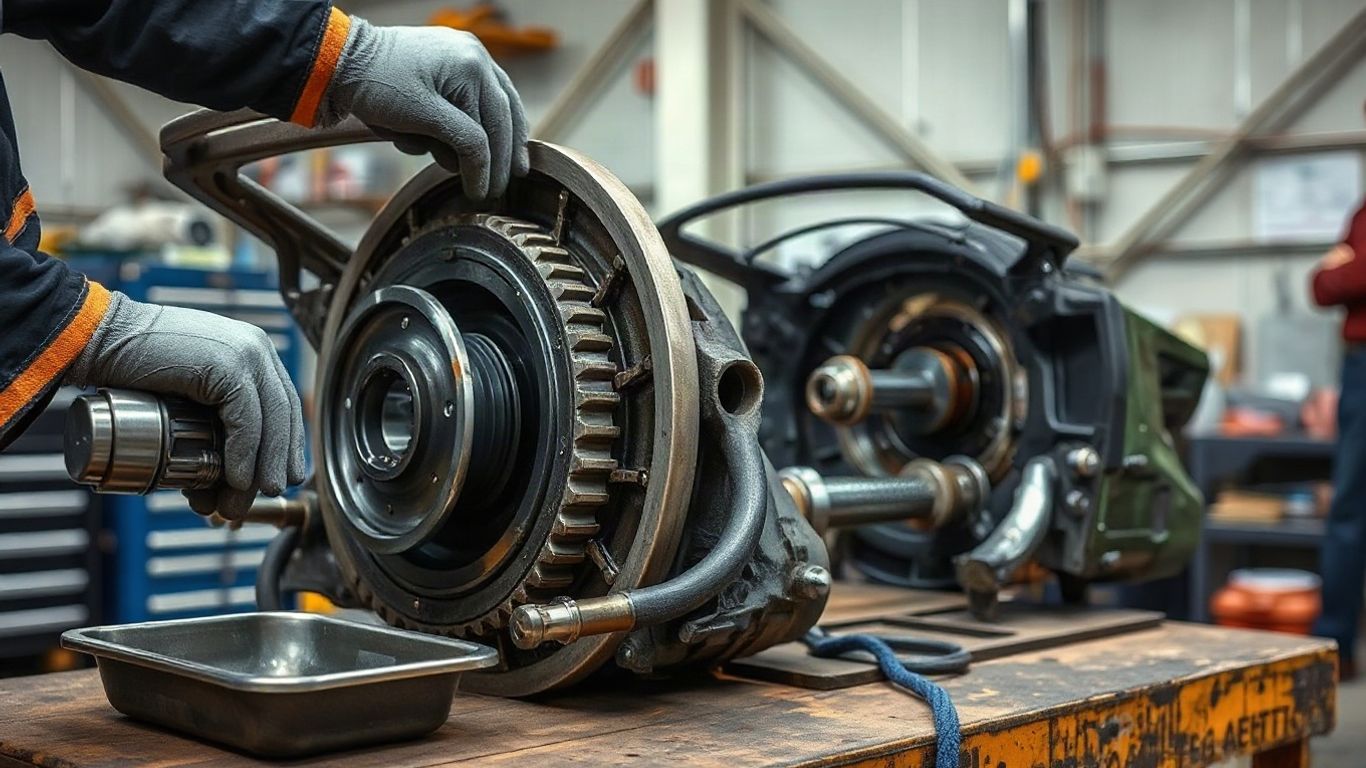
The inspection record should follow the part through the purchase decision. Keep photographs, messages, measurements, and the invoice together so the workshop can compare the delivered unit with what was ordered.
Comparing costs and evaluating value
The purchase price is only one part of the replacement cost. A cheaper differential may become expensive if it arrives with the wrong ratio, requires unexpected seals, or has no practical return option. Compare complete, installed cost and the consequences of a failed match.
A simple written comparison helps keep sales pressure out of the decision. Include both immediate charges and reasonable contingencies before choosing between recycled, rebuilt, and new options.
Typical factors that affect recycled differential pricing
Price commonly varies with model rarity, donor mileage, demand, condition, included components, inspection level, warranty, and location. A complete assembly with documented testing may cost more than a bare housing, but it can reduce the time and parts needed for installation.
The listing should make clear whether seals, covers, sensors, brackets, shafts, or mounting hardware are included. Small differences in what arrives can materially change the final repair bill.
Estimating shipping, core charges, and installation costs
Heavy mechanical assemblies can carry significant freight charges, especially when shipped across the country. Add packaging, delivery surcharges, taxes where applicable, core deposits, workshop labor, lubricant, seals, and any required mounting hardware to the estimate.
A core charge is usually refundable only when the old unit meets the seller’s return requirements. Ask who pays return freight and how long the core can be held before the deposit is forfeited.
Comparing a recycled unit with a rebuilt or new differential
A recycled unit may offer the lowest initial cost and the quickest route when a suitable donor is available. A rebuilt assembly can provide renewed wear components, while a new unit may offer the clearest specification but the highest purchase price or limited availability.
Compare warranty length and exclusions alongside price. The right option depends on vehicle value, expected ownership, repair urgency, and the condition evidence available for each choice.
Calculating the risk of buying the cheapest option
The cheapest listing deserves a closer look, not an automatic rejection. Work out the cost of a possible return, another installation, lost vehicle use, and extra parts if the assembly is wrong or noisy after fitting.
If the saving is small after freight and labor, a better-documented unit may be the more economical choice. A modest price difference can buy clearer fitment information and a more workable warranty.
Installing and maintaining a recycled differential
Installation is where fitment, preparation, and setup become practical results. The replacement should be compared with the removed assembly before the vehicle is fully dismantled, and the workshop should have the correct service information for the specific Chery drivetrain.
Do not treat the job as a simple bolt-on swap. Alignment, torque settings, lubricant specification, seals, and post-installation checks all influence how the unit performs.
Preparing the vehicle and replacement assembly
Confirm the part number, ratio, mounting points, flanges, connectors, and included hardware before installation. Clean the mating surfaces and replace accessible seals, gaskets, or fasteners when the service procedure calls for them.
Support the vehicle securely and inspect related components while access is available. Worn mounts, axles, propshaft joints, or damaged flange surfaces can create noise that is wrongly attributed to the replacement differential.
Why professional installation may be worthwhile
Differential work can involve heavy components, precise measurements, bearing preload, backlash, and torque procedures. A technician with driveline experience can identify a mismatch before it causes damage and can diagnose noise more accurately after installation.
Professional fitting is especially sensible when the assembly requires internal adjustment rather than a straightforward replacement. Ask the workshop whether its quote includes setup checks, lubricant, seals, and a post-road-test inspection.
Filling the differential with the correct lubricant
Use the lubricant grade and specification required for the exact assembly, following the service information rather than relying on a generic gear-oil label. Some differentials may also require a particular additive or fluid type, depending on their design.
Fill to the specified level on a level vehicle and inspect the plug and sealing surface. Incorrect or insufficient lubricant can damage otherwise serviceable gears and bearings.
Breaking in the unit and checking for leaks or noise
After installation, drive gently at first and vary the load rather than immediately subjecting the assembly to hard acceleration or towing. Listen for new whining, rumbling, clunks, or vibration and note when each symptom occurs.
Recheck fluid level and inspect seals, plugs, and housing joints for leaks after the initial drive. If noise increases with speed or load, stop treating it as normal break-in behavior and have the installation assessed.
A practical installation video can help explain the general workflow, but it cannot replace the Chery-specific service procedure or a technician’s measurements. Use it as background before the workshop begins, not as a substitute for correct setup.
Maintenance practices that extend service life
Keep to the vehicle’s service schedule and inspect for leaks whenever the vehicle is serviced. Avoid ignoring new driveline noise, because a small seal problem or bearing issue can spread damage through the gears.
Smooth driving, correct loading, healthy tires, and timely checks of related driveline components also reduce unnecessary stress. Keep the invoice and lubricant details with the vehicle records so future servicing starts with accurate information.
Conclusion
Finding the right recycled Chery differential is a process of matching the vehicle precisely, checking the donor unit honestly, and pricing the complete repair rather than the listing alone. With clear identification, documented inspection, suitable warranty coverage, and careful installation, a recycled assembly can be a practical part of a dependable repair.
Frequently Asked Questions
Is a recycled differential safe to use?
It can be, provided it matches the vehicle and has been inspected for housing damage, gear wear, bearing condition, backlash, lubricant contamination, and leaks. A clear warranty adds useful protection.
How do I know which differential ratio I need?
Check the original unit’s code or service documentation and confirm the ratio with a qualified parts supplier or technician. Do not rely only on model year or a visual resemblance.
Can I install a used differential myself?
A simple replacement may be manageable for an experienced home mechanic, but many differentials require heavy lifting, precise torque, backlash checks, or bearing setup. Professional installation is often safer for complex assemblies.
What should be included with a used differential?
The listing should identify the assembly and state whether covers, flanges, sensors, brackets, seals, or mounting hardware are included. Confirm these details before purchase rather than assuming the photograph shows everything supplied.
How long can a recycled differential last?
Service life depends on its prior use, internal condition, lubricant, installation, driving conditions, and maintenance. Mileage alone cannot guarantee a remaining service life.
What causes differential noise after replacement?
Possible causes include incorrect backlash or preload, worn bearings or gears, insufficient or incorrect lubricant, damaged mounts, misaligned driveline parts, or a mismatch between components. Prompt diagnosis is better than continued driving while the noise worsens.
Should I choose recycled, rebuilt, or new?
Compare verified condition, specification, warranty, availability, and complete installed cost. A well-documented recycled unit may be good value, while a rebuilt or new option may suit a vehicle requiring greater certainty or a longer planned ownership period.