

Key Takeaways
A second hand Chery crankshaft can be a sensible repair option, but only when its measurements and history match the engine being rebuilt.
- Confirm the exact model, year, engine code, and part number before buying.
- Treat visual inspection as a first step, not proof that the crankshaft is serviceable.
- Measure journals, runout, endplay, and bearing clearances against engine specifications.
- Ask for donor-engine history, clear photographs, inspection details, and return terms.
- Include machining, bearings, seals, labor, shipping, and warranty risk in the real budget.
Understanding second hand Chery crankshaft options
A crankshaft is not simply a large steel replacement part that can be chosen by vehicle badge alone. Its stroke, journals, counterweights, nose, rear flange, and timing-drive features must suit the engine around it. That is why a second hand Chery crankshaft should be treated as a measured engine component rather than a generic used part. A careful purchase begins with identifying what failed and what the replacement must match.
What a crankshaft does in the engine
The crankshaft converts the connecting rods’ up-and-down movement into rotation that can be sent through the flywheel or flexplate and transmission. Main bearings support it in the engine block, while rod journals carry the loads from the connecting rods. Oil passages inside the crankshaft help deliver lubrication to those loaded surfaces.
Its position also affects piston travel, timing relationships, balance, and the position of the flywheel or flexplate. A crankshaft can look broadly similar to another one while differing in stroke or flange details. Those small differences can make an otherwise attractive part unusable.
Used, reconditioned, and remanufactured differences
“Used” usually means the crankshaft has been removed from an engine and is being sold in its existing condition, although sellers may clean it before listing it. “Reconditioned” generally suggests that the journals have been inspected and possibly polished or ground, but the exact work must be confirmed. “Remanufactured” implies a more extensive rebuilding process, yet the included inspection, machining, and warranty still vary by supplier.
Ask what was actually done instead of relying on the label. A seller should be able to say whether the journals were measured, whether cracks were checked, which undersize bearings may be required, and whether the part was stored to prevent corrosion. Condition is a documented fact, not a conclusion that can be inferred from a clean photograph.
Chery models and engine families that may share crankshafts
Compatibility sometimes exists within an engine family, but it should never be assumed from a shared model name. The same vehicle line may have different engines by market, production year, transmission, or trim. Conversely, engines used in different models can sometimes share internal components, provided the full specifications and identifying marks agree.
Search tools can help locate candidates, including listings for used Chery engines, but a complete engine listing is not proof that its crankshaft matches your bare block. Use the donor engine code and crankshaft markings to narrow the search, then have a machinist or experienced engine builder verify the dimensions.
Common reasons for replacing a crankshaft
A crankshaft may need replacement after a spun bearing, oil starvation, severe journal scoring, a broken connecting rod, or a crack caused by mechanical failure. It may also be beyond economical machining if a journal is already too small, tapered, or damaged. In some rebuilds, the cost of repairing the original part is compared with the price of a serviceable used unit.
The cause of the original failure matters. Installing another crankshaft without correcting blocked oil passages, damaged bearings, poor lubrication, or connecting-rod problems can repeat the same failure. Diagnose the entire bottom end before committing to a replacement.
How to confirm the correct crankshaft fitment
Fitment is the point at which many inexpensive-looking purchases become expensive mistakes. Start with the engine identifier and the specifications for that exact application, not just the vehicle’s registration details. Record the original crankshaft’s markings and compare them with the proposed replacement before money changes hands.
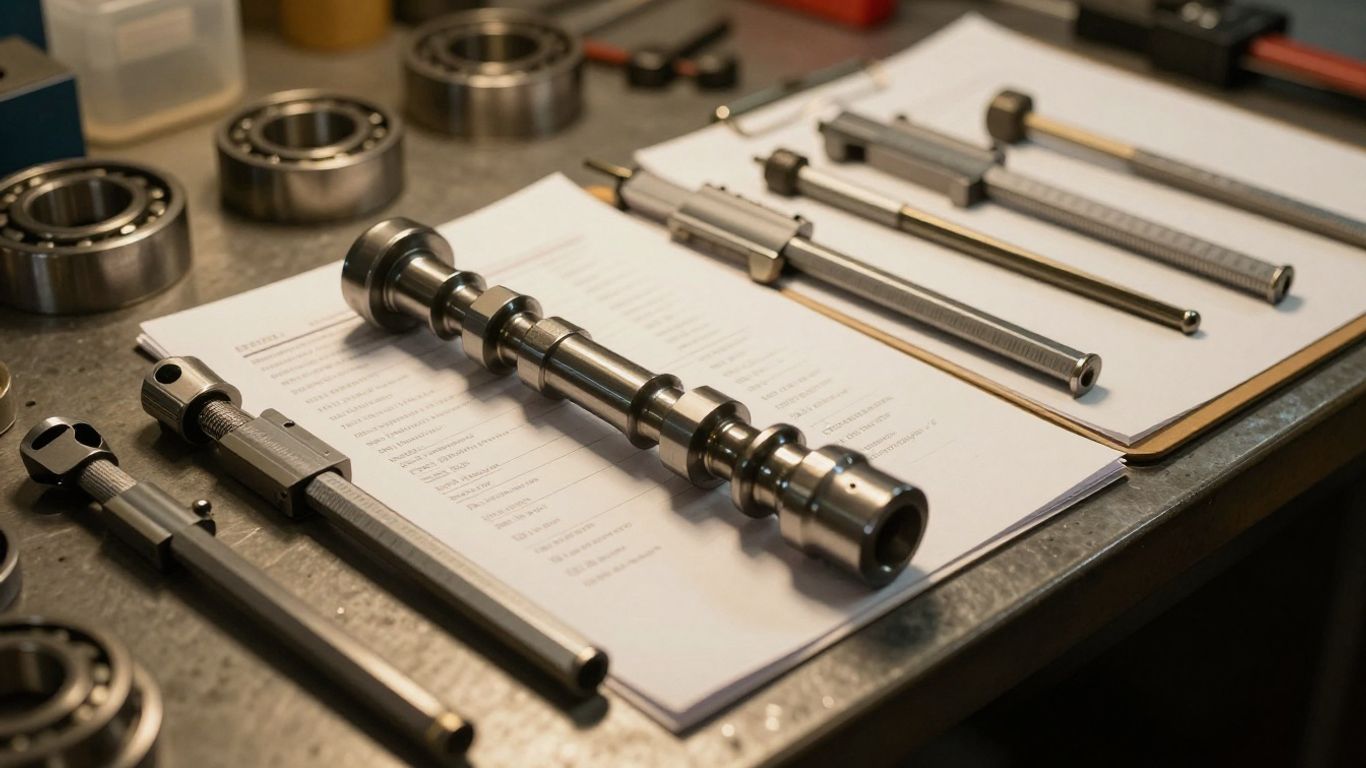
The seller’s description can support the investigation, but it cannot replace a direct comparison. If dimensions are missing, ask for them in writing or arrange an inspection by a machine shop. A part that is difficult to identify before purchase will usually be even harder to return after it has been cleaned, machined, or installed.
Matching the Chery model, year, and engine code
Write down the model, model year, market, engine code, transmission, and any production or VIN information available. The engine code is particularly useful because a model name can cover several engine versions. The original crankshaft’s number, casting mark, and counterweight shape add another layer of confirmation.
Do not accept “fits all models” without supporting details. Ask whether the listed part came from the same engine family and whether it was removed from a running engine or a damaged vehicle. If the seller cannot identify the donor application, treat fitment as unconfirmed rather than relying on appearance.
Checking part numbers and casting marks
Part numbers and casting marks may be found on the crankshaft cheek, flange, or other machined or cast areas. Photograph the markings on the original part and request close, well-lit images of the replacement. A partial number can still be useful, but it should be checked against a reliable parts catalogue or workshop information.
Casting marks are not always the same as a service part number, and a similar-looking number may identify a related component rather than the complete crankshaft. Keep a record of every number, including suffixes. A missing suffix can indicate a meaningful revision or specification difference.
Comparing stroke, journal sizes, and bearing specifications
Stroke determines piston travel, while main and rod journal diameters determine bearing selection and the relationship between the crankshaft and block or rods. Also compare journal widths, fillet radii, oil-hole placement, and any standard or undersize machining. A polished surface does not tell you whether the journals remain within specification.
The following comparison is a practical way to organize the information before inspection:
| Checkpoint | Original component | Proposed crankshaft | Why it matters |
|---|---|---|---|
| Engine and part identification | Record all codes and marks | Request matching codes and images | Prevents a visual-only match |
| Stroke and journal dimensions | Measure or obtain specifications | Require measured values | Controls piston travel and bearing fit |
| Journal condition | Note scoring, taper, and size | Ask for inspection results | Reveals machining or replacement needs |
| Flange, keyway, and oil passages | Photograph and inspect | Compare feature by feature | Protects timing and installation compatibility |
After the comparison, have the machine shop confirm the figures with calibrated tools. Bearing sizes should be selected only after the crankshaft and block have been measured together, not from a seller’s assumption that the part is standard.
Verifying compatibility with connecting rods and pistons
The rod journals must match the connecting rods in diameter and width, and the crankshaft’s stroke must suit the pistons’ intended travel. Check rod side clearance, fillet clearance, piston deck height, and the relationship between the crank nose, timing components, and rear flange. A crankshaft that fits the main saddles can still create problems at the rods or piston crown.
This is also where balancing considerations enter. The crankshaft, rods, pistons, flywheel or flexplate, and damper may be designed as a matched assembly. Before mixing parts from different engines, ask whether the rotating assembly requires balancing or whether the original components must remain together.
How to inspect a second hand Chery crankshaft
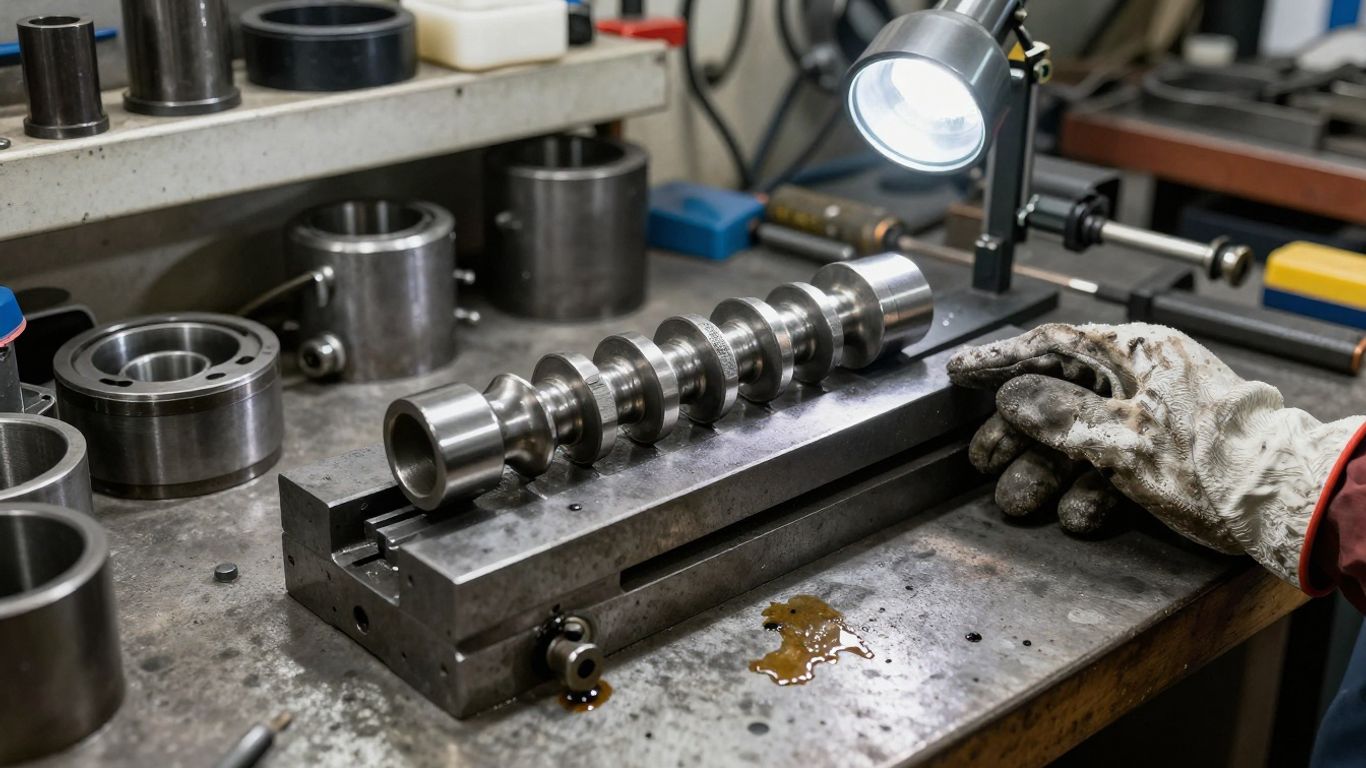
Inspection should move from broad visual condition to precise measurement. Clean oil and dirt from the part first, because residue can hide a damaged fillet or make a worn journal look smoother than it is. Use proper lighting and record findings rather than trusting memory.
A crankshaft may be repairable even when it shows minor marks, while a small crack or excessive runout can make it unsuitable. The decision belongs to the measurements and the engine manufacturer’s limits. If you do not have the tools or experience, send the crankshaft to a machine shop before purchasing or installing it.
Looking for cracks, scoring, and heat discoloration
Inspect every journal, fillet, cheek, counterweight, keyway, and flange surface. Deep grooves, raised edges, pitting, blue or purple heat discoloration, and material transfer can point to lubrication failure or overheating. Pay close attention to fillets and oil-hole edges, where cracks may begin or be difficult to see.
A visual check cannot reliably rule out a hidden crack. Magnetic-particle or other suitable non-destructive testing may be appropriate, depending on the material and the machine shop’s process. Do not confuse a shiny polish with evidence that the crankshaft has passed a complete inspection.
Measuring main and rod journal dimensions
Measure each main and rod journal in more than one position and direction. This helps reveal taper and out-of-round conditions that a single reading can miss. Compare the results with the correct service limits, and note whether the crankshaft is standard size or has already been machined undersize.
Use a micrometer suited to the journal range and verify that it is clean and calibrated. Plastigauge can provide a useful assembly check, but it should not replace precise dimensional inspection during a rebuild. If grinding is needed, confirm the required bearing undersize and the correct fillet finish before work begins.
Checking crankshaft straightness and runout
Place the crankshaft on suitable V-blocks or in a machine-shop fixture and measure runout with a dial indicator at the specified points. Excessive runout can affect bearing loading, oil-film stability, and the smooth rotation of the assembly. A crankshaft that looks straight on a workbench may still exceed the engine’s limit.
Record where the indicator was placed and compare the reading with the relevant specification. Do not attempt to straighten a crankshaft casually with heat or force. Such work requires the correct equipment and a process that will not introduce further damage.
Assessing keyways, oil passages, and flange surfaces
Inspect the nose keyway for spreading, burrs, or impact damage, and check that the key fits correctly. Oil passages should be open, clean, and free from abrasive debris; their edges should not have damaging burrs. At the rear, inspect the seal-running surface, flywheel or flexplate mounting area, dowel features, and bolt holes.
The flange must sit correctly against its mating component, and damaged threads should be repaired using an approved method before assembly. Clean all passages after machining because abrasive particles left inside the crankshaft can quickly damage fresh bearings.
Evaluating seller, history, and condition
The seller’s information is part of the component’s value. A crankshaft with traceable donor details and measured dimensions is easier to assess than one described only as “good condition.” Ask direct questions, keep the answers, and compare them with the photographs and inspection report.
A broad search may return many possibilities, from regional suppliers to international marketplaces. For example, Saudi used-part searches may help identify availability and delivery options, while a Chery Tiggo engine search can provide another route to a donor assembly. These sources can support sourcing, but fitment and condition still need independent verification.
Questions to ask about the donor engine
Ask for the donor vehicle or engine identification, approximate mileage, reason for removal, and the circumstances of the original failure. Find out whether the crankshaft was stored inside an assembled engine, coated against corrosion, or left exposed. Also ask whether it has been polished, ground, welded, or tested.
A useful seller should be able to explain what is included and what is not. Clarify whether the crankshaft comes with a written warranty, whether the warranty covers labor, and what evidence is required if a defect is discovered. If the seller avoids basic technical questions, the risk belongs in the purchase decision.
Reviewing mileage, failure history, and storage conditions
Mileage is only one clue. A lower-mileage crankshaft from an engine that suffered oil starvation may be worse than a higher-mileage part that was properly lubricated and removed during a non-internal accident. Failure history can reveal whether the crankshaft was exposed to bearing material, coolant contamination, or a broken rod.
Storage matters because bare steel surfaces can corrode, especially around journals and oil passages. Ask how long the part has been stored and whether protective oil or packaging was used. Surface rust may be removable, but pitting on a journal or seal surface can change the economics of the repair.
Requesting photos, measurements, and inspection reports
Request sharp photographs of all journals, fillets, the nose, rear flange, keyway, and identifying marks. Ask for actual measurements rather than statements such as “within tolerance.” A dated inspection sheet showing journal sizes, runout, and crack testing is more useful than a generic grading label.
If you are comparing a complete engine with a loose crankshaft, ask whether the engine has been opened and whether the pictured part is the exact part being shipped. Listings for a QQ3 replacement engine or a broad engine marketplace may be useful for sourcing leads, but the listing should never substitute for component-level confirmation.
Recognizing warning signs in online listings
Be cautious when a listing uses stock photos, omits the engine code, promises universal fitment, or gives no journal measurements. A very low price can reflect missing parts, uncertain history, corrosion, or a no-return sale rather than a genuine bargain. Reused photographs and contradictory answers are further reasons to pause.
Before paying, confirm the exact item number, packaging method, dispatch location, delivery cost, and return window. Save the listing and all messages. Those records can make a difference if the received part does not match the description.
Understanding pricing and total replacement costs
The purchase price is only the first line in a crankshaft replacement budget. A cheap component can require grinding, balancing, bearings, seals, cleaning, freight, and additional diagnostic work. A more expensive inspected or reconditioned part may reduce uncertainty, but its value depends on what the seller can document.
Compare alternatives on a like-for-like basis. Standard-size journals, machined undersize journals, included inspection, warranty coverage, and delivery terms can all change the apparent difference between two prices. The right question is not simply which listing is cheapest, but which option has the lowest credible total cost.
Factors that affect second hand crankshaft prices
Price commonly reflects engine-family demand, availability, condition, journal size, machining history, geographic location, and whether the part is sold loose or as part of a larger assembly. A crankshaft with clear markings and measurement records may command more because it is easier to approve for a rebuild.
Scarcity can also raise prices, but scarcity should not pressure you into skipping verification. If the part is difficult to replace, spend more time confirming its suitability before committing to freight or machine work.
Comparing used, reconditioned, and new alternatives
A used crankshaft usually offers the lowest initial price but the greatest uncertainty unless it has been tested. A reconditioned unit may include polishing, grinding, crack testing, or other work, although the exact scope varies. A new crankshaft can reduce concerns about previous wear, but availability, specification, and price must still be checked.
When comparing quotations, ask each supplier the same questions: What measurements were taken? What machining was performed? Are bearings included? What warranty applies? A consistent comparison prevents a bare used part from appearing cheaper than a tested unit that includes essential preparation.
Budgeting for bearings, seals, machining, and labor
Allow for main and rod bearings, rear and front seals where appropriate, assembly lubricant, fasteners that must be replaced, cleaning, and any required machining. The block and connecting rods may also need inspection, honing, or resizing. Labor can rise if the original failure spread metal through the oil system or damaged other rotating components.
A simple written estimate should separate known costs from allowances. That makes it easier to decide whether repairing the original crankshaft, buying a second hand Chery crankshaft, or selecting another replacement route is financially sensible.
Calculating shipping, returns, and warranty risks
Crankshafts are heavy, vulnerable to impact, and expensive to ship safely. Confirm the packaging, insurance, delivery time, and responsibility for damage in transit. A return policy may exclude parts that have been installed or machined, so read its conditions before placing the order.
Warranty length alone is not enough. Check whether it covers cracks, dimensional defects, or only complete failure, and whether labor, freight, and inspection costs are excluded. Price uncertainty is easier to manage when those limits are known in advance.
Installing and preparing a replacement crankshaft
Installation is the final verification stage, not merely a fitting exercise. The block, bearings, crankshaft, rods, pistons, fasteners, and oil system must work together within the engine’s specified limits. Keep the work area clean and follow the relevant service information for the exact engine.
Do not rush because the replacement has already been purchased. If measurements disagree, stop and resolve the discrepancy before tightening anything. A careful assembly protects both the new part and the time already invested in the rebuild.
Cleaning and preparing the engine block
Clean the main-bearing saddles, oil galleries, threaded holes, and mating surfaces thoroughly. Remove old sealant and bearing debris without damaging the block. Run suitable cleaning tools through the oil passages, then dry and protect machined surfaces from corrosion.
Check that the main caps remain in their original positions and orientation. Inspect the saddles for damage, confirm that locating features are intact, and verify that the block does not require line honing. Any distortion should be addressed before the crankshaft is installed.
Selecting the correct main and connecting rod bearings
Bearing selection depends on the measured crankshaft journals, block housing bores, connecting-rod dimensions, and the available standard or undersize sizes. Match bearing oil holes and locating tangs to the block and rods. Never select bearings from the vehicle model alone when the crankshaft has been machined.
Inspect bearing shells for correct markings and damage before installation. Keep pairs together, maintain their orientation, and use the specified assembly lubricant. If the original failure involved bearing material, clean the entire lubrication system before fitting fresh shells.
Checking crankshaft endplay and bearing clearances
After placing the crankshaft into lubricated main bearings, check rotation and measure endplay with a dial indicator or the specified method. Main and rod clearances should be checked using accurate tools and compared with the service limits. A crankshaft that turns by hand is not automatically within specification.
Check clearances at the appropriate assembly stage and make sure seal drag, assembly lubricant, or dirt is not affecting the reading. If endplay or clearance is wrong, investigate bearing selection, thrust surfaces, journal dimensions, and cap seating before proceeding.
Following torque specifications and break-in procedures
Use the correct tightening sequence, torque values, and any specified angle procedure for the main caps, connecting rods, flywheel or flexplate, and related fasteners. Torque tools should be suitable and in good condition. Rotate the assembly as instructed during staged assembly to detect binding early.
Before first start-up, prime the lubrication system where the engine design permits, confirm oil flow, and verify timing and fluid levels. Follow the engine builder’s break-in guidance, watch oil pressure and temperature, and investigate unusual noise immediately. This IOL selection guide, home-buying checklist, Zimbabwe safari planning, therapist credentialing guide, and competitive intelligence report are unrelated examples of research pages; they also illustrate why a buyer should judge information by its stated scope rather than by a confident headline.
The video can supplement, but not replace, the engine-specific workshop procedure. Once the crankshaft has completed its initial checks, recheck for leaks, abnormal sounds, and signs of inadequate lubrication during the first service interval.
Conclusion
A second hand Chery crankshaft is worth considering when its identity, dimensions, condition, history, and warranty are clear. Verify the part before purchase, have critical measurements confirmed, and budget for the complete rebuild rather than the listing price alone. That measured approach gives a used component the best chance of becoming a dependable repair.
Frequently Asked Questions
Is a second hand Chery crankshaft always cheaper than repairing the original?
Not always. The replacement price may be lower, but machining, inspection, bearings, shipping, and labor can make the total similar to or higher than repairing the original crankshaft.
Can I choose a crankshaft by Chery model name alone?
No. The model name may cover multiple engines or production versions. Confirm the engine code, part number, dimensions, and related components before treating a crankshaft as compatible.
What is the most important inspection for a used crankshaft?
Dimensional inspection is essential, but it should be combined with visual checks and suitable crack testing. Journal size, taper, out-of-round condition, and runout all affect whether the part can be used.
Can a scored crankshaft be repaired?
Sometimes. A machine shop may be able to grind a damaged journal to an approved undersize, but the remaining diameter, fillet condition, hardness, and bearing availability must meet the applicable specifications.
Should I buy a crankshaft from a complete donor engine?
A donor engine can provide useful history and matching components, but it is not automatically safe. Ask why the engine was removed and inspect the crankshaft independently before installation.
What documents should a seller provide?
Useful information includes the donor engine identity, mileage or failure history, journal measurements, runout results, crack-test details, machining history, photographs, warranty terms, and return conditions.
Should bearings be replaced with the crankshaft?
Fresh bearings are normally selected after measuring the crankshaft, block, and connecting rods. Reusing old bearings or choosing a size based only on the vehicle model can create incorrect clearances and early failure.