

Key Takeaways
A used Chery camshaft can be a sensible repair choice when its identity and condition are confirmed carefully.
- Match the camshaft to the exact Chery model, year, engine code, and part number.
- Inspect lobes, journals, oil passages, and the shaft itself before paying.
- Ask for clear mileage, testing, return, and warranty information.
- Include seals, gaskets, labor, timing work, and inspection in the real budget.
- Install the replacement with correct timing, lubrication, and torque procedures.
Understanding the role of a Chery camshaft
The camshaft is a precision engine component that coordinates valve movement with piston position. A worn shaft can create performance symptoms, but similar signs may also come from sensors, lifters, lubrication faults, or timing-system damage. Understanding the part’s job makes diagnosis and purchasing decisions less guesswork-driven.
How the camshaft controls valve timing
As the camshaft rotates, its lobes push the valve train to open and close the intake and exhaust valves at planned points in the engine cycle. It works in synchronization with the crankshaft through a belt, chain, or gear drive. That relationship controls when the cylinder receives its charge and when combustion gases leave it, so even a small timing error can affect starting, idle quality, and power.
A useful general explanation of valve timing and failure symptoms is available in this camshaft function guide, though diagnosis on a particular engine still requires the correct service information. The camshaft itself does not determine fuel delivery on its own; electronic controls and position sensors may also be involved.
Symptoms of camshaft wear or failure
Possible warning signs include ticking or tapping from the cylinder-head area, rough running, hard starting, reduced power, misfires, or an illuminated engine warning lamp. These symptoms are clues rather than proof. A Camshaft Position Sensor can also be associated with engine-position information, misfires, poor fuel economy, and synchronization concerns, so a fault code should not automatically be treated as evidence that the mechanical camshaft is damaged.
Before ordering a replacement, check oil level and condition, listen to the engine cold and warm, and record any diagnostic codes. A careful diagnosis saves money because replacing a sound shaft will not correct a wiring fault, low oil pressure, or a separate timing problem.
Camshaft damage versus related engine problems
Mechanical wear usually becomes clearer through a physical inspection, while electronic faults may appear in scan data or wiring checks. Low oil pressure can damage several valve-train parts at once, and a worn lifter or bearing may produce noise that seems to come from the camshaft. Timing-chain tensioners, belt condition, and incorrect installation can create similar running problems.
Do not rely on one symptom in isolation. If the engine has severe noise, metal in the oil, or a loss of compression, inspect the wider system before buying a used part. The goal is to identify the failed component and the cause of its failure, not just exchange the most visible component.
Why the correct engine code matters
A Chery model name can cover more than one engine, market specification, or production revision. The engine code narrows that range and helps distinguish camshafts with different lobe profiles, sensor targets, journal dimensions, or drive arrangements. The vehicle identification number, stamped engine information, and original part markings are all useful evidence.
Treat an apparently similar shaft as unconfirmed until its dimensions and application agree with the repair information. A mismatch may prevent installation or alter valve timing even if the part looks nearly identical.
Checking compatibility before buying a used Chery camshaft
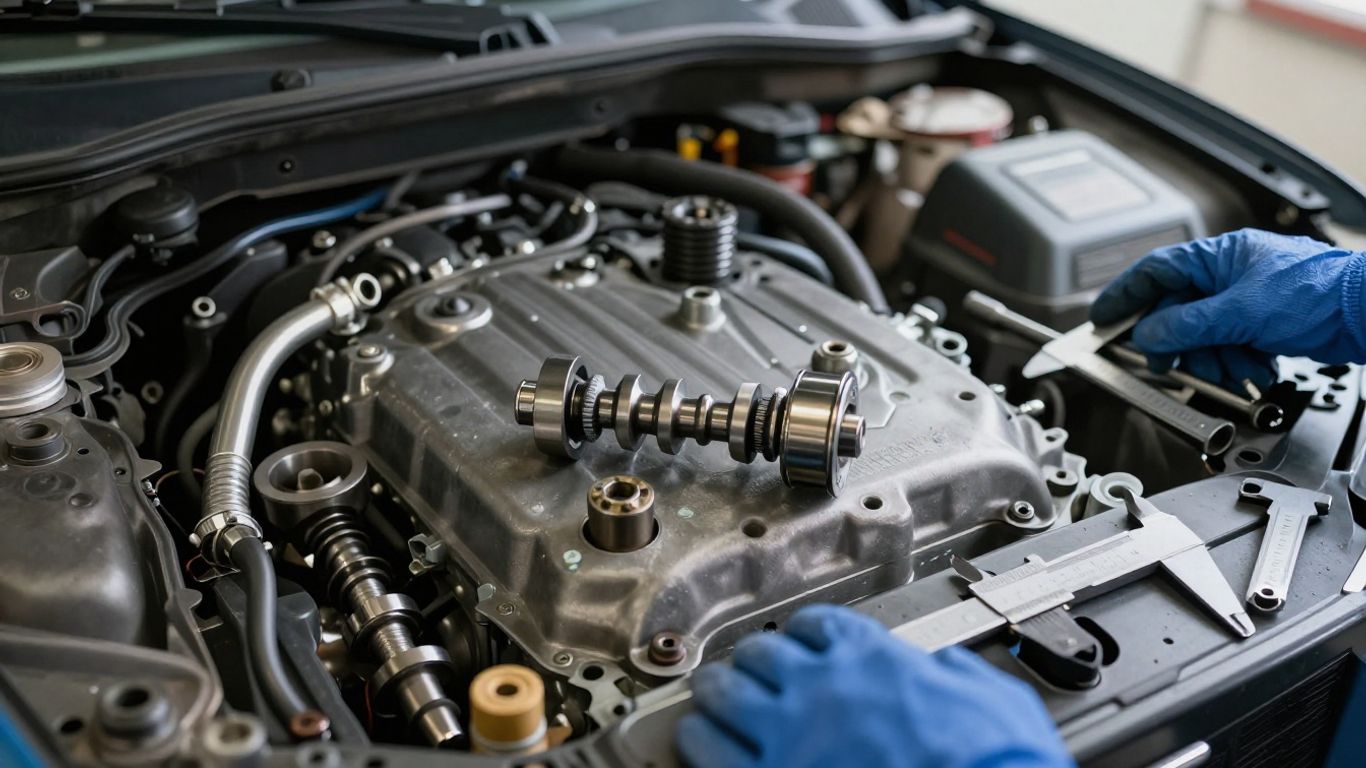
Compatibility should be established before discussing price. Model badges and photographs provide a starting point, but they rarely prove fitment by themselves. Gather the vehicle details, compare the original part, and ask the seller specific questions before committing to a used Chery camshaft.
Matching the Chery model and production year
Start with the exact model, body style, production year, and market in which the vehicle was sold. Mid-cycle revisions can change engine equipment without changing the familiar model name. A seller who lists only “fits Chery” has not supplied enough information for a confident purchase.
Write down the registration or VIN details and compare them with the donor vehicle’s information where available. Photos of the old shaft, its mounting arrangement, and the timing-drive end can help reveal differences that a generic listing hides.
Verifying the engine code and part number
The engine code is usually more useful than the vehicle name alone. Compare it with the number stamped or cast on the original shaft, then check whether the replacement is an intake, exhaust, or complete assembly. Do not assume that a superseded number is interchangeable without confirmation from a parts catalog or manufacturer documentation.
When a number is partly unreadable, ask for a close-up photograph rather than guessing. A precise comparison is especially valuable when several engines share a model designation.
Comparing intake, exhaust, and complete camshaft assemblies
Some engines use separate intake and exhaust camshafts, while others may be listed with a complete camshaft assembly or associated timing components. Confirm exactly what is included: the shaft alone may not include caps, gears, sensors, followers, or fasteners. The listing should make the package clear.
A simple comparison can prevent an inexpensive-looking listing from becoming an incomplete repair. Use the following distinctions when reading descriptions:
| Listing description | What to confirm | Common purchasing concern |
|---|---|---|
| Intake camshaft | Intake-side position and engine code | Exhaust shaft supplied by mistake |
| Exhaust camshaft | Exhaust-side position and part number | Different lobe or drive arrangement |
| Complete assembly | Included gears, caps, and hardware | “Complete” used without a contents list |
| Bare used shaft | Dimensions and visible condition | Extra parts needed during installation |
The table is a prompt for questions, not a substitute for a catalog check. If the seller cannot explain what the package contains, treat the listing as unresolved.
Confirming fitment with the seller or parts catalog
Send the seller the complete vehicle and engine information, the original part number, and clear photographs of the old component. Ask for written confirmation that the offered shaft matches those details. Keep the reply with the purchase record in case the return process later depends on what was promised.
A broad engine marketplace such as Chery engine listings may help reveal the range of available assemblies, but a marketplace listing is not proof that a particular shaft fits your car. Catalog data and direct seller confirmation still matter more than a visually similar photograph.
Inspecting a used Chery camshaft before purchase
A used camshaft deserves the same careful attention as any other precision machined engine part. Clean oil can hide damage, and a polished photograph may not show small pits or a bent shaft. Request close, well-lit images and inspect the part in person whenever possible.
Checking lobes for scoring, pitting, and uneven wear
Run a clean fingertip lightly over each lobe, taking care not to cut yourself on damaged edges. Look for scoring, pitting, flaking, a flattened nose, or a polished strip that differs noticeably from the others. Wear should be judged across the full shaft, not just on the most attractive lobe in the listing.
Deep marks or missing surface material are reasons to reject the part unless a qualified machinist has assessed it. A used shaft with apparently minor wear can still cause rapid damage when paired with new followers.
Examining journals, bearing surfaces, and oil passages
The journals should be smooth and free from heavy grooves, embedded debris, and blue or dark heat marks. Inspect the bearing surfaces for scratches and measure them against the service limits for the engine when possible. Oil passages should be open, clean, and free of sludge or metal particles.
Also inspect the matching caps and cylinder-head surfaces if they are supplied. These components may be line-bored as a set, so mixing parts from different engines can create clearance problems.
Looking for cracks, bends, and heat discoloration
Lay the camshaft on known-flat supports or have a machine shop check runout with a dial indicator. Do not try to straighten a suspected bent shaft by force. Cracks near lobes, journals, keyways, or gear mounts are unacceptable, while strong blue or purple discoloration suggests a serious heat or lubrication event.
A surface that has been cleaned is not necessarily a healthy surface. Ask what caused the donor vehicle to be dismantled, especially if the part shows broad discoloration or repeated scoring.
Reviewing mileage, vehicle history, and removal photos
Mileage gives context but does not establish condition. A low-mileage vehicle with oil starvation may provide a worse shaft than a higher-mileage engine that was serviced consistently. Removal photographs can show whether the part was stored carefully and whether surrounding components suffered damage.
Request the donor vehicle’s mileage, reason for dismantling, running status if known, and any available inspection notes. If the seller cannot provide a history, price the part as a higher-risk purchase rather than treating unknown history as good history.
Choosing a reliable source for a used Chery camshaft
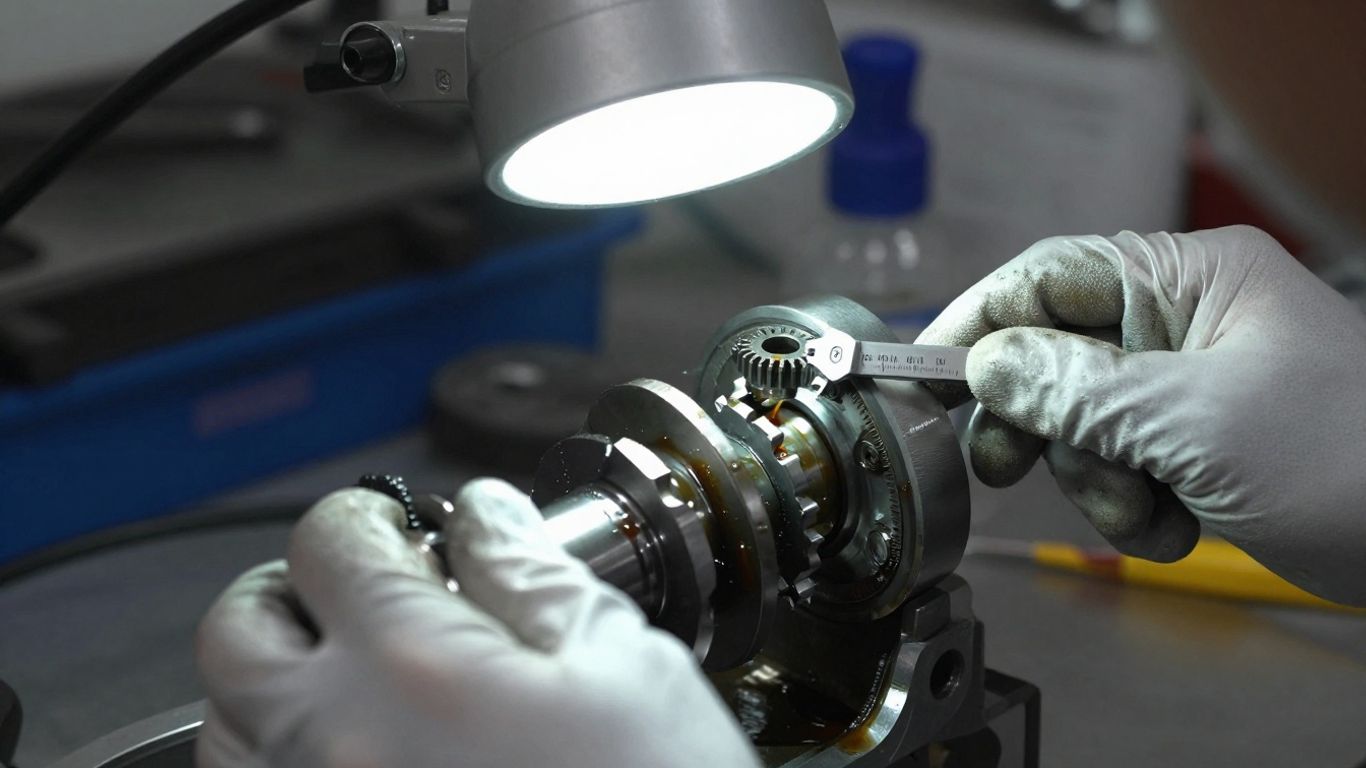
The source affects the quality of the information as much as the price. A professional dismantler may have identification and inventory records, while an individual marketplace seller may offer useful removal photographs but limited testing. Choose the source that can answer technical questions and stand behind the transaction.
Comparing salvage yards, specialist dismantlers, and online marketplaces
Salvage yards and specialist dismantlers often identify parts from a donor vehicle and may record mileage or inspection details. Online marketplaces provide broad access, but listings vary widely in accuracy and return support. The best option is the one that can document the part’s origin, condition, and compatibility rather than simply offering the lowest advertised price.
For a broader repair budget, AutoGuru describes a service that connects customers with local mechanics and provides fixed-price quotes for certain repair work. That kind of outside labor estimate can be useful when deciding whether buying a used part makes financial sense.
Evaluating seller ratings, listings, and product descriptions
Read recent reviews for comments about correct identification, packaging, communication, and returns. A detailed listing should show the actual part, state whether it was cleaned or tested, identify the donor vehicle, and describe any visible wear. Stock images and vague phrases such as “good condition” offer very little protection.
Compare multiple listings for the same number and look for inconsistencies in dimensions, included hardware, or application. A careful seller usually welcomes specific fitment questions instead of pushing for a quick payment.
Asking about testing, returns, and warranty coverage
Ask whether the shaft was measured for runout, inspected for cracks, and checked for lobe and journal damage. Clarify the return period, who pays return shipping, and whether the warranty covers the part only or related labor as well. Get these terms in writing before purchase.
Testing methods vary, and a seller’s statement that a part was “tested” may refer only to the donor engine running. Ask what was actually checked. For technical background, a camshaft testing device patent describes fixture-based testing concepts, but it should not be read as a guarantee that a marketplace seller performed those tests.
Identifying warning signs of a poor-quality used part
Walk away when the part number is missing, the photos avoid the lobes and journals, or the seller refuses to confirm the engine code. Other concerns include fresh paint covering the working surfaces, unexplained discoloration, mixed photographs, and pressure to buy before questions are answered.
A trustworthy listing does not need exaggerated claims. Clear evidence, sensible packaging, and a workable return policy are more valuable than polished sales language.
Estimating the total replacement cost
The purchase price is only one part of the repair. A camshaft job may involve access work, timing-system alignment, seals, gaskets, fluids, inspection, and diagnosis of the original failure. Build the estimate around the complete repair rather than comparing shaft prices alone.
Comparing the used camshaft price with new and remanufactured options
Compare a verified used shaft with new and remanufactured alternatives that carry the same application and warranty information. A new part may cost more initially, while a remanufactured part may include inspection or machining; those differences should be checked rather than assumed. The used option is most attractive when its condition and return terms are unusually clear.
A low advertised price is not a saving if the shaft arrives incorrect or unusable. Compare like with like: part number, included components, shipping, warranty, and the cost of returning a mismatch.
Budgeting for seals, gaskets, and related components
Plan for camshaft seals, valve-cover or timing-cover gaskets, fresh oil, and any one-time-use fasteners specified by the repair manual. Depending on the engine design, followers, lifters, bearing caps, or timing-drive components may also need inspection or replacement. Reusing damaged sealing material can create a leak after an otherwise successful repair.
Ask the technician to identify related parts before work begins. This reduces the chance of discovering necessary components after the engine is already apart.
Accounting for labor, timing-system service, and inspection
Labor can exceed the price of the used part, particularly when the camshaft sits beneath a timing belt, chain, or other components that must be removed. Include time for cleaning, measurement, timing verification, and a post-installation check. If the original failure involved low oil pressure or metal debris, add diagnostic inspection before approving the repair.
A written estimate should separate parts, labor, fluids, machine-shop work, and possible additional repairs. For a different kind of cost-comparison framework, this MSP buyer’s guide illustrates why evaluating scope and contract terms matters more than looking at a headline price alone.
Understanding when a cheaper part may increase repair costs
The cheapest shaft may require extra shipping, rushed labor, repeated teardown, or replacement of damaged valve-train parts. It can also expose the engine to another failure if the underlying lubrication or timing fault remains unresolved. A slightly more expensive part with measurable condition and a usable warranty may carry less financial risk.
Make the decision using expected total cost, not the first number displayed on a listing. That approach also leaves room for a professional inspection when the evidence is incomplete.
Installing and maintaining a replacement Chery camshaft
Installation should follow the service information for the specific engine rather than a universal shortcut. Cleanliness, correct timing, and lubrication are central to the job, and a mistake in any one of them can damage the replacement immediately. If the timing procedure or measurements are unfamiliar, use a qualified technician.
Preparing the engine and confirming timing marks
Disconnect the battery as appropriate, clean the work area, and prevent dirt from entering open oil passages. Before removing the old shaft, record the original timing position and follow the engine-specific procedure for setting the crankshaft and camshaft. Turn the engine by hand after assembly, using the prescribed direction and checking that timing marks return to their expected positions.
Do not force the engine past resistance. Resistance can indicate valve contact, incorrect timing, or a component that has not seated correctly. Resolve that issue before using the starter motor.
Replacing seals and inspecting connected components
Replace accessible camshaft seals and disturbed gaskets rather than relying on hardened originals. Inspect followers, lifters, bearing surfaces, timing gears, tensioners, guides, and the oil system for damage or contamination. The replacement shaft should not be installed into a worn support surface without assessing the resulting clearance.
Clean the mating areas carefully and keep abrasive material away from the cylinder head. New components cannot compensate for debris left in an oil passage.
Following torque specifications and lubrication requirements
Use the specified tightening sequence, torque values, and any required angle procedure for caps, gears, covers, and related fasteners. Apply the assembly lubricant or clean engine oil required by the service instructions to the lobes and journals before first rotation. Avoid guessing from another engine because fastener sizes can look similar while specifications differ.
Prime the lubrication system where the procedure calls for it. Good initial lubrication helps protect the contact surfaces during the first start, but it does not replace correct clearance or oil-pressure checks.
Checking oil pressure, valve timing, and engine operation after installation
Before declaring the repair complete, verify timing, inspect for leaks, and check oil pressure against the engine’s specified range. Start the engine only after confirming that tools are removed and the covers and connections are secure. Listen for abnormal ticking, monitor idle quality, and scan for returning fault codes.
After the first run, allow the engine to cool and recheck fluid level and visible leaks. Follow the recommended break-in or inspection interval for the installed components, and investigate any new noise promptly instead of assuming it will disappear.
Conclusion
Choosing a used Chery camshaft is a process of matching, inspecting, and budgeting rather than simply finding the lowest price. Confirm the engine code and part number, examine the working surfaces, ask direct questions about history and returns, and install the part with the correct timing and lubrication procedure. Those steps give the replacement a fair chance to work reliably and help prevent the original failure from repeating.
Frequently Asked Questions
Is a used Chery camshaft worth buying?
It can be worthwhile when the part is correctly identified, physically sound, reasonably priced, and protected by clear return terms. Unknown condition and poor fitment information increase the risk substantially.
How can I tell whether a camshaft is worn?
Inspect the lobes and journals for scoring, pitting, flattening, grooves, discoloration, and embedded debris. Measurements against the engine’s service limits are more reliable than appearance alone.
Can a bad sensor be mistaken for a bad camshaft?
Yes. Position-sensor, wiring, ignition, fuel, lubrication, and timing-system faults can produce overlapping symptoms. Diagnostic codes and mechanical inspection should be considered together.
Does the vehicle year guarantee camshaft compatibility?
No. The same model and year can sometimes use different engines or market-specific equipment. Confirm the engine code, original part number, and catalog fitment.
Should I replace the camshaft seal at the same time?
Replacing an accessible seal is commonly considered during camshaft work because the area is already exposed. The correct parts and procedure depend on the engine design and the condition of surrounding components.
What should a seller provide before I buy?
Request the exact part number, engine and donor-vehicle details, mileage if known, clear photographs of lobes and journals, inspection information, and written return or warranty terms.
What should I check after installation?
Confirm timing marks, oil pressure, fluid levels, leak-free operation, engine noise, idle quality, and diagnostic codes. Stop and investigate if abnormal noise or warning lights appear.