
Key Takeaways
A used gearbox can be a sensible repair when its specification and condition are properly verified. The safest purchase begins with accurate identification and ends with careful installation and testing.
- Match the gearbox to the exact model, engine, drivetrain, and transmission code.
- Ask for mileage, service history, inspection details, and clear photographs.
- Compare the full cost, including freight, fitting, fluids, and possible core charges.
- Buy from a seller with a written warranty, fair returns, and secure packaging.
- Service the replacement unit correctly and record the work for future reference.
Understanding used Chery gearboxes
A gearbox transfers engine power to the driven wheels while allowing the vehicle to start, accelerate, cruise, and reverse. When a transmission begins slipping, grinding, leaking, or refusing to select gears, replacing the complete unit may be more practical than repairing it internally. The right used unit can restore normal operation without the price of a factory-new assembly, but compatibility remains the first concern.
What a gearbox does in a Chery vehicle
The gearbox changes the relationship between engine speed and wheel speed. Lower gears provide the leverage needed to move away from a stop, while higher ratios reduce engine speed during faster travel. It also works with the clutch or torque converter, driveshafts, electronic controls, and differential, so a transmission problem should be diagnosed as part of the whole driveline rather than in isolation.
Manual, automatic, and continuously variable transmission types
Manual transmissions use a clutch and driver-selected gears. Traditional automatics use a torque converter and fixed gear ratios, while continuously variable transmissions alter the ratio across a range instead of shifting through conventional gears. Chery’s published gearbox range includes manual, automatic, and CVT types, with documented examples including QR512, QR513, QR515, QR523, QR525, QR416, and QR019; the Chery gearbox range is useful background when a code needs preliminary comparison.
The transmission type alone is not enough to confirm a replacement. Two units may look alike yet differ in control software, bellhousing details, final-drive ratio, or sensor arrangement.
Common Chery models and gearbox applications
Tiggo vehicles are among the models for which used automatic transmissions and gearboxes are commonly sought, but applications vary by generation, engine, market, and trim. A listing described simply as a “Tiggo gearbox” is therefore only a starting point. The Chery Tiggo gearbox listings can help a buyer understand how sellers describe these assemblies, though the vehicle’s own identification details still decide whether a unit fits.
Hybrid versions require additional caution because their powertrain arrangement may not correspond to a conventional petrol-vehicle gearbox. Do not assume that a visually similar casing is interchangeable.
Why owners choose a used replacement gearbox
Owners usually consider a used unit when the original transmission has suffered major internal damage, when repair parts and labor would be disproportionate, or when the vehicle’s market value does not justify a new assembly. Availability can also make replacement attractive. The trade-off is uncertainty: a used gearbox has an unknown operating history unless the seller provides credible mileage, testing, and warranty information.
That is why compatibility before price is the most useful buying rule. A cheaper unit that needs modification or fails shortly after installation may cost more than a properly documented replacement.
How to identify the correct gearbox
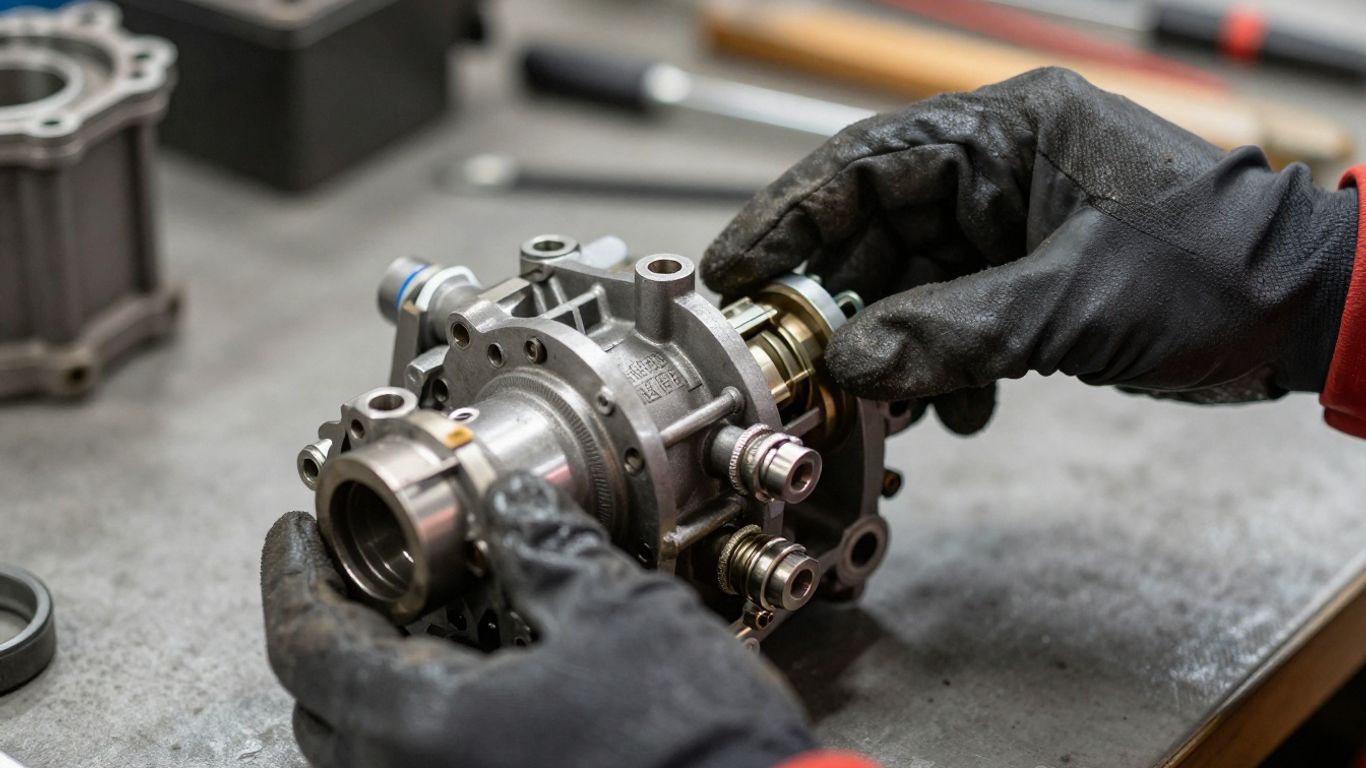
Correct identification prevents the most expensive mistake in this kind of purchase: receiving a unit that physically fits but cannot operate correctly in the vehicle. Begin with the registration or model information, then confirm the engine, transmission type, drivetrain, and code. Keep photographs of the original unit available when speaking with sellers.
Matching the gearbox to your Chery model and engine
Record the vehicle model, production year, engine displacement, fuel type, transmission type, and drive layout. An engine family may have been paired with more than one gearbox, and a front-wheel-drive assembly may not suit an all-wheel-drive application. Ask the seller to confirm the complete specification rather than accepting a broad model-name match.
Finding transmission codes and identification numbers
Transmission codes may appear on a stamped pad, an identification plate, or a label attached to the casing. Dirt, corrosion, and oil residue can obscure the marking, so clean the area carefully and photograph it in good light. Share the full code, not just the first few characters, because suffixes can distinguish revisions or market-specific versions.
Checking model year, drivetrain, and specification differences
Facelifts and specification changes can affect mounting points, wiring, sensors, gear ratios, and control modules. Check whether the donor vehicle used the same drivetrain and whether the replacement includes the required electrical connectors. If the seller cannot explain a difference between two apparently similar units, pause before paying a deposit.
Using the vehicle identification number for verification
The vehicle identification number gives a parts specialist a stronger basis for checking the original factory configuration. Provide the VIN together with the transmission code and a photograph of the unit. VIN confirmation is especially useful when the vehicle has been imported, modified, or repaired with parts from another model year.
Assessing the condition of a used gearbox
Condition is difficult to judge from a single photograph. Look for evidence of how the unit was stored, removed, tested, and described. A careful seller should be able to distinguish what was observed directly from what was merely assumed based on the donor vehicle.
Signs of wear, damage, and previous repairs
Inspect for cracks, impact marks, broken mounting ears, stripped threads, and heavy corrosion. Fluid staining around a seal does not automatically mean the gearbox is unusable, but it should be priced and repaired with the installation. Evidence of opened casing bolts or non-original sealant may indicate earlier internal work, which is not necessarily bad but should be explained.
Reviewing mileage and service history
Mileage is useful only when its source is credible. Ask whether it comes from the donor vehicle’s records, an auction report, or an estimate. Service invoices, fluid-change records, and the reason for dismantling provide more context than a low number alone. A higher-mileage unit with documented maintenance may be a safer choice than one with an unsupported claim of very low mileage.
Inspecting the casing, seals, mounts, and connectors
Request close photographs of every mounting face, shaft opening, connector, cooler port, and identification mark. Check that the casing is complete and that no brackets or sensors have been removed. Inspect seals for hardening and shipping damage, but avoid treating replacement seals as proof of internal condition. The external inspection should support, not replace, a functional test.
Questions to ask the seller before buying
A short, consistent set of questions makes different listings easier to compare. Ask about the donor vehicle, mileage source, operating test, fluid condition, included accessories, warranty length, and return procedure. These details also reveal whether the seller understands the part or is simply repeating a generic catalog description.
For a practical comparison, keep these checks together:
- Is the exact transmission code shown in writing?
- Was the unit tested before removal, and what was observed?
- Are the torque converter, sensors, mounts, and connectors included?
- What happens if the gearbox arrives damaged or proves incompatible?
The answers should be recorded in the order confirmation. Verbal assurances are harder to use if a dispute arises later.
Comparing used Chery gearbox prices
The advertised price is only one part of the purchase. A gearbox may be cheap because it is untested, incomplete, heavily worn, or offered without meaningful after-sale support. Compare like with like, using the same specification and the same assumptions about delivery and installation.
Factors that affect gearbox cost
Price reflects transmission type, demand, availability, mileage, test evidence, included components, warranty terms, and location. Automatic and CVT units may involve different diagnostic and adaptation requirements than manual assemblies. A unit that has been cleaned, photographed clearly, and tested may reasonably cost more than an unidentified assembly pulled from a vehicle.
Comparing used, rebuilt, and new replacement units
A used gearbox is normally sold in its existing condition, subject to whatever testing and warranty the supplier provides. A rebuilt unit has been opened and had selected components repaired or replaced, while a new unit has not previously operated in the vehicle. Ask exactly what “rebuilt,” “reconditioned,” or “tested” means, because those labels are not interchangeable descriptions of the work completed.
Estimating shipping, installation, and core-return charges
Include freight, insurance, lifting equipment, workshop labor, fluids, seals, programming, and any refundable core charge. Heavy parts can also attract residential-delivery or remote-area surcharges. If the old gearbox must be returned, confirm the deadline, packaging requirement, and who pays the return freight before accepting the quoted total.
Recognizing unusually cheap gearbox listings
An unusually low price deserves questions rather than immediate celebration. It may exclude the torque converter, come from a high-mileage donor, lack testing, or apply only to a stripped casing. Compare the listing with several units of the same code and specification, then ask what risk the lower price is transferring to you.
Buying used Chery gearboxes from a reliable seller
A reliable transaction should leave a paper trail from identification through delivery. The listing should describe the exact part, its condition, and its terms without relying on vague promises. Buyers can also compare availability across supplier networks, such as used Chery transmissions, while still confirming the individual unit with the seller.
What to look for in supplier listings
Look for a clear transmission code, donor information, mileage source, photographs of the actual unit, and an explanation of what is included. Stock images and broad compatibility claims are reasons to request more evidence. A listing should also state whether the part is used, rebuilt, tested, or sold for inspection and repair.
Checking warranties, return policies, and testing procedures
Read the warranty for exclusions, labor coverage, fluid requirements, and deadlines for reporting a fault. Some policies require installation by a qualified workshop or prohibit disassembly before a claim is assessed. Ask how testing was performed and whether the test covered leaks, engagement, noise, and electronic faults relevant to that transmission type.
Verifying seller reviews and business credentials
Reviews are most useful when they discuss accurate descriptions, packaging, returns, and resolution of problems rather than simply delivery speed. Check that the business provides a physical contact method, written terms, and a traceable invoice. A seller who answers technical questions directly is generally easier to work with than one who gives only stock responses.
Confirming delivery, packaging, and damage claims
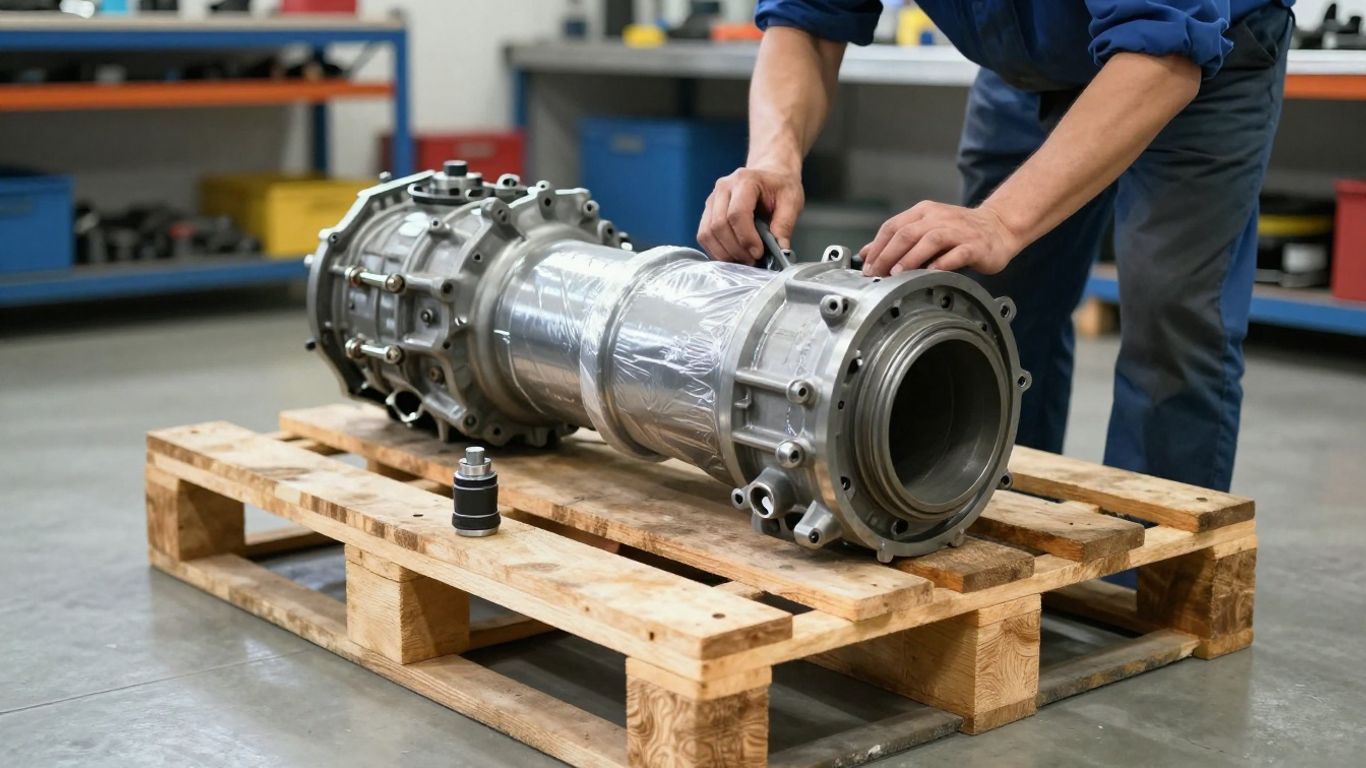
Heavy gearboxes need secure pallets, capped openings, protected connectors, and enough cushioning to prevent casing damage. Confirm whether delivery requires inspection before signing. Photograph the packaging and part immediately on arrival, and report visible damage within the seller’s stated time limit.
Installing and testing a replacement gearbox
Installation should be treated as a repair procedure, not a simple swap. Before the replacement arrives, confirm the workshop has the correct tools, fluid, diagnostic equipment, and service information. A clean installation also helps preserve warranty rights if the unit later needs assessment.
Preparing the vehicle for gearbox replacement
Verify the replacement code and inspect it against the original before removing the old assembly. Safely support the vehicle, disconnect the battery where appropriate, and label connectors and lines during removal. Drain and retain a fluid sample if diagnosis is still needed; its color or debris may help explain why the first gearbox failed.
Components to inspect or replace during installation
Check seals, cooler lines, mounts, driveshaft joints, clutch or torque-converter components, wiring, and fasteners while access is available. Replace damaged or questionable sealing parts rather than transferring them automatically. Flush contaminated cooling circuits where the transmission design requires it, since debris from the failed unit can damage the replacement.
Fluid requirements and electronic adaptations
Use the exact fluid specification and fill procedure for the gearbox, not a generic substitute chosen by appearance. Some vehicles also require a scan-tool reset, relearn, or adaptation after installation. The workshop should confirm fluid level at the specified temperature and complete any documented electronic procedure before road testing.
Road-testing the gearbox after installation
Begin with a stationary leak check, then test gentle engagement in reverse and drive. Once the fluid level is confirmed, use a gradual route that includes low-speed maneuvering, normal acceleration, and steady cruising. The AC DC Charger Transformer belongs to a different kind of technical purchasing decision, but its product-specific lesson applies here too: verify the exact specification rather than relying on a familiar-looking name.
A post-install scan and second leak inspection can catch problems that are not obvious during the first few minutes. Record any abnormal noise, delayed engagement, vibration, or warning light and stop testing if the symptom is severe.
Maintaining a used Chery gearbox
A replacement gearbox is not maintenance-free simply because it has already been installed. Its remaining service life depends on fluid condition, cooling, seals, driving conditions, and the health of connected components. Follow the vehicle-specific service information and treat new symptoms as diagnostic clues rather than normal aging.
Following the correct fluid service schedule
Use the specified fluid and service interval for the exact transmission. Severe use, towing, high temperatures, and repeated short trips may justify more frequent inspection, but the correct interval should come from reliable vehicle or transmission documentation. Check for leaks after service and confirm that the level was set using the required procedure.
Recognizing early warning signs of transmission problems
Watch for delayed engagement, slipping, harsh shifts, shuddering, whine, burning-fluid odor, visible leaks, or a transmission warning light. One symptom may come from an external sensor, mount, or driveline joint, so diagnosis matters. Continuing to drive while a small leak becomes a low-fluid condition can turn a manageable repair into major internal damage.
Driving habits that reduce gearbox wear
Allow the vehicle to select gears smoothly instead of alternating rapidly between reverse and drive. Avoid aggressive acceleration when the transmission is cold, and do not tow beyond the vehicle’s rated limits. Keeping cooling passages clear and addressing engine or mount problems also reduces stress transmitted to the gearbox.
Keeping records for future repairs or resale
Keep the invoice, transmission code, donor details, mileage at installation, fluid specification, and warranty terms together. Add dates for fluid services, inspections, and any diagnostic work. These records make future troubleshooting easier and give a later buyer a clearer account of the replacement’s history.
For contrast, documentation matters in unrelated equipment purchases too: a product rating engine concerns billing calculations rather than vehicle repair, while a therapy superbill concerns reimbursement records. Neither is part of gearbox maintenance, but both illustrate why precise records are more useful than vague descriptions.
Conclusion
Buying used Chery gearboxes is mainly an exercise in verification. Match the code and vehicle specification, investigate the unit’s history, compare the complete installed cost, and choose terms that give you a practical remedy if the part is wrong or faulty. Careful fitting, correct fluid, and consistent records then protect the value of the repair.
Frequently Asked Questions
Is a used gearbox worth buying?
It can be worthwhile when the unit is correctly matched, its condition is documented, and the total cost is comfortably below suitable rebuilt or new alternatives. A written warranty makes the decision safer.
How do I know which gearbox fits my vehicle?
Use the vehicle identification number, transmission code, engine details, model year, drivetrain, and photographs of the original unit. Confirm the match with a qualified parts specialist before ordering.
What should I ask a gearbox seller?
Ask for the donor vehicle details, mileage source, test results, included components, warranty, return process, delivery terms, and damage-claim deadline. Request written answers for important points.
Does a used gearbox need new fluid?
The fluid should be replaced or checked according to the transmission maker’s procedure. Use only the specified type and set the level at the required temperature or operating condition.
Can a gearbox that looks similar still be incompatible?
Yes. Mounts, ratios, sensors, connectors, control software, bellhousing patterns, and drivetrain layouts can differ even when casings appear alike.
Should seals be replaced during installation?
Accessible seals and damaged gaskets are often sensible to replace during installation, but the correct parts and procedure depend on the transmission. Inspect cooler lines and mounts at the same time.
What are the first signs of gearbox failure?
Common warning signs include slipping, delayed engagement, harsh or erratic shifts, unusual noise, shuddering, fluid leaks, burning odor, and dashboard warnings. Prompt diagnosis can limit further damage.